You can Impact Your Wealth: Destiny and Free Will



In this episode of The Torah Broker Podcast, Rabbi Yakov Bronsteyn joins Torah Broker Sanford Burstyn for a fascinating conversation about money and wealth, determination vs. self-accomplishment, and financial success. Drawing on powerful Torah sources and timeless wisdom, Rabbi Bronsteyn explores why some people have more wealth than others, how much of our financial success is predetermined, where human effort fits into the equation, and how to protect and preserve the wealth we have.
Subscribe for more episodes ➤ /@torahbroker
Rabbi Yakov Bronsteyn is a rabbi known for his work with STAR-K Kosher Certification as a West Coast Kashrus Administrator. He is also one of the “Founding Fathers” of the Phoenix Community Kollel. Known for his encyclopedic breadth of Torah knowledge and analytical mind, Rabbi Bronsteyn has an extraordinary ability to recall sources throughout the Talmud, Midrash, and its many commentaries, bringing together ideas from across the Torah with clarity, depth, and insight. Rabbi Bronsteyn delivers public Torah classes in the Phoenix area and hosts the podcast “Rabbi Yakov Bronsteyn –Parsha Classes.”
You can Impact Wealth - Ep. 12
[00:00] — Rabbi Yakov Bronsteyn
Everything is in the hands of Heaven except for the fear of Heaven—except for free choice. Therefore, the angel can't declare in advance that a person will be righteous or that a person will not be righteous, because that's up to the person themselves. It's up to them to choose whether they're going to be righteous or not.
[00:20] — Rabbi Yakov Bronsteyn
However, the other three distinctions the angel does declare, and it is decided in advance. Let's give an example.
[00:42] — Sanford
Hello. Welcome to Episode 12 of The Torah Broker. This is the fifth episode in the second season. I'm so excited that we're having Rabbi Yakov Bronsteyn here today.
Rabbi Bronsteyn, you remember, did the very first episode of The Torah Broker, where we talked about what the Torah is fundamentally.
I don't know if there's any more of an introduction to Rabbi Bronsteyn that I could give. I think that when you listen to him, that's the intro, and it never stops!
So today, the Rabbi is going to be talking about money. Our audience, I think, should have a good understanding of this to improve the quality of their lives.
I know that the Torah is big on having us have a balance between how hard we work at anything—particularly making money and our profession—and what God takes care of.
[01:56] — Sanford
That could be 90/10 in either direction.
And with that, Rabbi Bronsteyn, welcome, Rabbi.
[02:05] — Rabbi Yakov Bronsteyn
Thank you, Sanford.
[02:10] — Rabbi Yakov Bronsteyn
Just in general, about money. One of the fundamental principles is... The Gemara on page 16b says that—
Oh, we have a shot here. I can—
[02:28] — Sanford
Feel free, Rabbi. Yeah, fire away.
[02:30] — Rabbi Yakov Bronsteyn
We'll see if we need it.
Yeah. The Gemara in Niddah, page 16b, says that there is an angel that's appointed at conception. Before every single person is born, the angel comes to Hashem, comes to God, and brings the drop from which the person will be conceived. And he makes a declaration.
[02:55] — Rabbi Yakov Bronsteyn
He says, "This person will be rich or poor. He'll be strong or he'll be weak. He'll be smart or he won't be smart."
However, the Gemara says the angel does not say that the person will be evil or they will be good, because, as Rabbi Yaakov said, everything is in the hands of Heaven except for the fear of Heaven—except for free choice.
[03:35] — Rabbi Yakov Bronsteyn
So therefore, the angel can't declare in advance that a person will be righteous or a person will not be righteous, because that's up to the person themselves. It's up to them to choose whether they're going to be righteous or not.
However, the other three distinctions the angel does declare, and it is decided in advance. So, for example, let's give an example.
[04:01] — Rabbi Yakov Bronsteyn
One of the examples that the Gemara says is that whether a person is smart or they're not so smart—we know that people maybe can improve their IQ, but not so much. Whatever level of IQ a person has, that's the IQ they have.
Everybody takes a test, and the IQ level that they have is the IQ level that they were born with, and that is because that has been predetermined.
[04:29] — Rabbi Yakov Bronsteyn
What kind of IQ level a person is going to have, how smart they're going to be. The same thing with strength.
Some people are born large. They're born big-boned and with big muscles, and some people are not. Some people are scrawny and small, and they don't have big muscles.
I remember Chuck. Chuck used to tell me—he used to work out, and he told me, he said, "You can't make strings into..." He was pointing at his biceps.
[05:01] — Rabbi Yakov Bronsteyn
He said, "You can't make strings into dumbbells." It just doesn't work, no matter how much you work out. It's just the way it is.
So, you know, we understand that. And so that means that all three examples have to be the same—the same way that those two examples of being smart and being strong are predetermined.
[05:24] — Rabbi Yakov Bronsteyn
So, too, being rich—meaning being wealthy, being of a certain class—is also predetermined. It's also predetermined what level and status a person is going to have.
So that is point number one. The most basic, from the perspective of the Gemara, is that it's predetermined.
[05:51] — Rabbi Yakov Bronsteyn
The Gemara also says in Moed Katan, on page 28, that there are three things which are predetermined. It depends on a person's mazal, on their constellation, on the way that the stars, so to speak, are structured—the way that they were born.
Three things: children, sustenance, and life—how long a person is going to live.
[06:15] — Rabbi Yakov Bronsteyn
You see from this Gemara also the same thing: how much the person's wealth is predetermined. A person's wealth is predetermined. That's been decided already. That's it.
[06:32] — Sanford
So, you talked about making strings into dumbbells. So someone who has a sustenance that is modest, and he decides to go back to school or put in extra time or ask for some favors to fortify his income—that moves the needle some.
[07:03] — Rabbi Yakov Bronsteyn
Okay, so you're saying that our experience is not the way we presented it?
[07:08] — Sanford
You're saying—question. I don't know if it is or not.
[07:12] — Rabbi Yakov Bronsteyn
Well, is it true that a person can go to school and improve their education and improve their status and put themselves in a different place?
A person could put effort into a business and make money—or not.
[07:35] — Rabbi Yakov Bronsteyn
That's your question, right?
[07:37] — Sanford
That's part of the free will, right? Yeah.
[07:40] — Rabbi Yakov Bronsteyn
So the truth is, this is also an issue. It's true.
Let's just take one step back, though, because there is a contradiction in the way you're saying it. But I'm going to say it a little bit more. There is a contradiction in the way you're saying it, but there's more to it.
[08:01] — Rabbi Yakov Bronsteyn
For example.
[08:04] — Rabbi Yakov Bronsteyn
The Gemara says in Bava Metzia, page 38a, that a person wants one measure of what they earn themselves more than nine measures of something that somebody earned and gave them.
I know maybe that's not true in today's society. People maybe are very happy to take gifts from other people. But the Gemara is saying that naturally, a human being is not like that.
[08:32] — Rabbi Yakov Bronsteyn
A human being wants to earn.
[08:37] — Rabbi Yakov Bronsteyn
A human being wants to earn what they feel good about—what they earned.
Even if it's less, they'd rather be in their own apartment, paying rent that they're earning, than to be in a big house with many bedrooms in a fancy place that they're being given as a gift by somebody else, because they're embarrassed.
[09:04] — Rabbi Yakov Bronsteyn
And that seems to suggest—this is one of the sources that seems to suggest—that there is an earning value.
It's not that the person is predetermined, you know. Even though the Gemara does say in Sotah, for example, page 2a, that a person's house and their field of real estate is also predetermined, there is an earning value that a person can actually earn and feel good about what they earned.
[09:33] — Rabbi Yakov Bronsteyn
It's not that they were given it. They earned it, and that's why they feel good about it.
[09:39] — Rabbi Yakov Bronsteyn
So how does that go with the fact that it's predetermined? A person's wealth is predetermined?
That's your question. But you see a contradiction. You see that there's a dichotomy here. On the one hand, it's predetermined. On the other hand, it's earned.
[10:04] — Sanford
I'm just wondering if there's some elasticity, not just with income, but maybe years of life or health or mazal.
You know, as we work on our merit, that we're in a range. A smaller physical body could be fortified. Someone who's very big, who doesn't take care of himself, could be very fragile.
Can you expound on that, Rabbi?
[10:56] — Rabbi Yakov Bronsteyn
Yes. I think what you said, Sanford, is the key. You said "elasticity."
Let's just—elasticity means like if you have a rubber band, you can stretch the rubber band. Before you stretch the rubber band, it's a certain size, right? If you stretch it a little bit, you can expand it. If you stretch it too much, it's going to snap.
[11:21] — Rabbi Yakov Bronsteyn
So using that analogy, the way that you're saying it—and we'll give a source for it—you could say the same thing with the example that we started with.
Let's give you an example. A person has a certain IQ. They have a certain IQ, and then they're not going to change that that much.
[11:43] — Rabbi Yakov Bronsteyn
But if they sit down and they go to school, like you said, and they're going to study, read a lot of books, work very hard on passing a lot of tests, get a lot of information, focus—they could probably increase their knowledge base and their skills to a certain extent.
They're not going to be a rocket scientist. They're not going to become a super-genius like Einstein.
[12:12] — Rabbi Yakov Bronsteyn
But there is elasticity there. They're not going to remain that way.
So if you say that about a person who is smart, or the opposite, we have to say the same thing about a person who's strong and weak.
A person like you said, who doesn't exercise, they overeat—so whatever strength they have, whatever power they have, is gone.
[12:39] — Rabbi Yakov Bronsteyn
At the same time, they can work out. Yes, it's true, they can't make their strings into dumbbells, but they could improve their skills, their strength, their capacity to a certain extent.
They're not going to be able to get into a heavyweight fight with Mike Tyson or whatever it is, but they can become stronger than they are.
So they can pull the string to a certain extent before it snaps. The same thing.
[13:05] — Rabbi Yakov Bronsteyn
You have to say the same thing would apply by being rich.
A person is born in a certain status, and they're not going to be a billionaire and then become a trillionaire. It's not going to happen.
But if they work very hard, there is space. There's an elasticity of where they can improve their status.
[13:24] — Rabbi Yakov Bronsteyn
We have to say that that's the way that it is. It's not predetermined in such a way that no matter what a person does, that's the way it is.
Because we see that by experience. We see that there are people—if we give, like, a real estate class like we used to do in the past, and we present this to a secular audience, they're going to say, "What do you mean?"
[13:52] — Rabbi Yakov Bronsteyn
"I worked very hard for my business, for what I did. I earned it. It's mine."
[14:01] — Rabbi Yakov Bronsteyn
And it's true.
But at the same time, the Torah says to that person, don't say the following words: "It's me who did it. I'm the one who did it."
Rabbi [unclear], in his first volume, says the following idea, which we can all relate to:
A person wakes up in the morning and they have a plan.
[14:26] — Rabbi Yakov Bronsteyn
They have a plan, and things never go according to plan. Never.
You always have to make micro-adjustments, and things come up—good things and not such great things. There are fires that you have to put out, or things to deal with that weren't planned.
A person never winds up at their destination in the steps that they planned that they're going to take.
[14:59] — Rabbi Yakov Bronsteyn
So, at the same time, if a person never leaves their house, they're never going to get to work.
If they stand in their house and say, "I want to get to work," and they never leave the house, they're never going to get to work.
[15:18] — Rabbi Yakov Bronsteyn
But once they leave the house, they don't get to the house in their car. Maybe the car breaks down. They had to call an Uber or whatever. They had an appointment, then the car got fixed at the mechanic, so they go to the mechanic. They missed another appointment, whatever. But they got to work.
But the person who never left the house isn't going to get to work.
[15:32] — Rabbi Yakov Bronsteyn
So on the one hand, we have to put in the effort to get to work. And then, when we do put in the effort, we feel good about the fact that we put in the effort and that we got there.
But on the other hand, deep down inside, we know that even though we put in the effort—and if we didn't put in the effort, we wouldn't have gotten there—it wasn't our effort that got us there.
[15:53] — Rabbi Yakov Bronsteyn
But it wasn't our effort that got us there.
[15:53] — Sanford
So is that a different way of saying that you got to get off first base to steal second?
[16:02] — Rabbi Yakov Bronsteyn
It's more nuanced than that.
You've got to get on first base to steal second, but you're not guaranteed to steal second. You're guaranteed not to steal second if you don't get off the base.
You might not steal second. Maybe the catcher doesn't get on well. Maybe he has a good arm, but the second baseman or the shortstop or whatever will miss the ball.
[16:25] — Sanford
Or you're fast enough to get there before the ball.
[16:27] — Rabbi Yakov Bronsteyn
Right. But you don't know what's going to happen.
You have to put in the effort. If you didn't put in the effort, it would have never happened. But it never happens the way you plan it.
[16:37] — Sanford
And this is the partnership we have with the Creator.
[16:40] — Rabbi Yakov Bronsteyn
So that's already saying that God makes a person rich or successful, but at the same time, the person is doing both.
[16:57] — Sanford
The partnership.
[17:00] — Rabbi Yakov Bronsteyn
Yeah. This is the dichotomy.
The Alter of Kelm has an interesting piece—I think it's in volume one. He has an interesting piece about this.
[17:19] — Rabbi Yakov Bronsteyn
This is a dichotomy. How do we resolve such a dichotomy?
If we say that God is involved, then we're saying that our lives are miraculous.
If we're saying that we're involved, then we're saying our lives are natural, according to cause and effect.
If we're saying that God is involved—miraculous—and we are involved—nature and cause and effect—then we're saying that there is a concurrent existence of miracle and nature at the same time.
[17:55] — Rabbi Yakov Bronsteyn
And we who believe in God have to keep that in our heads at the same time: understand that it's us that's doing it and understand that it's not us that's doing it.
So the Alter of Kelm says the following. He says that there is a Mishnah called HaKol Patur? [unclear].
The Midrash says everything that we've been discussing. The Midrash says, "I might think that I could just sit in my house and do nothing, and God will provide."
And then it quotes a pasuk that says, "Everything that you will do." You can't sit. You have to do. That's what the Midrash says.
So the Alter of Kelm says that the way to properly approach life is to have these two dichotomous thoughts in one's mind. A person has to be very sophisticated.
[18:50] — Rabbi Yakov Bronsteyn
On the one hand, they should know that everything that they get comes from Hashem, comes from God.
Every business person knows this. There are some business people who are successful, and some who are smarter and they just don't succeed.
There are some people that are more educated, and everybody knows when they go through a process of making a deal that the hand of God is involved there somewhere.
[19:16] — Rabbi Yakov Bronsteyn
Everybody knows that.
A person has to keep in mind: on the one hand, they are putting in the effort, but it's not their effort that's doing it.
But on the other hand, they have to put in the effort because that's what God wants. God wants there to be an effort.
And it is their effort at the end of the day, but it's not really their effort at the same time, because God is doing it.
[19:39] — Rabbi Yakov Bronsteyn
The ultimate sophistication is walking the tightrope between these two ideas: that we exist in a miraculous world, but at the same time, we exist in the natural world too.
[19:50] — Sanford
Somewhere in our learning, there was a story about—
[19:57] — Sanford
A horse driver who told his wife he was going to just stay home and learn all the time, and he sold the horse. And their resources are depleting.
And the wife says, "Nu, where's the salami and the bread? What are we doing over here?"
And the horse shows up with a wagon full of gold, right? Remember this?
[20:25] — Sanford
I think the whole essence of the story is that there was merit to his learning, that God was going to take care of him.
I can't imagine the guy who got the gold just didn't find the horse and get it back.
Are these stories, or—
[20:47] — Rabbi Yakov Bronsteyn
Well, this story actually was with the Alshich. It's quoted in the sefer of the Alter of Novardok.
And the Alter of Novardok is understood to be in disagreement with the later authorities or later commentaries.
The Alter of Novardok does say that if a person is very extreme and they absolutely, 100% believe that God will provide, that they don't have to do anything.
That's what the Alter says.
[21:15] — Rabbi Yakov Bronsteyn
And the Chazon Ish doesn't agree with that.
He says that a person does have to put in effort.
Belief doesn't mean that you believe that God is going to provide because sometimes He doesn't give you what you want.
Belief means that you approach life with equanimity, understanding that whatever happens to you is meant to be, and that God is in charge.
[21:39] — Rabbi Yakov Bronsteyn
Even the Alter of Novardok—the way the story is told—the Alter also says that the Alshich was telling this story to his students.
The students said to him, "Why is it that this wagon driver can go home and there's a wagon with gold that shows up by him? We can't go home."
[22:03] — Rabbi Yakov Bronsteyn
He said, "Because you are very sophisticated people. You're learning, and you have all these questions."
He's a simple Jew. He just accepts it.
But my point is that the Alter was telling his students that it's not for everybody.
For the wagon driver, who had a binary, black-and-white belief in God, for him it worked.
But how many of us are going to jump off the building and say, "God will absolutely..." and believe in our minds and our hearts 100% that God is going to catch us?
[22:49] — Sanford
That's the story about the guy who's hanging off the side of the cliff, and he's praying to God, "Help me. I don't see any way out of this."
And this bat kol, this voice from Heaven, says, "Let go of the branch."
And he says, "You know, is there a second option?"
Right? I don't know. I don't see a fireman down there with a net.
[23:15] — Rabbi Yakov Bronsteyn
So that—
[23:16] — Sanford
Means—
[23:16] — Rabbi Yakov Bronsteyn
That he's like the students of the Alter, not like the wagon driver.
[23:19] — Sanford
Right, exactly. Yeah.
[23:20] — Rabbi Yakov Bronsteyn
How about this guy?
A guy has an appointment. He comes into a parking lot for his appointment, and he needs a parking spot.
So he starts davening for a parking spot. And as he's driving, a parking spot opens up.
He looks up to the sky and he says, "God, never mind. I got it."
[23:43] — Sanford
You know, you hear this, and there's a—I think it's a Burt Reynolds movie where he's out on a boat. The boat goes down, and he can see the shore a long ways away.
And he says to God, "Get me out of this, and I'll contribute $2 million to charity."
And as he gets closer to shore, the amount he's giving goes away.
[24:06] — Sanford
And when he gets to the beach, he says, "Don't worry about it, God. I got it covered."
Right?
Yeah. Is there any Torah source that speaks about how just our general merit, our behavior, influences our wealth?
[24:31] — Rabbi Yakov Bronsteyn
Our general behavior and merit?
[24:34] — Sanford
Yeah. I mean, people who have more merit maybe have more mazal—just in general, more luck.
[24:42] — Rabbi Yakov Bronsteyn
Do we mention in [unclear] that if a person tithes, then—
Actually, I don't think we mentioned it.
[24:54] — Rabbi Yakov Bronsteyn
If a person should tithe his produce or give 10% of his money, then he'll become rich that way.
So a person does—there are certain mitzvahs that a person can do to preserve their wealth, like we said in the name of the Maharal, or to increase their wealth, but only to a certain extent, because that's predetermined.
So the answer is yes.
[25:19] — Sanford
This notion that the Torah says that charity is the fence around your net worth.
[25:33] — Rabbi Yakov Bronsteyn
The Mishnah. And because—
It's a fence for being rich.
[25:41] — Sanford
Right.
[25:42] — Rabbi Yakov Bronsteyn
That just means—let's give an analogy.
If you put your yogurt in a refrigerator because it's a perishable item, you can eat it. You don't put your yogurt in the refrigerator [and then] two hours later say, "Can't eat it."
If a person gives tzedakah—
[26:04] — Rabbi Yakov Bronsteyn
Then if the person gives tzedakah, they're putting their money in the refrigerator.
[26:10] — Sanford
What's what? They're not giving the portion they're holding, right? Or is it—or is it both?
[26:19] — Rabbi Yakov Bronsteyn
No. The money that they're giving away is the money they're giving away.
But their status and their wealth are being protected because their status and their wealth are a perishable item, and they're being protected by the tzedakah.
If they don't give tzedakah, then it's not protected.
And since it's unprotected—
But that doesn't mean that it could be transferred through generations.
[26:44] — Rabbi Yakov Bronsteyn
It means for that specific person.
[26:46] — Sanford
Thank you. That's what I was thinking—that if somebody merited to have money upon their passing, that would then go to the next generation with all of the Torah laws associated with it.
[27:05] — Rabbi Yakov Bronsteyn
Those are the laws that we have to follow from our perspective.
But God decides. A person can inherit tremendous amounts of wealth and not be able to spend it.
[27:13] — Sanford
Right.
[27:13] — Rabbi Yakov Bronsteyn
For a million reasons, right?
This is an interesting Maharal. If you want to know why it is that tzedakah is protective of a person's money, in the [unclear source]—maybe we started it together, I don't know—because sometimes you attend our class.
He says that a person who is rich, a person who's wealthy, clearly has bracha in their life.
[27:42] — Rabbi Yakov Bronsteyn
Because that's what bracha is. Blessing is multiplication of what they have.
And a person who is wealthy has multiplication of what they have. They're well-to-do. Everyone can see it. They can see it. They're more comfortable, and they have more power than other people.
That is called—it's analogous to a spring.
[28:09] — Rabbi Yakov Bronsteyn
A spring has living water.
And the reason it's called living water is because the spring always replaces the water. It always comes into the well.
If you have a standing body of water, what happens to it? It goes bad. The water has to be treated, or the water can't be—
You can't drink that water.
[28:31] — Rabbi Yakov Bronsteyn
So what happens is, if a person who's wealthy gives money away, then they are a spring that's constantly flowing, and they're keeping the spring alive.
If they don't give the money away, then they're closing up the spring. And now it's a standing body of water.
Once it's a standing body of water, it's no longer alive and it shrivels up.
[29:02] — Rabbi Yakov Bronsteyn
So giving the money away is how a person ensures that the bracha that they have in their life—the blessing that they have in their life—continues.
And that's why it protects a person's wealth.
[29:15] — Sanford
I was always taken by—and I don't know why—the source is the Rambam, which are the different levels of the quality of giving.
And, you know, the notion of giving to someone who doesn't know who gave it to them...
[25:19] — Sanford
This notion that the Torah says that tzedakah is the fence around your net worth.
[25:33] — Rabbi Yakov Bronsteyn
The Mishnah. And because...
It's a fence for being rich.
[25:41] — Sanford
Right.
[25:42] — Rabbi Yakov Bronsteyn
That just means—let's give an analogy.
If you put your yogurt in a refrigerator because it's a perishable item, you can eat it. You don't put your yogurt in the refrigerator two hours later and say, "I can't eat it."
If a person gives tzedakah—
[26:04] — Rabbi Yakov Bronsteyn
Then if the person gives tzedakah, they're putting their money in the refrigerator.
[26:10] — Sanford
What? They're not giving the portion they're holding, right? Or is it both?
[26:19] — Rabbi Yakov Bronsteyn
No. The money that they're giving away is the money they're giving away.
But their status and their wealth are being protected because their status and their wealth are a perishable item, and they're being protected by the tzedakah.
If they don't give tzedakah, then it's not protected. It's unprotected.
But that doesn't mean that it could be transferred through generations.
[26:44] — Rabbi Yakov Bronsteyn
It means for that specific person.
[26:46] — Sanford
Thank you. That's what I was thinking—that if somebody merited to have money upon their passing, that would then go to the next generation with all of the Torah laws associated with it.
[27:05] — Rabbi Yakov Bronsteyn
Those are the laws that we have to follow from our perspective.
But God decides. A person can inherit tremendous amounts of wealth and not be able to spend it.
[27:13] — Sanford
Right.
[27:13] — Rabbi Yakov Bronsteyn
For a million reasons, right?
This is an interesting Maharal. If you want to know why it is that tzedakah is protective of a person's money, in the [unclear source]—maybe we started it together, I don't know, because sometimes you attend our class.
He says that a person who is rich, a person who's wealthy, clearly has bracha in their life.
[27:42] — Rabbi Yakov Bronsteyn
Because that's what bracha is. Blessing is multiplication of what they have.
And a person who is wealthy has multiplication of what they have. They're well-to-do. Everyone can see it. They're more comfortable, and they have more power than other people.
That is like a spring.
[28:09] — Rabbi Yakov Bronsteyn
A spring has living water.
And the reason it's called living water is because the spring always replaces the water. It always comes into the well.
If you have a standing body of water, what happens to it? It goes bad. The water has to be treated, or you can't drink that water.
[28:31] — Rabbi Yakov Bronsteyn
So what happens is, if a person who's wealthy gives money away, then they are a spring that's constantly flowing, and they're keeping the spring alive.
If they don't give the money away, then they're closing up the spring. And now it's a standing body of water.
Once it's a standing body of water, it's no longer alive and it shrivels up.
[29:02] — Rabbi Yakov Bronsteyn
So giving the money away is how a person ensures that the bracha that they have in their life—the blessing that they have in their life—continues.
And that's why it protects a person's wealth.
[29:15] — Sanford
I was always taken by—and I don't know why—the source is the Rambam, which are the different levels of the quality of giving.
And, you know, the notion of giving to someone who doesn't know who gave it to them...
[29:38] — Sanford
Someone who had given to Torah.
[29:49] — Sanford
These different levels of the quality of giving—as much giving as there is in the Jewish world—is there something I'm unaware of where people actually, when a guy makes $1 million, I don't know, after tax, whatever, he's got to give away $70,000?
He earmarks that money and he goes, "Okay, honey, let's sit down and figure out where the money goes."
[30:27] — Sanford
Do people understand better the ranking of that? I don't see it.
Is that something that was more managed and focused on and controlled and given with that understanding in previous generations?
[30:46] — Rabbi Yakov Bronsteyn
No, I think the halakha is very clear about the hierarchy. And one should study the hierarchy and follow it. Why not?
I mean, that's the way—you know, some of it we can intuit.
Like a guy sits down with his wife and says, "Honey, we have $1 million. $70,000. What should we do with it?"
[31:08] — Rabbi Yakov Bronsteyn
And then she says to him, "Well, you know your sister hasn't paid her rent the last three months."
"Yeah, but I got an envelope. I got a guy at the door from some yeshiva who's collecting money. So should I give him some of it?"
It's intuitive. You have to help your family first before you help—
[31:34] — Sanford
Right? Right.
[31:35] — Rabbi Yakov Bronsteyn
So essentially, it's a question of triage, right?
It's a question of triage, which takes on many forms in many different ways of halakha.
For example, if you have—the end of [the tractate] discusses who you save first, I think, if I'm not mistaken.
You know, if you have the Titanic—
[31:58] — Sanford
You're talking—
[31:58] — Rabbi Yakov Bronsteyn
About only having enough boats—
[32:00] — Sanford
Taking the rabbi out of the water first? Yeah. Who should—
[32:04] — Rabbi Yakov Bronsteyn
Yeah. The Gemara on page 13b—the Mishnah gives a hierarchy of people who should come first.
You know, and you have responsa from Moshe Feinstein and contemporary halakhic practice.
For example, if two patients come into a hospital and you only have one machine that you could put one of them on, and they're both going to die if they don't get put on the machine in the next five minutes—which one should you pick?
[32:41] — Rabbi Yakov Bronsteyn
Who has priority?
What happens if you have a patient that's going to die, but they're already on the machine? If you don't take them off the machine, they're going to live another hour. But if you do take them off the machine, they'll live for five minutes.
But if you put the person who just came in on the machine, now they're going to live for the rest of their life.
But if you don't put them on now, they're going to die.
So can you pick the hour of the person who already had it versus the person who's going to have the machine for the entire hour?
[33:13] — Sanford
But he just took us to a different galaxy.
[33:14] — Rabbi Yakov Bronsteyn
I'm saying this, you know, this is a question of the Torah having to make a determination of hierarchy all the time, in many different areas, right?
[33:22] — Sanford
Yes, I know that.
[33:28] — Sanford
We see it's clearly stated in the Torah that there's a higher ranking to the act of charity when it is anonymous versus when it is known. This is a fact.
And yet we see names on buildings. We see names on hospitals and libraries and synagogues.
[34:01] — Sanford
Every time there's a fundraiser, there are different categories of giving.
Is there any correlation between the virtue, the sustainability, the richness of the wealth when it is worn in more of a modest way?
[34:28] — Rabbi Yakov Bronsteyn
Of course, you should be modest. Nobody's going to say that a person should be flaunting their wealth.
I mean, it's obvious that a person is not supposed to show off.
[34:38] — Sanford
Well, I thought I remember something from the Torah talking about clothing for a man—that if he has more wealth, he should move up a little bit with the suit, but not, you know, overdo it.
[34:59] — Rabbi Yakov Bronsteyn
You mean show your wealth?
[35:01] — Sanford
No, not show it where it—
[35:04] — Rabbi Yakov Bronsteyn
But treat yourself with respect.
[35:08] — Sanford
I maybe—I don't. It's a question, Rabbi. I don't know. Is that what it is?
[35:14] — Rabbi Yakov Bronsteyn
I don't know. I mean, a person should always—the Gemara in Tractate Shabbos, page 114a, says that a person should always dress in an honorable fashion.
It says that if you have a Torah scholar who has stains on his clothing—
[35:36] — Rabbi Yakov Bronsteyn
Very strong language. It says in Shabbos 114a that he is liable for the death penalty.
[35:45] — Sanford
Sure.
[35:46] — Rabbi Yakov Bronsteyn
And I mean, the simple explanation of that is that the Gemara says on the page before that a person used to call his clothes his honor—that his clothing honors him.
The simple explanation is that a Torah scholar who's walking around in a non-presentable manner, people say, "Look at this person. He learned Torah, and look at what he looks like."
[36:14] — Rabbi Yakov Bronsteyn
So a Torah scholar represents Torah. A scholar represents Hashem. He represents God. He's the representative of God in the world.
And therefore, the representation of God can't be something which is—
[36:35] — Rabbi Yakov Bronsteyn
Deformed, blemished, dirty, unkempt, or not clean.
[36:41] — Sanford
Right?
[36:42] — Rabbi Yakov Bronsteyn
When a person is not representing God—which is the whole point of creation, as the Mishnah says at the end of Kiddushin—God should be represented by the person who is supposed to represent Him, then he has no reason to exist.
So maybe the Gemara doesn't actually mean that he's going to be tried by the tribunal, but that's what he effectively is putting himself in that situation.
The Kohen Gadol, the High Priest, had to wear clothing that was made from very expensive materials—gold and linen and all kinds of different dyes—for honor and splendor.
[37:20] — Rabbi Yakov Bronsteyn
Yeah, I think the story was that he used to dress in very fancy clothes because he was the Rebbe. He wore very fancy clothes and expensive boots.
And then one day they found out that he had expensive boots, but they didn't have any soles.
So, you know, that's the way he presented himself.
[37:41] — Rabbi Yakov Bronsteyn
You know the story of Ben... Well, actually, I read in many places that he used to be a very rich man, and everybody knew that.
He used to lay down in a grave every single day to remind himself that one day he's going to be—
[37:57] — Sanford
With the worms.
[37:58] — Rabbi Yakov Bronsteyn
With the worms. Yeah.
If a person is wealthy, like you mentioned before, what should they do with their wealth? Or ask themselves: Why are they wealthy?
[38:15] — Rabbi Yakov Bronsteyn
What should they do with it? Well, why do they have it?
[38:22] — Rabbi Yakov Bronsteyn
Correct.
[38:23] — Sanford
Yes.
[38:24] — Rabbi Yakov Bronsteyn
Yeah. So one of the famous reasons that, for example, the Chovos HaLevavos says at the beginning that a person who is wealthy or poor is being tested by God.
Because a person who is poor can say, "Well, you know what? How come God doesn't take care of me? Why do I have to suffer like this?"
A person who is poor is being tested. It's a test. How are they going to react in their relationship with God?
[38:45] — Rabbi Yakov Bronsteyn
And a person who is rich is also being tested. How are they going to use it?
Are they going to show off? Indulge? Not share? Not help humanity?
[39:17] — Rabbi Yakov Bronsteyn
What are they going to do with it? It's a test.
And the question is: Which test is bigger? What's the bigger test—being wealthy or being poor?
So that's another aspect that's worthy of discussion.
[39:29] — Sanford
So, Rabbi, what's the correlation between—
[39:35] — Sanford
Happiness and money?
[39:39] — Rabbi Yakov Bronsteyn
Not really. There's no correlation at all.
Happiness—money is a tool, just like anything else. Just like being strong. Just like being smart. Just like anything else.
It's meant to be a tool, to serve Hashem in the way that you're supposed to serve Hashem.
Support institutions, give tzedakah, be a voice of power and influence to affect different policies.
[40:07] — Rabbi Yakov Bronsteyn
It's to help other people, etc. It's a tool. It has nothing to do with happiness.
And we all know the Mishnah in Pirkei Avos that says, "Who is rich? One who is satisfied with his lot."
And there's the famous [Maharal], the second piece in the first volume, about how he says what true happiness is.
[40:38] — Rabbi Yakov Bronsteyn
And he says that people who are rich are not really happy.
Even though they look happy, if you ask them themselves whether they are or not, they'll admit that they're not whole.
And he says that a person who is truly happy is the one who serves Hashem properly.
[40:59] — Rabbi Yakov Bronsteyn
I mean, that's always the case.
It is that the rabbis are using the language of "Who's rich? One who's happy with his lot."
So being rich is a borrowed terminology for success and ultimate achievement in life.
It's not getting money, being rich. I'll give you an example.
[41:26] — Rabbi Yakov Bronsteyn
The Gemara says in Nedarim, I think, if I'm not mistaken, on page 41, the Gemara says, "Amar Abaye..." and we have a tradition in the name of [Rabbi] that a person is only poor if they don't have any knowledge.
[41:49] — Rabbi Yakov Bronsteyn
So the Maharal there explains: What do you mean? A person's poor is one who doesn't have any knowledge?
A person is poor if they don't have any money, not if they don't have any knowledge.
So the Maharal actually says that the words "rich" and "poor" really mean knowledge. They're not really referring to money.
We borrow the terms "rich" and "poor" and apply them to money.
[42:15] — Rabbi Yakov Bronsteyn
And we use them as if that's the meaning of the word.
But the actual meaning of the word is knowledge—not how much wealth the person has.
[42:27] — Sanford
We really see the limits of it with the sensitivity that God tells us to have with widows and orphans.
It makes a point of telling us that even if they have wealth, they're impacted by their situation, and we have to be extra sensitive to them.
[42:54] — Rabbi Yakov Bronsteyn
Yeah.
I mean, there is a mitzvah to emulate God's ways.
The Gemara in Sotah, page 14a, says that the same way that God visits the sick—He visited Avraham Avinu—the same way that God clothed the naked, when He clothed Adam HaRishon and his wife—the same way that He visits the mourner.
He visited Yitzchak when Avraham died, if I'm not mistaken.
And the same way that He buries the dead—He buried Moshe—we also have to bury the dead.
[43:22] — Rabbi Yakov Bronsteyn
We have to emulate God's ways.
God is the ultimate giver because, by definition, all He does is give. He doesn't do anything else because He doesn't need anything else.
He doesn't need affirmation. Affirmation doesn't exist in His realm. Credit doesn't exist in His realm. Honor doesn't exist in His realm.
By definition, He's a giver. Our whole existence is His gift.
[44:12] — Rabbi Yakov Bronsteyn
So we have to emulate God also.
And when we emulate God, then we have a feeling, a sense of purpose, and a sense of accomplishment.
And so then, of course, the downtrodden are the ones that God takes care of.
So when we take care of the downtrodden also, we are emulating God's ways.
[44:26] — Sanford
Well, thank you, Rabbi Yakov Bronsteyn.
Thank you. Episode 12, podcast number five of Season 2.
Thank you very much. Look forward to the next one.
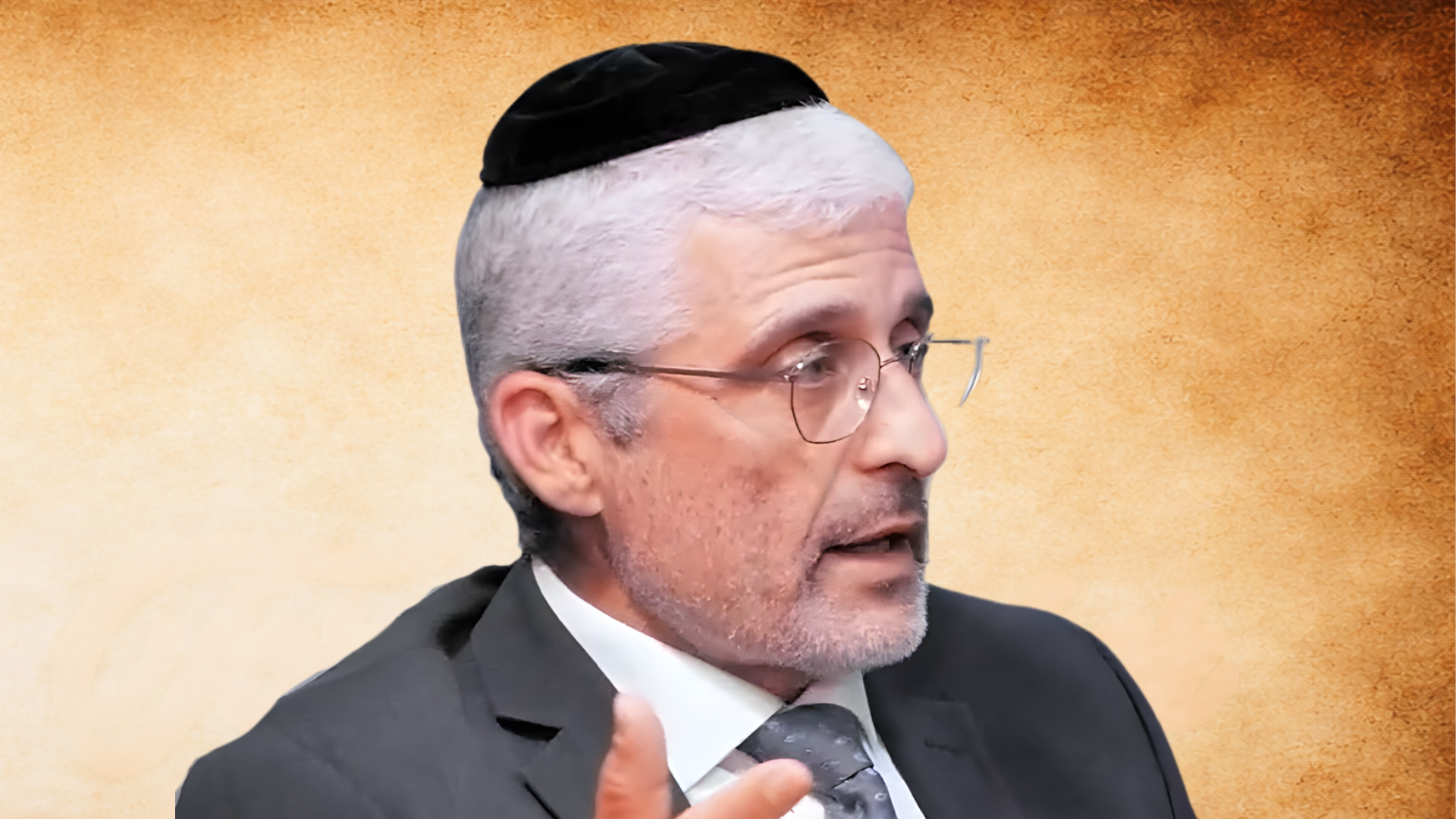
Star-K Kosher- West Coast Kashrus Administrator.
Rabbi Yakov Bronsteyn is a rabbi known for his work with STAR-K Kosher Certification as a West Coast Kashrus Administrator. He is also one of the “Founding Fathers” of the Phoenix Community Kollel. Known for his encyclopedic breadth of Torah knowledge and analytical mind, Rabbi Bronsteyn has an extraordinary ability to recall sources throughout the Talmud, Midrash, and its many commentaries, bringing together ideas from across the Torah with clarity, depth, and insight. Rabbi Bronsteyn delivers public Torah classes in the Phoenix area and hosts the podcast “Rabbi Yakov Bronsteyn –Parsha Classes.”