Unearthing the Positive in Every Person: The Good You May Not See at First
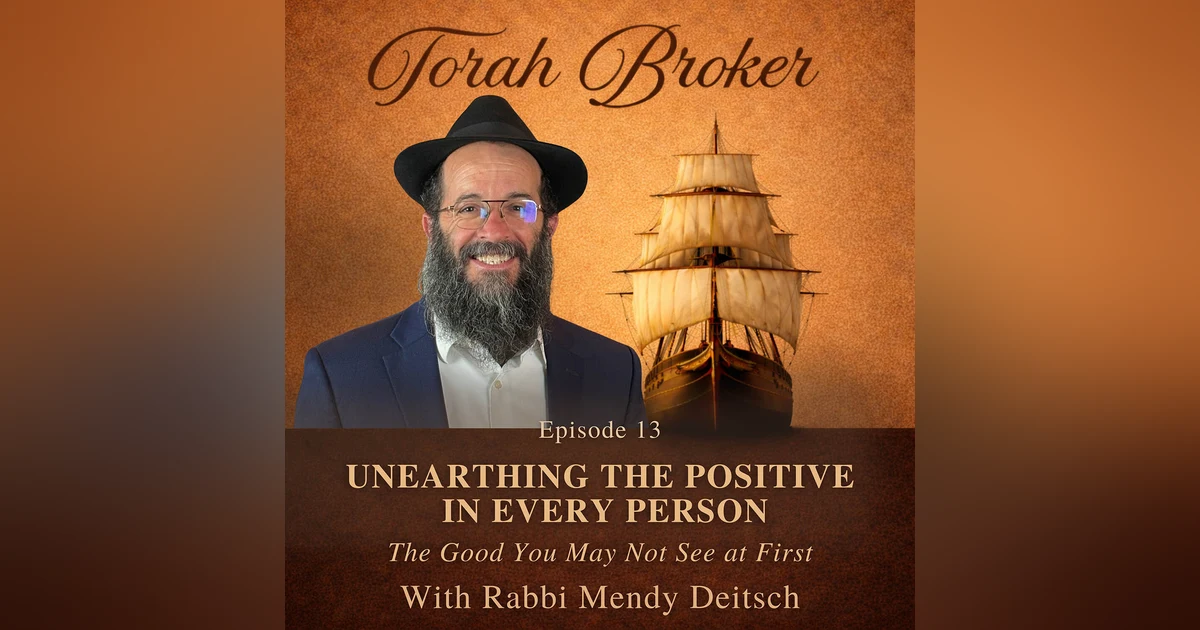


In this episode of The Torah Broker Podcast, Rabbi Mendy Deitsch joins Torah Broker Sanford Burstyn for a powerful conversation about what it really means to live a Jewish life. Why are so many Jews rediscovering their identity and how can we make Judaism something our children truly love? Rabbi Deitsch shares compelling insights on parenting, discipline, leadership, synagogue life, Jewish unity, and finding the Jewish soul in every Jew.
Subscribe for more episodes ➤ /@torahbroker
Rabbi Mendy Deitsch is a Brooklyn native who grew up in Crown Heights and was deeply connected to the Lubavitcher Rebbe. Since moving to Chandler, Arizona, in 1997, Rabbi Deitsch has played a central role in building and strengthening Jewish life in the East Valley. Under his leadership and involvement, the community has grown from having very little Jewish infrastructure into a vibrant Jewish center serving families from diverse backgrounds, with educational programs including a preschool, day school, and Sunday school.
Rabbi Deitsch serves as Rabbi of Chabad of the East Valley and Director of the Pollack Chabad Center for Jewish Life. He has also traveled extensively, teaching Kabbalah and Jewish Mysticism to Jewish communities in Bangkok, Singapore, Central America, Russia, and Australia. His work focuses on bringing the depth, beauty, and relevance of Torah and Jewish life to Jews from all backgrounds.
The Torah Broker — Episode Transcript
These young kids are going to grow up one day to be the future strength and pillars of Torah Judaism around the world. So I tell our congregation all the time, I said, well, to the day when we will not hear the voices of kids running around the synagogue.
Welcome to episode six of season two with The Torah Broker, today we have Rabbi Deitsch. With us by Deitch is one of the pillars of the Jewish community here in metro Phoenix, particularly in Chandler, with quite substantial community. And with that will introduce Rabbi Deitsch. Rabbi, will you. Thank you for being here today.
Thank you for having me. Yes.
Will you introduce yourself a little bit and tell us about the Chandler community?
Sure. So, like I said, Mendy Deitsch, I moved out here with my wife and one child. In September of 1997. And so we're coming up on a 30th anniversary of being here, and.
We moved to Chandler thinking this would be a great opportunity. There was no Jewish infrastructure in Chandler, no Jewish institutions. There was nothing there. It's a very new city, a lot of new construction going on. And we thought this would be a great challenge to do that with young and naive, as they say when we came out here.
And it's been amazing. We moved out here. We knew six people that we were introduced to, and since then it's just just flourished beyond our wild imagination. Wow. Yeah.
So is there a school out there, Rabbi?
So since we moved out here again, not because of us, but despite us, just the community has come together and really built a very strong Jewish infrastructure. We have a preschool. There's a day school now that was started. We also have a Sunday school. For those that don't want to make Jews Jewish families. They want to make the full commitment to come every day of the week.
So we have a Sunday school and we just see the the excitement and the passion and the commitment that people have to really doing what they can to educate their children in today's environment and giving them a strong Jewish foundation. It's so inspiring because many of these people didn't grow up like that. They came from very, you know, unaffiliated background, but now they've somehow found Judaism and they've been inspired by Judaism.
And they say, you know, we want to give our kids a lot more than when we had. And they're willing to make that commitment. And it's it's truly humbling to be part of that, that growth and that infrastructure.
Do you think that that's been a stronger force with recent actions of anti-Semitism?
So there's certainly the concept. I'm sure you heard of the concert called The October 8th Jew, which is after October 7th. All of a sudden, many Jews started to realize, wait a second, what does it mean for me to be a Jew? What in this world, you know what happens if they come? Come after me. So a lot of Jews have awakened after that.
But I think really, we've always tried to educate the community to live as a Jew. Not because we're being attacked. Liver is Jew, because Judaism is so rich, so meaningful, so impactful, so lively and so full of depth and and joy. And that's why you should embrace Judaism. Of course, is also you have the negatives. But don't we try not to focus our education on how much people don't like us?
Let's try to focus our our education on how beautiful and rich and meaningful Judaism is. And we feel that that message, I think, has resonated with the Jews in our generation, because many people have come to us and said, you know, we've asked them like, why did you move to Arizona? You know, run away from the Jewish infrastructure in New York or Chicago or Minnesota or Los Angeles, whatever it is.
Why do you move here? And we've got an answer. People are running away from Judaism because all they heard growing up is anti-Semitism and the Holocaust survivors. And they kind of wanted to they don't want anything to do with that. So we've really shifted that conversation to try to focus on the positive and which is really what, you know, the way I grew up in New York, hearing the Lubavitcher Rebbe, you really heard about anti-Semitism.
He spoke about it. And here, you know, from time to time. But the majority of the message was such a positive, influential, meaningful and joyful message. And that, I think, resonates with our generation.
You you see, in the Torah incidents with Danielle, with Avraham. Right. Avraham told to do idol worship or get thrown in the oven. And he says, I'm not doing idol worship. And the king says, well, you're going in the oven. And he threw them in the oven with his brother, right? The brother didn't make it. Avraham made it.
And the king was so impressed he gave him his son, which was Eliza. No, that was the king's son. Yeah. Which, you know, the question was always, you know, was Ellie as or Jewish?
But what makes the Jewish Jew then.
Yeah. So that's a good question. You want to answer that?
Yeah. So before the Torah was given what what you did, what made a Jew a Jew, essentially. Right. And what made Abraham a Jew and essentially made to have Abraham a Jew was the fact that he believes in one God. So anyone that came around and believed in one God and not just believed in it, but lived with that mindset, with that philosophy, they're essentially joining the children of Abraham and the children of, of Isaac and of of Jacob, which then became Israel.
So the children of Israel. So once you believe in this singular monotheistic one God, then that makes you a Jew. But the interesting thing is that people say that Judaism believes in one God. But what does it mean to believe in one God? When we say, for example, Shema Yisrael, Hashem Elokeinu, Hashem Echad, right? What does it mean?
The Lord is one. Many people say there's one God that. What does that mean? That does one God. So what it really means is that nothing in this world is outside of God, that everything is part of God. There's nothing that's independent of God. So when we say that God is one that means everything, every person, every object, every created being is a part of God.
That's what it means. So when we say that we believe in one God, we believe that everything in this world is a extension of God that is permeated with godliness, with holiness.
Are you familiar with Raleigh? You'll see him as Rocky. Yeah, he's a favorite of mine. And he did a a recording entitled, I think it's called The Torah and Science. Okay. Where.
Yeah, that gets a lot of activity. Yeah.
What what I found, I find amazing in.
And when rhymes Rocky is identifying,
Witnesses, it always has two like, like for the animal to be kosher. She was cut and hooves for the fish. Fins and scales. Just like, you know, for a capital crime, right? You have to have two witnesses. One witness doesn't get anybody prosecuted. So, the consistency is so visible that every time you add another layer of evidence of the construction, it becomes more clear that there's a god.
So, I, I think that, this notion of getting away from the anti-Semitism or the Holocaust and all that in my own travels, I the.
The exercise of keeping one's self engaged in fulfilling the, the commandments, doing what is needed to be done to be in the image of God should keep all of us busy to the point where there isn't any space for the other subjects. Maybe. Right.
And so it just,
Two things. It's not really getting away from the Holocaust and from the anti-Semitism. It's an important thing we have to talk about. We have to address because it's a real it's a real threat and a real subject and a real presence in our life. The main thing is not to focus on it. That shouldn't be the focus. Focus is the beauty and the joy.
And I want to get back to what you said about the science. Everything is too, which is why the irony that God created everything in pairs except for the human being. God created Adam in the first man alone, and Adam turned around and says, wait a second, what's going on? Everything is created in pairs male and female animals, trees, the heavens and the earth.
Everything has a match. Only it doesn't have a match is the human being. So what did God create? What did God say? Then? God said, I'm going to make a helper for you, right? Which is the Adam's helper, which is. Then God separated the male and the female, and he put. And then we have the male in the female, the Adam and Eve.
But who was originally when God created Adam, according to the Kabbalist, Adam and Eve were actually together back to back. They were one being got separated them. The common explanation, common explanation is that God took a rib out of atoms body. But really, according to the Kabbalist, it wasn't a rib. He's still back to back and got separated them.
And now they came face to face. This Adam and Eve's Adam is in the not written and masculine. Adam is gender neutral and once there's a female, then is also a male. But the point is, who is the second one from Adam and the being was God. So it's the human and God that's the peer. So everything has a peer.
Even the human being has a peer. Adam is not alone. Who's Adam with? Adam is with God. And that's my message for today. Also, we as a human being always need to remember that we're never alone. There's always our match, our peer, which is God.
Rabbi, what are some of the bullet points of being a good father?
I'm the third child of 12 kids and thank God we have a wonderful family, amazing siblings. We've often asked our parents. I said, what did you do to have such good, good kids? They said, it's pure mazel that God gives us. You know, we have to do what we we got to do. We got to try our best.
The end of the day, it's the gift of God that he's looking out for us and doing what God does best, and that's that. He takes care of each and every one of his children in the most profound manner. So what's the secret of being a good father? Having trust in God, knowing that God will take care of us and do what we need to do and try to get stay minimally involved, meaning to say, don't think that we can control every situation.
We have to be there for our kids. Be there. You know, one of the hardest things of being a communal rabbi is that people need you. 24 hours a day, seven days a week, you always have to be available. And it took a lot of effort to really turn off my phone from 5 to 730 every single day and say, my kids, I very important.
Also, I got to be there for homework, for bedtime, for dinner, and we got to be there for them. After 730, I can go back out, give classes, meet people, and so on and so forth before five, no problem. But during those at least 2.5 hours after be available for my kids. So certainly we got to be available and we have to be there for them, but not to control them.
Let them be who they are. Let them express themselves, let them grow the way they need to go, and trust that God will will take care of everything else. We give them the tools, everything else God will take care of.
And being a good husband.
I'm still working on that.
So I think.
For me it's really it's really easy. And that is because I'm very lucky to have an amazing wife. And when you really come to appreciate the gifts that the your wife brings to the table and brings to the house and brings to the family, it's like every day is like thanking God that I'm so lucky to be a husband to this, you know, amazing person.
And.
Really, I think this is the essence of what husbands and I try to impart that when I give, you know, classes to brides and grooms before they get married, to appreciate the other spouse and hold them in the highest degree, highest pedestal. When we truly appreciate the value and appreciate who they are and what they add to the world, to our relationship to us and how they completely transform us for the better.
It's like, what more can I do for the other person's? Like I can never do enough for the other person because they're so amazing. And when we, you know that, you know, that's a very micro, you know, husband and wife relationship. But I think the truth is we have to see that at the world at large. I think that's part of the problem of today's world, is that we don't appreciate our fellow human beings enough.
We underestimate the value that they can bring to the table. We think we're older. We have more education. We know more. I went to a better school. I have better friends. I have a bigger house, a nicer car, whatever it is that we say, and unfortunately to often it leads to us looking down at another person. And really that's, I think, a major problem in today's society.
We have to really think long and hard and truly appreciate what every single created, being who's created in the image of God, what they bring to the world. I'm flawed and I'm inspired by some young people that come to the synagogue. It's unbelievable what they do, the commitment that they have, what they sacrifice to put on, to fill in in the morning to, you know, to do the mitzvah or to make a blessing or a food to eat, a kosher item, the sacrifice that they have to do, they weren't brought up like that.
And they go to work in a non kosher environment, if you want to call it that. But they're willing to commit and to do so much. It's so inspiring and it's so humbling. I say I don't know if I can withstand that temptation or that difficulty, that challenge, but these people come around. It's unbelievable. So we really have to, I think, see the beauty in each and every created being male, female, young, old, everyone has something to give, something to add to the to this world.
I heard a coach say that.
If you're engaged with somebody that engaging with somebody, you can identify 1 or 2 things immediately that are virtuous and that seems to.
Really define your focus and thought of the person. The coach included things like hair and teeth and and vocabulary and fashion, and I'd never heard that before. But it it I've tried it and it seems to be a nice thing.
Yeah, whatever it takes to appreciate the other person. But I think.
It's almost so simple. It's such a simple thing because at the end of the day, you have a class of 15 kids or something, right? And each kid is so different than the other one. Some kids are wild, some kids are quiet, but each of them has such a unique aspect to them, a uniqueness to them, a specialty to them, a gift that they add to the conversation, a different perspective, whatever it is.
And that's so beautiful when we respect that, when we honor that, people feel that and people are empowered by that end of the day, we don't want to squash anyone's potential and put anybody down. We want to lift everybody up because everyone deserves to be lifted up. This world needs lift it up. People inspired people. This world needs empowered people.
And it's not a fake empowerment. It's a real empowerment when we really see the value, you know, so many big companies in this world that we have today that we interact with every day, were invented by people who teach us, probably wrote them off, thought nothing, not going to make anything of themselves. But they persevered and they created these amazing gifts to humanity.
And I believe every single union being has that potential and has that inside of them. And when we you know, as you may know, I grew up in Crown Heights in Brooklyn, New York, and just blocks away from the Abbey. So I had the opportunity to really live close to the river and see the rabbi every close up.
And here's the greatest leader of our time, Torah giant. Someone who was able to talk the greatest, deepest concepts of the Torah, expound upon it, and make it so understandable. But the leader ever saw a fellow Jew, a fellow even being that came to him, he gave him the time. The respect was like, wait a second, what is what are you seeing this person?
You don't see it? What are you seeing? This person? You get older, you see, you know so much to see in that person. And I think in business also. And we meet a potential client or potential partner or potential business acquaintance to do business with. And we appreciate what they bring to the table and not just brush them off and send it to the back of the room, but we engage in them as a man to man as a adult, a human being to human being, and engage them in that manner.
They feel valued and they want to enhance. They want to add to the value of what we're bringing to the table. They want to partner with us, and we have a better chance of really building a very strong business or a strong relationship. And that's what it's about.
Professor at Stanford identified how.
The.
Characteristic of humility in leadership creates enormous results. There's a book on it, and.
When?
When there isn't one person in the room that's taken all the air, it's a it's a pretty refreshing environment to be in.
Yeah. That's right.
So it's interesting the way you talk about the kids in, in the classroom, it's to teachers now have more patience for rowdy kids.
I think so, I definitely think so. Yes. You know, we were growing up, a lot of our teachers were immigrants and that grew up in very difficult times hunger, poverty. And they came in, you know, I don't want to say bitter, but they came with a lot of baggage, a lot on their shoulders, no fault of their own.
But that's just the way it was. But today's teachers have a much grow up in a more stable environment, a healthier environment. I think they add that to when they come to the classroom, they're teaching in a much more patient, much more understanding and giving manner. We also today have incredible tools for teachers to be able to really.
You know, engage like professional development and stuff like that. You know, I know in our school, the teachers are required to do professional development a certain amount of hours every single month. And that really enhances their educational ability to using. Yeah.
Well, when I went to school as a kid, when they hit you, it was thought to be.
A method to create a better behaved student. Right. Oh, well, what does the Tar say about that?
So it's a very controversial subject or question, but, it seems that the Torah is very into the idea of discipline. At the same time, the Torah is into discipline according to the child's of.
Educate a child according to their way. Don't educate the entire class according to your way. Educate the child according to their way. So we now understand that what the Torah was saying. Certainly discipline is important, but discipline doesn't have to be harsh punishment making you stand in the corner or taking out. When I was a kid that had the rulers, the big wooden rulers, they make it.
Put your finger like that and snap your fingers. So today we teachers understand that that's just going to drive a child away. You want to really engage the child, engage them with discipline, but discipline out of love or tough love as they say. So when we engage the child in that manner. So, you know, we as we know there's the world was created, is it the world is created on the model of ten Sefirot or ten spiritual attributes.
And those are called in the Kabbalists, the 10 to 10 spiritual attributes. You have the intellectual attributes, three intellectual. You have the seven emotional. In the emotional you have kindness and strength. So or kindness, love and discipline. Right? So is love. Strength is discipline. So you have these two aspects. You have to have love. You have to have discipline.
These are Jewish principles, no question about it. But you also have to fuse the two with a harmony bringing them both together. I think the Torah says you mean. You mean you mean with the right hand? We bring close with the left hand we push away. So you need to have both of those aspects.
What's the Torah's vision of tough love?
Tough love is a.
A certain time when we're trying to educate a child or a class or whatever we need to do, let's say, a specific child. Sometimes we need to show a little tough love. Tough love doesn't mean that we don't like the child. We despise a child, and we want to throw them out of their class. It means that because I love you so much and I care about you so much, and I want you to be the best child that you can be.
I have to discipline you a little bit. I have to make you work a little bit harder than you really want to work. But through this, you're going to turn out to be much better.
Well, when Jacob was giving, when Jacob was giving the blessings to his 12 sons, which were the 12 tribes, Shimon and Levi had killed out a city because they raped their sister, their only sister. And Jacob thought that maybe there should have been his involvement in that decision before they did that.
Right.
And so he, in their blessing, he differentiated between who they were and their their character traits, their actions, which I think from a an educational perspective, a relationship perspective is kind of interesting to create this dichotomy between your actions are bad, you're not.
Bad, right? So you don't say you're a bad kid. You said what you did was bad. Exactly right. Right. It's a very important distinction.
Right.
And the only time we don't make that distinction is when we lose control of ourselves, when we're in the moment. And today, part of the teacher training or really should be parent training is always being control yourself. Never lose control. Because if you lose control, then essentially you're giving the power of yourself to somebody else and then something not good happens.
So always human in control. Separate the child from the action.
Where, anger is produces a a similarity at idol worship.
Correct. Exactly.
So we don't want to get angry, right? The generation today of parents are, very weak. Okay. How did that come about?
So at our.
Day school graduation last month, part of the graduation ceremony. So the kids sang many Jewish songs and spoke about the prophets that they learned about and the verses in the Torah that that they learned. And they also sang patriotic songs. And there was a grandmother that was there. And she almost had tears in her eyes. And I said, you know, is everything okay?
She says, well, I was just recently, two days ago, I was in public school. Other other grandkids graduated from public school, and they didn't sing any patriotic American songs. And here these kids are seeing it in a Jewish school. And I see they're not just learning Torah principles, which is amazing, but they're also learning what it means to Great American to be a great American.
And so the next day we had a preschool graduation for the young, for the little kids. And there was a couple that both teaching in public school. So I asked the teacher, I asked them, I said, is it true that there's no or this minimal American patriotism in the public schools? And he said, sadly, that is the reality.
He said, some teachers do, but it's not necessarily encouraged by the school district, and many teachers don't do it. And so on to the conversation. What happened? How did American public schools that are being funded by tax dollars, essentially, how do they not teach pride to about our country? Be happy and be proud of Americans? How can we miss such an important subject?
And I think it's it's a failure not just in not teaching it, but it's a much deeper failure. Why don't they teach it? What is what is the underlying issue that they are afraid to teach and to be proud of what it means to be an American? And essentially it comes down to, you know, there's many arguments exactly what it is or what generation when did it happen?
But I think one of the underlying concepts is that we stopped to respect one another. We only respect ourselves. So this is why today you hardly have a dialog like we're having. How do they have people that sit down together and to talk, especially when they're not like minded people? So what happens is when you don't sit down to talk, you never really understand the other person.
All you hear is what you want to hear. And your friends that are like you are hearing. So of course we're not going to like this country because the things that are wrong with this country absolutely are things that are wrong, but that doesn't define our country, that makes our country how great it is, because we have the power to take that which is wrong and make it even better, and we give them the freedom to make it better.
We live in a country doesn't really have to accept every nonsense that's out there. This is a nonsense, you say, you know what? I don't like the nonsense. I'm going to do something about it. I'm going to make it better. So when we don't have a the dialog and B when we don't have the humility to listen to somebody else, when we think it's all about me, it's the media or the I society, then there's no room for anybody else.
And then there's certainly no room for this amazing gift that this the of this country of kindness has brought to the world. And so this is why in the promises, they're not comfortable to talk about the greatness of America, because it's going to fence some people, because some people don't like what's happening in this country. You know, I have a neighbor that has he put up an American flag for July 4th, said, can thing to do, but he put it upside down.
So I went over to my he may have made a mistake, you know, it's upside down. He says on and off. It's on purpose. America is in distress. So I didn't want to get into a whole argument with him. But I, you know, was kind of surprised. I said either issues with America. Absolutely. But America is in distress.
Oh, this is the greatest country we've ever lived in. And it's unbelievable, you know, the issues in America? Yes. But in America, we can live as an observant Jew with no strings attached. It's unbelievable the freedoms that were given. And so how can we not be thankful for that? And I think that comes from a stage of humility when we recognize the gifts that were given and we say, you know, it's not all about me, it's about the incredible lessons that we learn.
And that helps us be a strong Jew and proud Jew and a proud American.
What is that Torah quote about sparing the rod? And the thought is, is that you won't feel good about yourself if you if you don't, if you don't spank your child. I, I don't know the essence of it. What defines sparing the rod? It seems pretty literal to me. But when you go to school and Chavez and you go to the kids and there's 30 kids between the table and the adults, or you're in a, there are fewer chairs than there are people, and children are sitting little children are sitting with their parents, and adults are coming to the table and the parents aren't.
You know, my father wouldn't let us sit down to begin with, let alone sit and then be removed for an elder. So these things are discouraging, particularly when the rabbi from the pulpit speaks to these things. And.
Burdens seem to be a lot of action. And in addressing those.
I think there's a middle ground, perhaps. So first of all, you know, every synagogue has what they call Shusha. Shusha, those that when people are making noise, they go right. When kids are making noise, they and it's not a great feeling for a kid to walk into a synagogue and hear everybody shushing them. It'll them to be quiet.
But at the same time, it's okay to let them let them do their shush, let them tell the kids to be quiet and let the kids make noise. In other words, I tell our congregation all the time, I said, well, to the day when we will not hear the voices of kids running around the synagogue, then we're in trouble.
That's how lucky we are that we hear kids running around. There's a life, there's liveliness, there's youngsters, these young kids running around. This is the greatest blessing. Embrace it. Are they making noise? Yeah. And they disturbing. Yeah. Are they sometimes a little bit too wild? Yes. But how lucky we are that this is in the synagogue. It's so beautiful.
It's so amazing. And if you have a hard time concentrating, we're try to concentrate a little bit harder. Work on yourself a little bit to concentrate more. But to kick the kids out, that's our future. Those are the next generation of Torah holders are going to keep Torah strong. They're going to keep Torah proud and keep Torah strong.
When I was a kid, I was a wild kid. And I remember I grew up in a big synagogue, used to run around like I don't say animals. We used to run around like kids run around. But we were tolerated. Adults tolerated us. They understood that these young kids are going to grow up one day to be the future strength and pillars of Torah Judaism around the world.
So that's the one, one, one perspective. The other perspective is, yes. If there's a kid sitting on a chair, an adult comes over. It needs a seat. The parent should pick the kid up and put them on their lap. Don't send the kid out of the synagogue, but let the parent put the kid on the left. Is it going to be a little bit uncomfortable?
Yes, the parents should also know that 100%. So for me to be a little bit uncomfortable, but let another Jew sit down and have a chair and my kid could sit on my lap. Is it going to disturb my prayers a little bit? So be it. It's worth a sacrifice to help out someone else that they can have a seat.
So I think there's a little middle ground there.
I grew up in a synagogue where there weren't kids in the shuffle.
There were not?
No. And if there were, they behaved in a way that reflected that God's presence was more intense in the synagogue than it was almost anywhere else in the world. And the the respect that is shown in this environment where, the, the sanctity of the space allowed for people to concentrate on their prayers and to be reflective and to repent in their own way.
And there was real order. Now, this, if you're if you're in an outreach environment last week in Rabbi Miller's handout, Rabbi Victor Miller's work, he talks about Pinchas and, That was a big shush, right? Spearing Zimri and Cozbi on the end of a sword for the lack of morality and in a holy environment. Right. And Rabbi Roseman talked about the difference between the senses of seeing and hearing that hearing.
You can only hear one thing. You you really can't differentiate between listening to the Torah being read and the kid making noise. Okay, visually, you can see the kid moving and see whatever's in the background that were coming out, the the rabbi who's leading the service, you know, shaking as he does. So what what I took away from that was pretty powerful in that, the the hearing is, is singular.
So I don't think it's necessarily so easy to transcend the noise and increase the focus on, on the prayer.
So I, I just want to clarify, I think you have an excellent point. I agree with, with that perspective 100%, that the kids need to learn reference in the synagogue and have respect for the space, no question about it. And which is why we, you know, in our city, for example, we have a children's program or children's service, we call it.
Yes, the kids do have an opportunity to pray and to hear a story here and insight into the Torah for on a kids level to keep them engaged. But you can't do that for 2.5 hours with the kids. So at some point they're going to, you know, come out of the kids program and do other things, but 100%.
Do you have to teach the kids a reverence? And I think there's a way to do it. There's a way to do it, and a big way to do it is by example. You know, when we were kids growing up, there were two terms that we always heard our grandmothers or the old lady on the block yelling at us, or you misbehaved.
One was your your wild animal, and then the other one is said, you should be a dog. You should be a living example. So I tyrants ask me all the time, how can I be a good parent, right? And us what you said earlier, what does it mean to be a good parent? One of the critical lessons that I've learned very young from my teachers is that you really want to make a difference in someone's life.
You want to make a difference in your child's life. Be a living example. Don't preach. Don't stand up there and tell them how they have to behave. And you go ahead and do whatever you want to do. You have to be a living example. So in the synagogues, the same way, if the adults are sitting and talking with one another, kids are going to see that, the kids are going to talk.
Also, they see the adults standing there and praying with earnest and really focusing and concentrating. The kids will learn that also. They may not learn it when they're six. They may have learned when the seven and they're nine years old, ten years old, they're going to start to retain that information and retain that what they're seeing, how the adults are behaving.
So an adult behaves in the right way in the synagogue, the kids learn that without the adult having to preach it, having to teach it, the kids see that. They see the reverence, they see the respect to have. They see the respect to have for the place that they're in. They keep the place neat. They keep their seat clean.
They don't throw papers on the floor. Kids see that. Kids recognize that this is a holy place. You know, there's a lawn, Jewish, halacha, Jewish law and the synagogue. A parent does not let a kiss their child. You have the Torah that we kiss in the presence of God. Your child is such a holy, such a special thing.
Does a synagogue has certain decor, certain behaviors that we have to do so when by, when a when adults behave the way they need to behave, then the kids will also behave the way they need to behave. We no need to discipline them or to shush them or to get, you know, kick them out of the environment. There's a story with a chassid.
When he was much older, he was deaf or hard of hearing. And they said, what happened? How did you lose your, you know, your hearing? See, he said he he needed a job, so he got a job as a construction worker. But construction workers are known not to be the most refined character people. They talk talk about all sorts of things not so refined.
And they said, I didn't want to really hear what they were talking about. So I trained myself to block out all that noise. And so I trained myself so much that now I blocked out all those I can hear anymore. So we have the power and it's true. You're right that when hearing stuff, it's hard to hear a lot of things at the same time.
But we have the power to really focus in on one sound. It's the sound of the Torah that's over here. We don't even hear anything else. For example, if somebody is watching something on their phone, right, they're watching something on the TV or.
Let's say they see an action in the street and watching that action, someone can be calling the name. They won't even hear that. You have to call them a few times. So when you're focused on something, you can block out all the other sounds. So someone's focused on the Torah. They didn't even hear the kids. And that's how I tell people.
I said, if you're hearing the kids, you're focusing on the wrong things. Focus on the right things. You'll see the kids will be only music to your ears.
I think if if we look at the fundamental construction of of Jewish people, that all people are made in the image of God, not just Jewish people, but if the Jews are tasked with observing 613 commandments, maybe it's two thirds of those now without the temple. So 400 and anon Jew has seven, right? Right. So these requirements for character is very important.
So what I like is think in the shul that I'm in there's different levels of observance. When you look at completely invested Jewish families, you see all of the sons come in a pseudo close with a tie that's done up. The behavior is very consistent with the pseudo close. The father is an example. Right now. The dichotomy between that construction and the other kids that are louder or not necessarily behaving in that way draw those kids whether they're friends.
So that's where a parent needs to step in. And his his role model behavior is not the only force. It's in my day. It's getting grabbed by the ear as a reminder and brought back to your seat with your face in front of the the prayer book. When you see parents coming without a pseudo close, maybe a short sleeved shirt during the week, maybe in shorts.
This is not necessarily the same role model, with the same expectation of behavior, with the same reverence for the space we're in. So the notion that when you see Torah scholars in a suit of clothes all the time. These are men working for God on a full time basis and in that uniform, I feel like I feel like maybe I may not come across so serious with this.
Sitting here in a white suit. I don't know how that.
Rabbi's very respectful. It's very honorable and very professional.
White suit or off white suit?
Why not?
It's just trying to protect me around.
First, the beauty of of of each and every one of us is that we have our individualism. We don't have to be cookie cutter Judaism. Each one has to celebrate our Judaism, the way we celebrate our Judaism. If we're doing it for spite, it's a different story. If we're doing it to. This is the way I express my love to to God.
You know, there was a story of a of a chassid of the third rabbi. So only 200 years ago who?
Was a businessman, he did business with all sorts of aristocrats back in Europe, and he would wear the clothing that they wore, a suit and tie, whatever the clothing, the color of the suit was that he wore when he went to do business. But when he come to his court, his synagogue, he would dress up in the Hasidic garb.
One time he thought to himself and says, you know.
Let me be who I am.
Let me wear my suit that I always wear in business. Let me show it to my rabbi in that suit. Why should I change when I come to his synagogue where the Hasidic are? So when he came there, he said that I always thought that this is who you are. When you go over there, you wear because that's, you know, the environment you have to be, and so you want to fit in or whatever.
But that's not really who you are. You're only in the business world because that's what you need to do to earn a living. But your real life is in the synagogue. That's your real self. But now you're showing me that your real life is in the business and the synagogue is secondary. So, you know, let's not focus on the exterior, on the external parts of us.
You have to focus. Where's the heart of the Jew? The heart of the Jew is connecting to God, wants to do what's right, wants to bring up a holy, beautiful family. God fearing family once have been Torah and the principles of Judaism into their life every single day. Sundays we have to be out there. We have to do things that are completely foreign to where we want to really be.
We do that, but then we come back and we engage and we plug into to Torah and to mitzvot.
I thought you were going to say that this businessman wore his three quarter like jacket to the business meetings.
So now that's what people are doing now. And now that's beautiful. So when the rabbi told him that, he realized, he says, you know, you're right. I'm not going to wear my other suits to the business. I'm going to wear who I really am to the business, to the business meetings. In today's environment, I'm going up. Very few observant Jews were a yarmulke on their head when they went to work.
Were tzitzit hanging out of their pants. Well, to work today. It's a beautiful world. So different today. Jews proudly where the yarmulke on their head in business. Where it sits as the not afraid and not embarrassed. It's today. It's an amazing, amazing time. We're living in this I you know, I really believe it's a time of at the time when there's no better time than now for Moshiach to come and to usher in this time of peace and harmony in the world.
Well, everybody will be united in together in the land of Israel.
I think the Code of Jewish Law has 17 events to occur before Messiah comes. Okay. And and I'm I think one of them is this.
Bad behavior of the lefties in Israel.
Okay.
This when this is pretty close to a premiership that this.
Says, right, that the Harry. Harry translates chutzpah or gall will be stronger, it will be more powerful. And then we see that today. Yeah, but I'm not comfortable using that term to be honest. Which term that lefties in Israel because we I think it's used in a almost I don't know if that's what you meant. I don't think you meant it.
But sometimes people use it as, you know, there's like, I don't know, derogatory, but they're not as observant as as.
Don't think I don't know if it has to do with observance necessarily. I sat on an airplane one time with a man who was military, and he wore this amazing uniform, very colorful.
And he worked in the library at West Point, and he was involved in all of the the wars that occurred from the time they could memorialize the events of wars when there were catapults.
Stop for one second. When I was 15 years old, I read the McGill on the scroll of Esther on him at West Point. So the Jewish servicemen that was stationed there. Yeah.
Wow.
Yeah.
Well, two of them.
Know there was.
There was.
A minute. Yeah, yeah.
Wow. Very nice. This was not Jewish. And he says to me that they used these the essence of the strategy and the success or failure that they associate with each of these battles. So I said to him and what he learned from those with the Israeli Defense Force, and he got quiet. And he said, we don't we don't look at those.
And I thought that was maybe an anti us sort of approach. Okay. So I asked him what why don't you use them? And he said we can't explain them. Which is to say that when you see the hand of God in battle.
The military might.
Right. It's beautiful. It's a it's a spiritual thing. Right. So for these liberals in Israel to think they're going to take Torah scholars that are generating spiritual energy, that will amplify the effects of the military engagement and take them out of there, reduce the production of the merit, the, the appeasement of, of God to help us and put them in a uniform with a gun.
No, not sure that is an equation that in the whole scheme of what's in the interest of the Jews and and Israel is is right. I mean, I think there's room for both.
Yeah, yeah, it's obviously a lengthy discussion, arguments back and forth. But one thing October 7th taught us is that.
The.
The Hamas took hostages, right? Would they take hostages from they took hostages from the novel festival, the Castros from the kibbutzim, the small Jewish establishment settlements right near the Gaza border. And they took them hostage. The people that were living there did not even have synagogues in their communities. Imagine living 100 families in a community, not one synagogue.
Hard for us to imagine. The Noah Festival was on the holiday. Music, all sorts of stuff. Hard for us to imagine how, let's.
Say a desecration of.
A holiday. Yeah, right. Yet. Yet when these hostages were freed.
One by.
One, they came out saying when we were there in the tunnels, we pray to God every day. We tried to keep the Shabbat as little bit as I can. We tried to keep kosher as much as we can. We didn't eat their meat. We didn't eat stuff that they gave us. We survived on Peter and Carrots. Few little things here are our Jews.
That clearly seems like they didn't care about Judaism, didn't care about God. They didn't care about anything. But yet they were held in these tunnels. They're the most committed, devoted.
Godly.
Holy people. So it's hard for me to come and say that that left us. They don't look down on us. They don't. I think, I believe, I really believe deep, deep down there, the most amazing, beautiful, inspired Jews. We just have to find that. We have to find a way to bring out the beauty that they have inside.
And what happens is today we kind of sit down at a table because we're just arguing and yelling at each other so nothing can get done that way. I think if there's a way to have an honest, real conversation, we can see the beauty within. Even someone who doesn't like the Torah studying Jew or the Torah observant you.
I think they really, deep down respect it and love it. I really believe that.
That's what one of the things that creates such greatness in you is a leader. Not everybody has that that ability. There were I don't know how well known this is. There were some of the perpetrators of that raping and pilfering that were being.
Briefed, debriefed. I'm sorry, from these really military. And they were showing they they asked them about why they didn't go to these two religious places and, and kill those people. And so they said they went to the gate and there were three rabbis standing there. And they said to him in Arabic, it won't be good if you come in here.
And so they seem pretty convincing. So we left. So they showed them pictures. Have you heard this? No. They showed them pictures of the rabbis. And the one that they kept picking out was the Baba Solly, who's been dead for some time. Right? Yeah. Maybe the 80s.
Yeah, yeah.
Yeah. Right. So you this this is not some piece of propaganda the Jewish people are putting together. This is from the enemy, right? Yeah, right. So when, when you connect all these dots, if somebody is interested or studious organized enough to do that, you come away with one conclusion. There's a God, and he runs the world. It isn't really complicated.
Exactly. What I really enjoy a lot about The Torah is how it adds clarity between absolute truth and managed truth. Correct? The managed truth is about our feelings. I, I, I, I don't want to wait three hours after flash after meat for dairy, right. Because I get a headache. Right? What? We know that's not a true statement, right?
Right. Or.
Some story about. Which is an untruth about a grandfather who was known to it. You just keep your mouth shut when you hear these things. And don't put the Code of Jewish Law in front of them or anything like that. So but we see it all over. We see it in work. We see it socially.
Yeah. What I love, you know what I love about the Torah? Obviously, everything about the Torah. We love every detail, every aspect. But if you really look at the Torah, you really learn the Torah. You gain a deeper appreciation for the physical, materialistic world we live in. Meaning to say. It says that the Torah is a blueprint to the world.
But I am a God looked into the Torah and created the world. So if we study the Torah in depth and live with the Torah like it's part of us, part of our very essence, very being, every fiber of of our life, the Torah is us. Like we drift horror, so to speak. It's like in us. It's part of us.
Then everything in the world will also become holy, become a part of God, become elevated. You know the story with the first Chassidic rabbi, the Alter of the Tanya and the Code of Jewish Law. So he was arrested by the Czar's army for his sending funds to the Land of Israel to help out the poor Jews that were living in Israel then, which was under the Turkish government, and the Turkish were the enemies of the czar.
So some people said that he was sending money to the enemy, to Turks. Really? He was sent it to the Jews that were living there. Anyways, they arrested him, but they knew right away they have this great rabbi in their in their midst, you know, sitting in a cell in the prison. And so this great general from the Czar's army came to visit him, and he was in a cell with no windows.
They completely distort your control of time because they can interrogate you and get you off guard anyway. So he comes to him and he says, it's time to wake up. It's 7:00 in the morning. So the author says, no, it's 2:00, a middle of the night. He says, how do you know? Said, every hour has a certain energy in the world.
This four letters of God's name detach in the cave. Then you have the name aloft. Al-Majid. God is the mass of the world. So each letter, when you reconfigure the letters, that power, that energy, that holiness, is given to another hour. If 24 hours in the day, each hour has another one of godly energies that are in that hour.
So if you're in tuned to the Torah, if you study, the Torah becomes part of you. You feel that energy in that our you don't need a watching it o'clock you feel the environment. The world has that that energy. So when we learn the Torah and we understand that the world is a was built using the words of the Torah.
So now you don't. Nothing goes to waste. Nothing is thrown out. You appreciate everything. Everything is holy. Everything is special. Everything is unique. Today we live in a. Everything is away. We have no regard for things anymore and really, things are special and things are so special. We wouldn't have millions of things. We'll have the things that we need.
But the point is that everything in this world and we are in tune, we permit. The Torah permeates us, who we are, and we live that way. Then we meet somebody in business. We're talking to them. Torah. When we do a business deal, it's going to be an ethical deal because that's who we are. We're presenting something higher when we bring our kids up.
When we engage with our wife, we do anything we do. We're going to be in such a holy and elevated state of being, because that's the Torah is part of who we are. And that's, you know, that's the key. You know, when we built the synagogue, people, you know, I'm a rabbi. I never learned architecture and design and never learned fundraising.
I never learned mathematics. You know, the way to understand how to how to engineering all these things. So how did how did you know how to build it? I said, thank God we had amazing people around us. But even so, I looked at the architectural plans of blueprints, which I've never seen them before in my life. I don't know blueprints, but immediately certain things just jump out of you, say, let's say this wall doesn't make sense, you know, and the architects, you know, actually, you're right.
I don't know how you know it. I know the Torah knows it. But when someone studies the Torah, someone sees the world from a very different perspective. I think that's the way we have to approach the Torah. Learn it in such a way. Just let it. Let it sink in. Let it be who we are. Then we go out into the world.
We take that with us.
This this subject of appreciating the physical. We remember where at the end of King David's life, he had a physical challenge where he couldn't stay warm.
Oh, yeah.
And the reason for it was he cut King Saul's, clothing cloak as as a way to tell him I could have killed you. So I'm just showing you how close I got to you by cutting your clothing, I found I've always found that to be. It comes to mind when you're dealing with a any sort of physicality.
Somebody who's in my office and we're moving in the. The printer was lower, and he put his head, his feet up on the printer.
I asked him to take his feet down. It's like, what do I care? I mean, he's not going to damage it, but it seemed disrespectful. Okay, I, I don't know if I'm right or wrong with that, but that story about the prison reminds of where I don't. You may remember who the rabbi was. Rabbis in prison with some other men.
And there's a man there who takes a bite out of an apple. So the rabbi said, did you make a blessing? And he said, Rabbi, I'm in here because I just killed three people. You think God wants to hear from me? A blessing for the apple. I've sullied myself. Rabbi said he wants to hear the blessing.
It's a beautiful story. Exactly. That's exactly right.
So he told him. Say the blessing. Yeah. It's it. It's a very difficult.
It's a high level to be on that level.
It's a.
High level. But it's but it's. That's exactly right. God wants us. We do one mitzvah. That's amazing. Should we do all? All 100%? Of course we should do all. Absolutely. We should be perfect. You know the best we can be.
You'll forgive my. I don't mean to talk about different groups of people in Israel. I felt like I've been a maybe affronted one too many times, but clearly what was demonstrated here in the hour or so was the hand of God. Where you see.
A family with 12 children that all normalize.
You see, Rabbi Deitsch almost 30 years ago show up in town without any relationships, identify, a demographic area of Chandler and bring Judaism to the developing community there. It's a rhetorical question, but you think this happens without the hand of God? Of course not. And everything else in my life, in your life, if we're looking for it.
Rabbi Deitsch, thank you for being with us. We wish you all the best going forward with the school and the expansion of your community. Thank you. Look forward to the next episode. ``` **TRB Ep 13 transcript.txt** Displaying TRB Ep 13 transcript.txt.
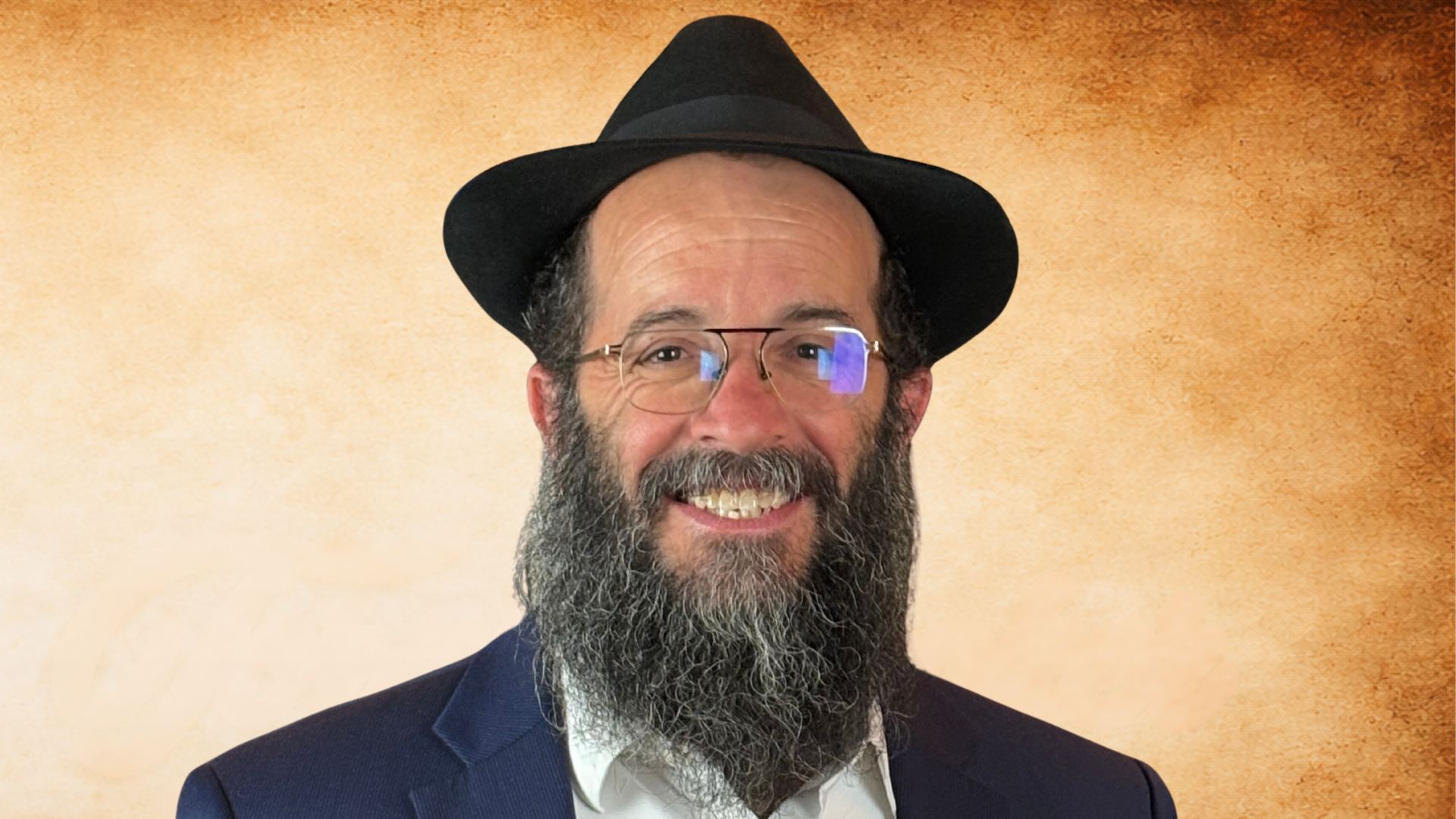
Rabbi Mendy Deitsch is a Brooklyn native who grew up in Crown Heights and was deeply connected to the Lubavitcher Rebbe. Since moving to Chandler, Arizona, in 1997, Rabbi Deitsch has played a central role in building and strengthening Jewish life in the East Valley. Under his leadership and involvement, the community has grown from having very little Jewish infrastructure into a vibrant Jewish center serving families from diverse backgrounds, with educational programs including a preschool, day school, and Sunday school.
Rabbi Deitsch serves as Rabbi of Chabad of the East Valley and Director of the Pollack Chabad Center for Jewish Life. He has also traveled extensively, teaching Kabbalah and Jewish Mysticism to Jewish communities in Bangkok, Singapore, Central America, Russia, and Australia. His work focuses on bringing the depth, beauty, and relevance of Torah and Jewish life to Jews from all backgrounds.