Understanding Satan: Seeing Through the Darkness
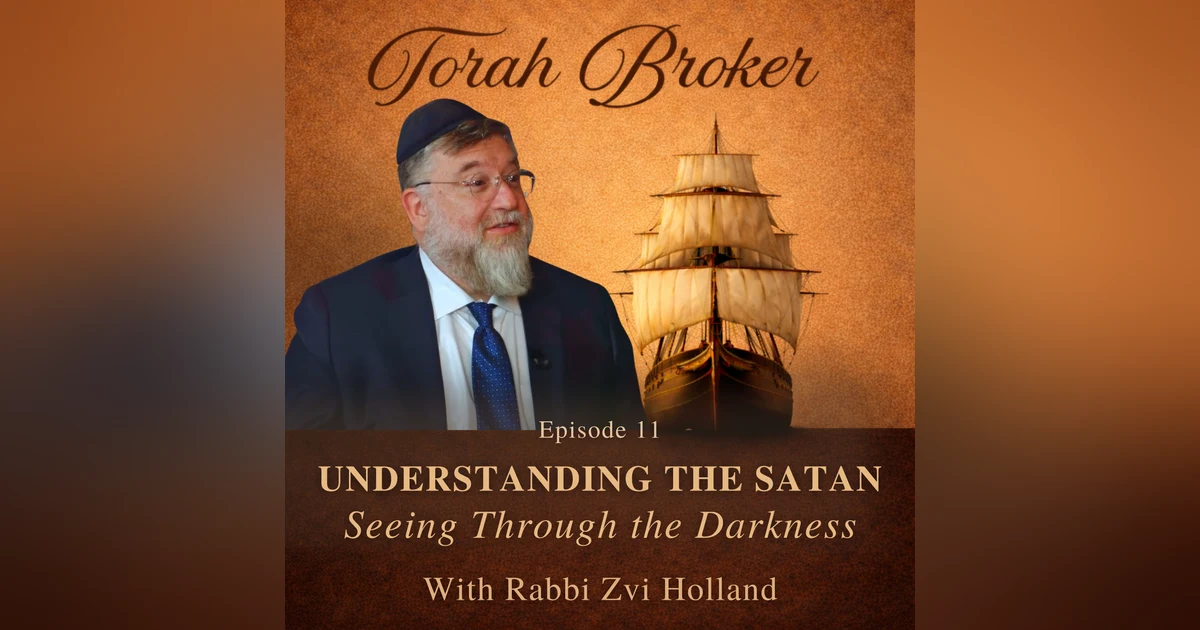


In this episode of The Torah Broker Podcast, Rabbi Zvi Holland joins Torah Broker Sanford Burstyn for a powerful conversation about the battle between light and darkness and the forces that shape the choices we make every day. Pronunciation note: The Hebrew word Satan (שָׂטָן) is pronounced “sah-TAHN,” with an “ah” sound, rather than the English pronunciation “SAY-tan.” In this episode, .Rabbi Holland offers a fascinating Jewish perspective on the Satan, explaining how temptation, distraction, social pressure, and materialism pull us away from our true purpose. Through sharp insights, humor, and memorable stories, they explore why so many of us simply follow the crowd and what it takes to step off the treadmill.
Subscribe for more episodes ➤ /@torahbroker
Rabbi Zvi Holland is Director of Special Projects and a Kashrus Administrator at STAR-K Kosher Certification, where he specializes in practical halacha and contemporary kashrus, including the complex world of kosher meat production. Before moving to Baltimore, Rabbi Holland spent 12 years in Phoenix as the founding Rosh Kollel of the Phoenix Community Kollel, helping build Phoenix into a thriving Torah community. He has extensive experience in Torah education, community leadership, and practical halachic issues, and is known for making complex Torah concepts accessible and engaging.
Watch Rabbi Holland’s The Meat We Eat series:
The Meat We Eat — STAR-K
The Torah Broker — Episode 11
00:00 - 00:28
Rabbi Zvi Holland:
There is no such thing as true evil, true evil, something we can choose to do, but it doesn't really exist in the sense that there is no power other than the goodness of Hashem. There's no God is all good. So where's the bad? Where's this, you know, stuff you're talking about? Where is it from?
00:28 - 00:29
Rabbi Zvi Holland:
Hello.
00:29 - 00:50
Sanford:
And welcome to episode number 11 of The Torah Broker. This is number four in the second season. Today, we're happy to have Rabbi Zvi Holland with us. Rabbi Holland is from Baltimore, a previous resident of Arizona. With that, I'm going to do Rabbi Holland.
00:50 - 01:14
Rabbi Zvi Holland:
My name is Zvi Holland. I had the pleasure of living in Phoenix from 2000 to 2012. I was raised in Scranton, Pennsylvania. I studied in Israel, and my favorite activities growing up was where I know horseback riding and watching television. I went to yeshiva. I was in for like 16 years. Then I moved to Phoenix and I was here.
01:14 - 01:34
Rabbi Zvi Holland:
I lived here for 12 years. I worked as the head of the kollel out here. And for the last 14 years I've been working in Star-K Kosher Certification in Baltimore, Maryland, where I am the director of special projects. I handled a portfolio of kosher certification all over the world. I get involved in all kinds of interesting things. I travel all over the place and I meet a lot of special people.
01:35 - 01:56
Sanford:
Well, thank you, Rabbi. This story of the two goats and one God commands we give to the Kohen, and he puts it on the altar and serves it up as a sacrifice to God on our behalf. And the second one, God says to push off the cliff and to give to the Satan, the devil.
01:56 - 02:01
Rabbi Zvi Holland:
Well, so give it up, okay.
02:01 - 02:05
Sanford:
This is essentially Satan, though.
02:05 - 02:28
Rabbi Zvi Holland:
There's a lot of talk about what it is. There's, you know, the open and there's a you could jump into that pool. You'll never hit the bottom. A central part of this thing. You describe this whole complicated ceremony that we don't have anymore. That was in the Temple because the Temple was destroyed. The question really is, everybody knows about Yom Kippur, okay?
02:28 - 02:48
Rabbi Zvi Holland:
Or almost everybody knows about Yom Kippur. Sandy Koufax gets credit for it, right? There's actually a Jewish kid. My my, my 14 year old told me that there's a Jewish kid, a religious boy who is playing for Division I. He was drafted. He was offered a scholarship. Division I basketball now. And he's a kid who plays with a yarmulke.
02:48 - 03:08
Rabbi Zvi Holland:
And he said he's playing for some backwater college because he wouldn't play on Shabbos and Division I wouldn't take him. I think they're crazy. I think they're crazy. I think that the the, the, you know, the excitement of having something different, you know, not just a bunch of seven footers. I mean, he's six seven, he's a Jewish kid, six seven.
03:08 - 03:26
Rabbi Zvi Holland:
It's like nine feet tall for a Jewish kid. He's got a little brother, six nine. But, you know, but everybody knows about him. And, so much so that when I was growing up, we had some relatives who, you know, they weren't that religious, but they they they went to shul on Yom Kippur, but they always liked to scalp the tickets.
03:26 - 03:48
Rabbi Zvi Holland:
So, Yom Kippur, is this day okay? Is this day is a special day. It's like a laundromat. It says Kiva has on this day, this day, this day that God, you know, you know, cleans us up. And there's a whole discussion in the, in the, in the whether you have to even try to like, repent or it just, you know, it's just like a reset button.
03:48 - 03:50
Sanford:
I want to talk more about the devil.
03:50 - 03:50
Rabbi Zvi Holland:
Okay.
03:50 - 04:17
Sanford:
And my understanding is, is that he's unusual in the sense that the classic angel, which the devil is only has one job, right? Our version of the Satan, as I understand it, please correct me, is that he has three jobs. One is to tempt us to is to prosecute us for the violations, and three is to execute the punishment.
04:17 - 04:20
Rabbi Zvi Holland:
And it's all the same thing. And and I'll explain.
04:20 - 04:21
Sanford:
Wow.
04:21 - 04:41
Rabbi Zvi Holland:
There we go. I'll explain. It's all the same thing. I'll explain because we have a totally different version than, you know, let's say some of some of our sister religions. There is no such thing as true evil, true evil, something we can choose to do, but it doesn't really exist in the sense that there is no power other than the goodness of Hashem.
04:41 - 05:02
Rabbi Zvi Holland:
There's no God is all good. So where's the bad? Where's this, you know, stuff you're talking about? Where is it from? It's the absence of God. The Rambam says, is I didn't make it up right. It's the absence of God, okay? It's a cloak. It's darkness. It's separation from God. The more separated you get from God, the more separated get from the reverence of God of a sham.
05:02 - 05:21
Rabbi Zvi Holland:
Right. So then you could do aveirot. You could be tempted by things, right? And you could just you you get separated enough. You just cease to exist. Because everything we have, our library life comes from God. Even when we do the and the says, God is so loving like a parent. Anybody who doesn't have kids is a hard time and I apologize.
05:22 - 05:37
Rabbi Zvi Holland:
It's hard to understand this, but when you love something so much, you'll even allow it. You'll like give it an allowance to rebel against you. Like, right? You know, like you'll you'll be there when your kid steals the car in the middle of the night to go party with his friends, and he's not supposed to be going out, right?
05:37 - 05:54
Rabbi Zvi Holland:
You say? I want to make sure that he had a full tank of gas, you know, and Hashem does that for us, right? So this Satan that you have this something that you're talking about, the devil or whatever you want to call them, right? Right is the angel of evil is just darkness. It's separate, separating us from God.
05:54 - 06:12
Rabbi Zvi Holland:
Absence of God. The more absent, the worse things happen. And then we attempted to do things that are, you know, obviously bad. Now, obviously bad can be a lot of things. Okay. There's a lot of obvious bad things, you know, stealing, killing all kinds of stuff. Right? We could justify anything. Right. And then there are things that we, the Torah tells us are bad, but, you know, society tells us are good.
06:12 - 06:35
Rabbi Zvi Holland:
But hey, let me tell you, the only reason why society thinks they're good is because society thinks they're good. Because the Satan is hiding God from them. That is the Satan. He's he's closing everybody's eyes. He's looking at it and not seeing it. It's the same thing. Like people who, you know, like we all struggle. I mean, I'm not I'm I'm not a I'm not a, you know, a size 32 slim.
06:35 - 06:52
Rabbi Zvi Holland:
Right. So you know, I didn't I didn't gain weight by accident. I had to eat to gain that weight, right. That's the Satan saying, hey, you know, it tastes good. Eat it. Right. It's just bad habits. It's just bad habits, you know? And as we get older, we get smarter. And, you know, thank God I'm moving in the right direction.
06:52 - 07:06
Rabbi Zvi Holland:
But, you know, there are things that if they're black and white and they're simple, there would be no choice. There would be no question if we didn't have a Satan, if we didn't have something to hide God from us, there would be no challenge in life, right? We would always make the right choices.
07:07 - 07:36
Sanford:
Recently, I came to the conclusion that some people, and I'm not sure what happens to them that gets them in this place where many of the decisions are about Coke, Pepsi and and Honda. What am I going to have? It's not about maybe more thoughtful things where the emotions are held at bay and the decisions are based on the facts.
07:37 - 07:53
Rabbi Zvi Holland:
Well, let me ask you a question. So God created the world. There's a very good plan. It was soon. If he's got you know, he does it right. So tell me something. Why are there emotions? Why isn't everything just some dry intellectual exercise?
07:53 - 07:57
Sanford:
I certainly there's a place for emotion. God gave us emotion. But.
07:57 - 08:00
Rabbi Zvi Holland:
But what's the place?
08:00 - 08:03
Sanford:
I, I don't know to you. Sure.
08:03 - 08:09
Rabbi Zvi Holland:
Tell me. Motions motivate us. It's a balance, you see.
08:09 - 08:10
Sanford:
Or demotivated?
08:10 - 08:35
Rabbi Zvi Holland:
Correct. Correct. Emotions give us a feeling that help us determine how much energy we're going to put into the things that we decide to do one way or another. So if we let the emotions make the decision, we did them without brains, right? If you let emotions decide whether you're going to go run in front of a speeding car, well, you might make a bad choice, right?
08:35 - 08:50
Rabbi Zvi Holland:
That might intellectually be a bad choice, because the Torah tells us you're not supposed to kill yourself. And it's quite dangerous to run in front of a speeding car. But if you're some that you're motivated for some reason to run in front of us, even if you're not trying to get hit by the car, you don't want to take a risk or something, or you want to.
08:50 - 09:08
Rabbi Zvi Holland:
You're embarrassed or you want to show off or whatever, whatever reason it might be that you do something. If it's not, if you're not using your mind, if not, we call it your that's your wisdom. Then, you know, you let your emotions control your emotions. Your mind is supposed to control, and your emotions are both supposed to motivate or demotivate.
09:08 - 09:19
Sanford:
These decisions are everywhere. What time do you get out of bed? Am I going to take a shower? Do I need to shave? What am I going to? Where am I going to eat?
09:19 - 09:22
Rabbi Zvi Holland:
Well, that's and that's that's that's quite true.
09:22 - 09:33
Sanford:
But you can you can go to the airport, you can go to the mall, you can go anywhere and look at people and see in many cases the residue of those decisions.
09:33 - 09:57
Rabbi Zvi Holland:
And I would say that I would say that the vast majority of people, the vast majority of people out there, it's my impression that they're not really thinking carefully about the choices that they make. A lot of them are motivated by things that they're taught, like it's like a herd mentality, like, you know, people, a lot of people are programmed that, you know, we should be smarter to have a nicer car.
09:57 - 10:16
Rabbi Zvi Holland:
We should be starting to have a nicer house. We should be aspiring to own a second home. We should be going on. I mean, I mean, how many people, how many people have had the following conversation? I took my family to Disney World. Have you ever been to Disney World? Know what's wrong with you? Meaning they might not say what's wrong with you, but everybody goes to Disney World.
10:16 - 10:34
Rabbi Zvi Holland:
Why? I have to tell you, I'm embarrassed to say it because it's I fell for it. I went to Disney World, I think twice. Okay. My parents took me to Disney World when I was little. Aline. All day. You spent tons of money and you do nothing there. It makes no sense. But everybody does it because they don't think about it.
10:34 - 10:59
Rabbi Zvi Holland:
And the whole the our whole world is full of that. The people who spend time thinking deeply and carefully about the choices that they make are totally different class of people. They're not always, you know, they're not always like mega successful or mega wealthy or but they are they are much more real people. They've they've fulfilled the reason they've actualized themselves.
10:59 - 11:01
Rabbi Zvi Holland:
They've done what God wants them in the world.
11:01 - 11:21
Sanford:
For these notions of did you did you go to the play? Did you did you go to Disney? Did you get the car? This these are all rooted in this element of exchanging social currency, because it's implicit in the question when you ask, did you have you been to Disney? It's like, I must have just got back. Right?
11:21 - 11:24
Rabbi Zvi Holland:
Okay. So how do you beat that? How do you beat that?
11:24 - 12:05
Sanford:
Rabbi I'm surprised that's such an easy pitch to hit. We all have a path. I was listening to Charlie Munger, who is Warren Buffett's partner. So on this clip, he just talks about living like you're poor. I think that might even be in the title of it. He talks about having a lesser watch and a lesser car and, and and this is a man who obviously could have ten of any one of those items or 100 x.
12:05 - 12:06
Rabbi Zvi Holland:
1000.
12:06 - 12:17
Sanford:
And wouldn't miss it in his financial statement. And yet he talks about, modesty and managing yourself. It's like.
12:17 - 12:18
Rabbi Zvi Holland:
But how.
12:18 - 12:18
Sanford:
Do you counter it?
12:19 - 12:37
Rabbi Zvi Holland:
How do you how do you overcome, you know, the promises us that if we spend, you know, we hang around people, it'll have an impact for good and for bad. So there's a simple way to beat it. The Ba'alei Mussar had this idea. I don't know that we have to actualize it. Like, you know, in a, you know, super weird way.
12:37 - 13:08
Rabbi Zvi Holland:
But the concept of to be alone means that you build a wall around yourself to some extent and protect yourself from being controlled by the behavior of the herd. Yes, that's that's extreme. That's extremely, extremely important. That's extremely. If you could do that, if you could do that, anybody who takes that total advice, it takes a total of and makes a decision not to allow all the people around them to decide who they want to be.
13:08 - 13:34
Rabbi Zvi Holland:
Remember, this happens to anybody. This can happen to does actually doesn't really matter. You know what society you're from. You could be from anywhere you if you allow those inputs to, to to determine what you know, what you want to eat, where you want to live, who you want to marry, how you treat your children, all kinds of how you dress.
13:34 - 13:40
Rabbi Zvi Holland:
And you know, you know, to me that's like so sad. It's almost. It's almost like you're an animal.
13:40 - 13:44
Sanford:
It's a volume control, but I, I think,
13:44 - 13:50
Rabbi Zvi Holland:
But think about it. You turn all the volume off, you're nothing now. You're all alone. Who am I?
13:50 - 14:11
Sanford:
No, no. What matters? No no no no, I don't think you turn it all the way down. I think you lower it. And I think we've both seen this in many situations where we'd be in a situation and somebody might say, like, did you eat at that restaurant or did you go to Disney World or something? Which is the lead in of Let's Compete on who's doing what?
14:11 - 14:47
Sanford:
Because I'm bringing a big game over here. Let's see. Right, right. And I think we've all seen situations where someone will just in a very calm way, doesn't live. That lifestyle isn't moved by the, the, the trip or the car or anything. And there's a certain peace that comes off of that person, the contentment, satisfaction. In my line of work, in my business, people are exchanging the currency quite a lot.
14:48 - 15:15
Sanford:
I was being this morning and you pull up and you see 70, $80,000 cars in the parking lot, right? And the interesting thing is we kind of, we know kind of more or less who the players are and the market and stuff and, and but anyways, this is as Charlie Munger says, this is getting on a treadmill because you get the nicer house.
15:15 - 15:43
Sanford:
No problem. What's a cause should operate it got more landscape. You got more pool, got more air conditioning. It's not buying the asset. Everybody understands that the car is the same thing. You want to get a tune up for a Bugatti and you see the social currency everywhere. Like how if a lady has a nice ring on, you know how the hand moves, or if there's a nice bag or a this is the city.
15:43 - 16:11
Sanford:
And I don't think people who don't live in that world are resentful in any way. I think we all sort of pick a path as to how we want to live, what we want to do, and we do it. This, this notion of every coach will tell you this. Comparing is death. Death. And I happen to be a fan of this Charlie Munger.
16:11 - 16:28
Sanford:
And he's got another video that that talks about that. He talks about, living in, in the world of other people with net worth like him and how they live and are they happy and what do they do? How do they express them?
16:28 - 16:49
Rabbi Zvi Holland:
Let me tell you a story about a rabbi. He was very, very wealthy before he became a rabbi. His name was Rabbi Yosef Yosef Horowitz. And I think he got he got to a point where he realized, like, there's he's got to do something and he got to do something really radical. I wouldn't recommend this for anybody.
16:49 - 17:05
Rabbi Zvi Holland:
But he bricked himself up in a house, and he lived inside the house. And the only contact he had with people is he had people here, like a little window where the garbage went out and the food went in the water, whatever he needed. And, you know, he just he just detoxed. He actually became a very, very influential person.
17:05 - 17:29
Rabbi Zvi Holland:
He opened up a giant network. She was in prewar and interwar Europe. He was known as the Alter of Novardok. You could see how your world could see God in the world around you. And the only way to do it, it's unfortunate, right? Because, you know, we're all different kinds of people, right? And, you know, there's a million different, you know, you know, I mean, the world is so full of wisdom and, you know, amazing things.
17:29 - 17:49
Rabbi Zvi Holland:
And, you know, it's just it's just a giant place with all kinds of complicated things going on that nobody could figure out. But there's just one thing. There's only one. This there's one thing. And it's really true. We have to. We have to crack the books. We have to take a peek at the Torah. Yes. I guess sometimes you can get somebody to tell it to you if you don't want to read it, but you need to study it.
17:49 - 17:52
Rabbi Zvi Holland:
Because if you could see God in the world, the whole world looks completely different.
17:52 - 18:14
Sanford:
Thank you. Rabbi, I've been what the Torah Broker is really trying to provide to the audience. Is this understanding that the Torah is the operating manual for life for all of our lives? So when you have a question like any of these, how do I decide to do this? You know, how much work should I do? Should I take this job?
18:14 - 18:44
Sanford:
Should I move here? Should I send my kid to this school? Should I pray over here? You know, how do I answer my wife? It's all in the Torah. Now, what's interesting is that most of us just can't pick up the Torah and get it right with the commentary in the make and the Hebrew. No, no, no, this is where we we we just Google traditional rabbi near me, and you call him up and he goes, hey, why don't you come by night?
18:44 - 19:01
Sanford:
We got a class at seven, lasts 45 minutes. I can talk to you after. And I think you're going to enjoy the class the class is about. And the person there and goes, I need that. Yeah, coming for that. And he's so on fire. After 45 minutes, he forgets what he wanted to talk to the rabbi about because he's busy making notes about the 45 minutes.
19:01 - 19:17
Rabbi Zvi Holland:
We live in an incredible time. I mean, you know, 30 years ago, I would have told you you could open up the article. Chumash. You go to drive to a bookstore, call somebody up on the phone and they'll mail your book. And then it was Amazon. And now, I mean, you could open your computer and you have access to all kinds of things.
19:17 - 19:39
Rabbi Zvi Holland:
And, yeah, there's a lot of garbage. There's tons of garbage, right? But, you know, the amount of access that we have to to authentic, you know, real, you know, things. It's simple. I mean, let's say you read the Chumash, right? You're the commercial, you read, you read the novel, or you read the Rambam, right? You read the Rambam, or you read, you know, you read, you know, missiles or a million things.
19:39 - 19:40
Rabbi Zvi Holland:
There's tons of things to read, right?
19:40 - 19:54
Sanford:
The beautiful nuance when when Rabbi Holland and I used to read learn, I would have like a text like this. And the rabbi would read it upside down.
19:54 - 20:04
Sanford:
Rabbi, those are great days. Let's circle back to the Satan. It was interesting the way.
20:04 - 20:19
Rabbi Zvi Holland:
The guy he's the problem. This is what's going on. He's just. He's just got a job. Let me spend the Satan. Let me tell you where the Satan is, okay? The Satan is everywhere. He's even in the synagogue. He's in the rabbis mouth. Sometimes I'll explain how it works. Okay. Two guys go to shul. The Beis Hamikdash to.
20:19 - 20:40
Rabbi Zvi Holland:
Sure, wherever it is. And they go to a class, right? And they open a book, okay? Or they'll listen to the rabbi, whatever it might be. They go, they study some Torah, and there's these two guys are maybe learning the exact same thing. Maybe they're maybe the twin brothers. Okay. And one of them is like, whoa, Zach. He married.
20:40 - 21:00
Rabbi Zvi Holland:
And like the rabbi, say, NASA. Look, this it feels to him like, you know, it's like the elixir of life, right? And the other one is low. He didn't merit for some reason. You know, something got in the way. Something he let something got in the way. Obviously, if you have a choice, God lets us. God, you just have to open a tiny keyhole, a pinhole, and God will let us through.
21:00 - 21:21
Rabbi Zvi Holland:
But this guy, you know and love us, it's like a it's like poison for him, right? And this happens all the time. This is this is the thing we have to identify when it's baloney. We have to identify that there's darkness. We have to throw light on the darkness. We have to run away from the stupidity. Okay? And I got to tell you, you know, some things are hard to tell, but there's there's a lot of things everybody knows, right?
21:21 - 21:43
Rabbi Zvi Holland:
Men, women, children we all know. Okay. Meanness, nastiness. Right. Running after some kind of base instinct, animalistic, uncontrollable instinct that we have. You know, I was talking to a young guy. Okay. He's got a good job. He's got everything going for him. You know, he's got a young family. And he was telling me that, you know, the rabbi in his shul says, you know, you got to come study with us at night, you know, what are you doing at night?
21:44 - 21:56
Rabbi Zvi Holland:
No, no, I'm busy, busy, busy. I'm tired, I'm busy. I'm busy and tired, you know, whatever that is. Right? And, you know, I like, you know, I did this and they said, no, you got to come. And he keeps on conversation. You know, I really like you to come. And finally, one day, he starts to come. The rabbi was so excited.
21:56 - 22:13
Rabbi Zvi Holland:
He starts to come to the to the, you know, all the time to learn. And I said to him, I said, okay, fine, that's a great story. What were you doing, man? What what was the barrier? Tell me what the barrier was. Right. And I really enjoy this because I learned something. And he's like, I don't know, scrolling around on my phone, you're like, what were you doing?
22:13 - 22:33
Rabbi Zvi Holland:
Like looking at WhatsApp statuses. Look at YouTube or something, you know, and you know that everybody, we all have that something. So, you know, guys like you and me. So we could just be tired and say, it's not the Satan, we're just old. That's our excuse. But it's not true. Because if you look around or people that are that can still plug away and do.
22:33 - 22:39
Sanford:
Stuff decisions, we make the decision if we're going to stay in the light or in the dark, right.
22:39 - 23:00
Rabbi Zvi Holland:
But but we have to know that there's an active resistance. You talk about the resistance with exercise before before we started the podcast. Right, right. That there's some natural resistance that you have to fight, you know, to, to, to, to keep yourself limber, to keep yourself healthy. That's the same thing spiritually. Right. That that there's a there's a if you're not pushing against it, it'll it'll swallow you up.
23:00 - 23:18
Rabbi Zvi Holland:
And we see this all the time. You see people who had wonderful, incredible lives. And, you know, for some reason, at some point in their life could be when, you know, something takes a turn or whatever, for whatever reason. Sometimes it's when they retire, right? That happens. Also, they just get involved with darkness. They get involved with darkness.
23:18 - 23:30
Rabbi Zvi Holland:
They don't know how to make good choices. They get lost. And it's hard. And I feel I'm not judging them because, you know, I don't you know, we can't judge anybody. I wasn't in their place. But people get involved with darkness. They don't they don't they don't make the right choices.
23:30 - 23:52
Sanford:
I don't think I would say they get there's a gravity that takes us there today. I don't I think that the, the element of free will is not like it was when we were kids running around in the street that the world is. There's a complete paradigm shift. Whenever you see there's.
23:52 - 24:05
Rabbi Zvi Holland:
A lot of noise, there's a lot of noise. That's why people want to live on a farm. I talked to a guy today who lives in southeastern Kentucky on a farm, and I didn't ask him, hey, David, why do you live on a farm? I know why he lives on a farm. He lives in a farm because he doesn't want the noise.
24:05 - 24:19
Rabbi Zvi Holland:
Now, I'm not suggesting everybody move to a farm, but in the world we live in, in the world we live in. Got you say, turn down the volume. And I agree with you. You gotta turn the volume rose. You'll never, ever hear anything else. But we got to turn on the lights. And it's really hard to make those decisions.
24:19 - 24:22
Rabbi Zvi Holland:
All of us. It's not easy. I'm not preaching to anybody.
24:22 - 24:38
Sanford:
For Jews today. It's it's it's it's this is where we're at a I think and this isn't necessarily my thought exclusively in talking with other people smarter than myself where.
24:38 - 24:52
Sanford:
We're really being tested now with our Jewish identity. I mean, if you looked at pre Holocaust years where Jews were saying that Berlin was the New Jerusalem, if that.
24:52 - 24:53
Rabbi Zvi Holland:
It's a simple thing.
24:53 - 25:00
Sanford:
If, if, if that isn't moving from the light to the dark, that.
25:00 - 25:23
Rabbi Zvi Holland:
It's a simple thing. Nobody likes to be uncomfortable. You know, Jews were oppressed in the in recent history. We were oppressed. And nobody wants to be oppressed. So how do you solve the problem? Become something else? It was impossible. It was impossible to become something else. Right? You know, we came to America and it became possible to become something else.
25:23 - 25:25
Rabbi Zvi Holland:
We thought it became possible.
25:25 - 25:35
Sanford:
We see in Arizona, we see people moving here from somewhere else with a legacy and a Jewish community and their family. And they come here and they vanish.
25:35 - 25:59
Rabbi Zvi Holland:
Yes. But unfortunately, the reality is, is that looking at things that go on in the world today, you know, where, you know, we have completely, you know, just unfortunately, just like it happened in Germany, you know, you had kids in Columbia University who did not identify as Jewish, but they were identified as Jews, and they had heard themselves and barricaded themselves in a lab after October 7.
26:00 - 26:17
Rabbi Zvi Holland:
Because. Because why? Because a bunch of Jews were massacred in Israel and Israel wanted to get them back. And what does it have to do with a bunch of kids in New York City? Nothing. Nothing, nothing. And how could we blame it on them? Talk about collective punishment. Talk about racism. Talk about bigotry. Do you know what's crazy?
26:17 - 26:35
Rabbi Zvi Holland:
We live in America. Did you ever fill out an application? I fill out applications all the time. An application. They want to know if I'm in a minority. And I've looked on every application. You know what? Minority is never listed. They're Jewish. We're not a minority. We're not a minority. And it's a really interesting thing. It's a really, really interesting thing.
26:35 - 26:52
Rabbi Zvi Holland:
But we are the victims very often of bigotry and hatred. So to me, I'm cool with it because I want to be Jewish. I don't want to not be Jewish. But, you know, it's a wake up call for somebody who thought they weren't Jewish. And all of a sudden to find that everybody else thinks they are. So that's that's one of the things that this time, this time does for us.
26:52 - 27:08
Rabbi Zvi Holland:
I mean, we're really, really lucky to live in a country like this. You know, I get around a little bit, you know, in some of the places, some of the places around the world are very, very different. I mean, you know, thank God, you know, it's not like in, you know, I don't know, pick a country in Europe when you go to shul in South America, also in a lot.
27:08 - 27:10
Sanford:
Of places of security.
27:10 - 27:24
Rabbi Zvi Holland:
You go to. What do you mean? The government, the army's there. It's not just like, okay, let's hire some guy, you know, you know, want to want a sheriff Jones graduates. Really? You know. Yeah. The army's there. They have barricades. They have. I wouldn't want to go to school in that.
27:24 - 27:26
Sanford:
Well, countries is.
27:26 - 27:27
Rabbi Zvi Holland:
I mean Italy. You go to shuls.
27:27 - 27:28
Sanford:
Like that in Italy.
27:28 - 27:31
Rabbi Zvi Holland:
Oh, yeah. A lot of France. Good part of France is like that.
27:31 - 27:34
Sanford:
Italy has people that want us that bad.
27:34 - 27:38
Rabbi Zvi Holland:
No, I don't know, but that's what the shuls look like. Wow. That's what the shuls look like. Wow.
27:38 - 27:56
Sanford:
So, Rabbi, let's get back and and put some pieces together substantively on, on this item. So it was interesting how you framed him, where the three specific tasks he performs is really just one.
27:56 - 28:23
Rabbi Zvi Holland:
Yes. Darkness, absence of God. And so it doesn't it doesn't really make sense because God's everywhere, right? Right. But what it does is it it it hampers our ability to see. And then we make without that clarity, we make the wrong choices. Because if because good and bad is a lie. It's not good and bad. It's true and false.
28:23 - 28:38
Sanford:
Is there a source in the Torah somewhere that has the Satan instructing us to give to placate some other angel with something like the Azazel exercise?
28:38 - 29:04
Rabbi Zvi Holland:
No, that's not the. Okay, so we're not trying to placate anybody. We're not placating. I know it's not what it is. It's symbolism. It's an avatar. It's it's a task, right? It's a task where we're contrasting. We're contrasting a the difference between a, a sheep that stays with God, that goes away. But and if you look, if you look I mean this now is not I don't wanna get down this rabbit hole but at the end of the podcast.
29:04 - 29:26
Rabbi Zvi Holland:
But I give everybody homework. Okay. The best in my opinion. My humble opinion, the best explanation of the Satan, which cannot be looked at. You can't only look at us. It's all contact. First of all, there's two of them. One goes out, one goes. But the best description, that whole thing you'll find in Rabbi Samson Raphael Hirsch's commentary. The commentary Rabbi Samson Hirsch.
29:26 - 29:39
Rabbi Zvi Holland:
That's where you look. And there's a lot of symbolism. Okay? You know, whatever the details are, the point is, the point is this is how we this is how we.
29:39 - 30:03
Rabbi Zvi Holland:
Come close to God. This is where we touch God, the closest moment. And that's a compare and contrast moment. Right? There's the whole avodah that we do. Sometimes it is wearing white, sometimes he's wearing gold. Right. Sometimes he, he's, he's doing things outside, sometimes he's doing the inside. It's this whole, you know, trying to get close to God, to be as close to as possible.
30:03 - 30:19
Rabbi Zvi Holland:
The Jewish people, you know, touch and the whole Beis Hamikdash is that it's we're having touches Earth. It's the closest moment we have. No, we're not to be all and end all. That's the hard part. That's a that's a hard part. We got to swallow that, right? Nobody ever conquers the world, you know. And we all know this because nobody lives forever.
30:19 - 30:36
Rabbi Zvi Holland:
Nobody. We have a job here. And then and then it's over if it's meaningful. Right. So then we got to make it make it meaningful. And if it doesn't mean anything that we shouldn't have any values. All human beings. No, especially Jews, but all human beings know that we're bigger than this. We're bigger than just talking animals. We know that.
30:36 - 30:59
Rabbi Zvi Holland:
We know that we know that there are things that are right and there are wrong. And all that is about meaning what we would want, what we would want is that moment of all the time. And that's, well, nobody's ever been there. But I would imagine if we study a little bit, let's say the words of the Rambam, that the next world, which we didn't talk about today, it's just more of that.
30:59 - 31:09
Rabbi Zvi Holland:
It's more of him. It's closer to and that and and the hell you know the devil. It's farther from. That's what it is. It's farther from G-d.
31:09 - 31:32
Sanford:
I thank you for coming in. I envisioned this for some time now. Thank you very much. This has been episode 11, which is number four in the second season. To see more about the Torah Broker, go to Torah Broker.com and stand by for God willing, more episodes. Thank you Rabbi.
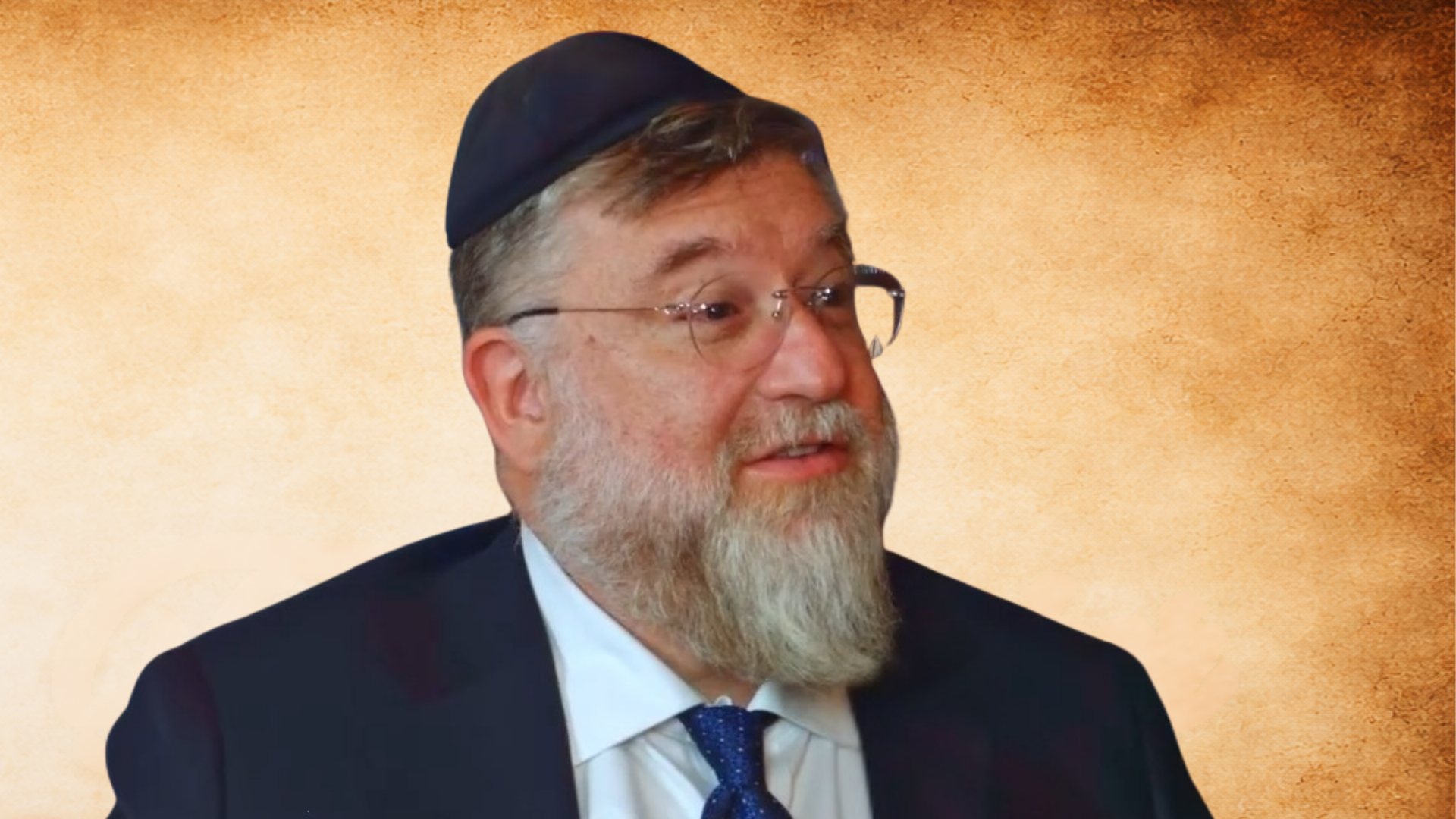
Rabbi Zvi Holland is Director of Special Projects and a Kashrus Administrator at STAR-K Kosher Certification, where he specializes in practical halacha and contemporary kashrus, including the complex world of kosher meat production. Before moving to Baltimore, Rabbi Holland spent 12 years in Phoenix as the founding Rosh Kollel of the Phoenix Community Kollel, helping build Phoenix into a thriving Torah community. He has extensive experience in Torah education, community leadership, and practical halachic issues, and is known for making complex Torah concepts accessible and engaging.
Watch Rabbi Holland’s The Meat We Eat series: star-k.org/Scripts/vimeo_player.php?channel=1856695&utm