Order and Honor - The Thriving Jew
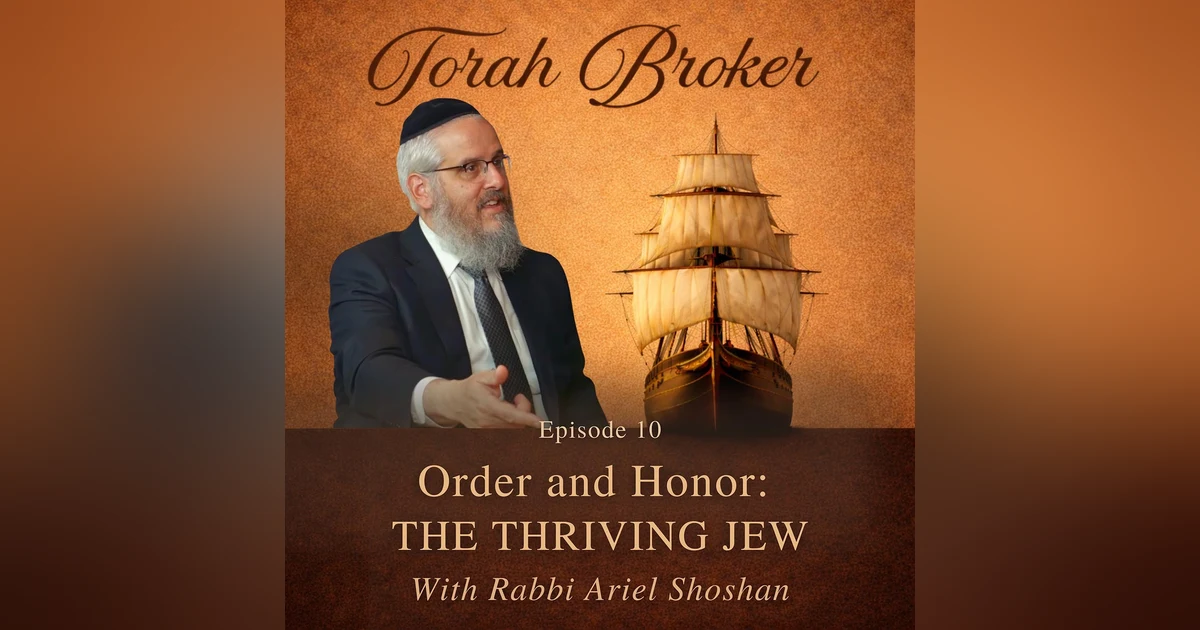


In this episode of The Torah Broker Podcast, Rabbi Shoshan joins Torah Broker Sanford Burstyn for a captivating conversation about living a life of purpose through the timeless wisdom of Torah. With remarkable eloquence, passion, and wisdom, Rabbi Shoshan weaves together unforgettable stories, powerful parables, and profound Torah teachings to reveal the importance of honoring parents, respecting elders, building strong families, embracing the gift of Shabbos, and developing lasting character.
This episode is a compelling invitation to rethink what truly matters, revealing that genuine success is measured not by what we accumulate, but by the legacy we leave, the choices we make, and the eternal values we invest in.
Subscribe for more episodes ➤ /@torahbroker
Rabbi Ariel Shoshan is the founding rabbi of Ahavas Torah: The Scottsdale Torah Center, a vibrant Torah community that has brought passionate, authentic, and welcoming Judaism to thousands throughout the Greater Phoenix area. Originally from Chicago, Rabbi Shoshan served as Director of the Phoenix Community Kollel before he and his wife, Ayala, founded Ahavas Torah in 2004. He has played a leading role in strengthening Jewish life across Arizona through initiatives including the Valley Eruv Project and the Esformes Family Mikvah. Rabbi Shoshan is a member of the Conference of Synagogue Rabbonim of Agudath Israel of America and serves as a volunteer chaplain for both the Scottsdale Police Department and the United States Secret Service. His popular weekly Nesivos Shalom shiur on All Parsha is a taste of the fire that warms the Scottsdale community and its thousands of annual visitors.
Learn more from Rabbi Shoshan's weekly Torah insights:
https://allparsha.org/authors/134429
The Torah Broker: Episode 10
Season 2, Episode 3
Guest: Rabbi Ariel Shoshan
Transcript
[00:00:00] Rabbi Shoshan: There's a fox, and the fox is desperate to get into the vineyard. He just sees the grapes there, and he just wants so bad. So ultimately he realizes that there's a little hole. But at one point in the fence and near the bottom. If I starve myself, I'll get thin enough to get through the hole. And he takes the grapes and he's eating them.
[00:00:20] Rabbi Shoshan: Oh, and he's so happy the fox is eating this smart aleck. He's eating all the grapes. Oh, oh! It falls asleep. He eats it more tomorrow. Falls asleep. Oh, he's so happy. He's got a problem. He can't get out. He goes back to the vents. He can't get out. So what does he do? Starves himself again. So what should he have done?
[00:00:52] Sanford: Welcome to episode ten of The Torah Broker. This is number three in the second season. We have with us today an illustrious guest and rabbi Shoshan, who is the rabbi and founder of of Ahavas Torah in Scottsdale. And with that, I'm going to allow the rabbi to do some stuff. Rabbi, thank you very much for being a guest on the Torah Broker today.
[00:01:16] Rabbi Shoshan: I'm thrilled to be here, and I'm very thankful for our many, many years relationship. Although I lived here in town for almost 24 years, we've been friends since I started visiting here over 30 years ago, and I'm real thrilled to be here as well. Thank you. So what can I tell you?
[00:01:39] Rabbi Shoshan: I've been here for 24 years. I come from Chicago originally. If there are people here who are watching there from Phoenix and there probably even before that, from Chicago, many of them. And I grew up in a modern Orthodox home. I had fabulous educational experiences that ultimately led me to Israel in the tradition of those modern Orthodox type upbringings.
[00:02:00] Rabbi Shoshan: Spent a year and a half in Yeshiva Hotel, and then life was took two amazing turns. I planned on going coming back to the university, but I ended up going to Yeshiva in Baltimore for two months in Arizona, but stayed for seven and a half years and my educational plans changed. And then at the at the age of 27, married for about three and a half years.
[00:02:27] Rabbi Shoshan: At that point, my wife and I moved to Phoenix with our two little daughters, and I had the honor of being the director of the Phoenix Community Kollel for five years. But after the first two of those five years, we moved to Scottsdale and we started a show. There was lots of there were fabulous things going on there at that time.
[00:02:50] Rabbi Shoshan: The community was was exploding across the valley in terms of observance and as an organization. We felt there was a need for something in Scottsdale, and we were blessed to to be at the helm of that pretty quickly.
[00:03:03] Sanford: Very nice. I remember those early days of the call. I spoke to my home last week, and it changed the whole dynamic of Torah and Judaism in Arizona, from the lowest level to the highest.
[00:03:24] Rabbi Shoshan: And it was a partnership. It was a partnership of those young rebels, but it was really profoundly a partnership with guys like you. You know, this is the Torah broker, but we we were brokering Torah together, you know, 23 and 24 years ago. Right. I used to say about the Cole that we were in the Hebrew school rehab business, you know, people who had had bad Hebrew school experiences could get access to Torah from our years of learning.
[00:03:52] Rabbi Shoshan: And you made that happen to other a lot of other people. It was it was a very exciting time.
[00:03:56] Sanford: I thought about Irving a long time. Thanks for introducing that. And it was like, what would you like to talk about today?
[00:04:06] Rabbi Shoshan: You know, as I understand it, you're bringing ideas to the wider audience, and I've seen some of the episodes of what you've done. You know, you have had fabulous, fabulous speakers, rabbis here in the community. I'm pretty confident that you'll probably have rabbis from elsewhere also pretty soon. And people start to see more of this and see what you can do.
[00:04:28] Rabbi Shoshan: And so when we were just kind of talking about what can we share with people, I had the following thought come through my mind. And I think it's very applicable to men and women. It's applicable to fathers and mothers, to children, grandparents and and and employers and employees and all kinds of people in relationships. So it's what I'm going to share with you is built on a little bit of a technical point, but I think it'll be easily understood to the to the viewer.
[00:04:59] Rabbi Shoshan: We are familiar with the fact that the Ten Commandments says.
[00:05:03] Rabbi Shoshan: Honor your father and your mother. The Talmud and condition says that.
[00:05:10] Rabbi Shoshan: That honor your father and your mother is very similar to the to the verse honor God from what you have. And there the Talmud says that God equated the honor of parents to his own honor.
[00:05:28] Sanford: Well.
[00:05:28] Rabbi Shoshan: And it continues by saying, get this. When I see when a when a son honors his mother and his father, and it says son, but it could be daughter, it's the same idea when a son honors his father and his mother, Marla alum Dorothy Benham. I view it as though I lived amongst them, and they honored me. That's a beautiful idea.
[00:05:54] Rabbi Shoshan: Left alone, that is a beautiful idea, God says. I view it as though they honored me when when he honors his parents. But there's a technical point that's really important, which is that there's a pronoun disagreement in this statement. It should say, when a son honors his mother and his father, I view it as though I lived amongst them, and he honored me.
[00:06:15] Rabbi Shoshan: When he does the act of honor for parents, I view it as though he honored me, because that would be, he equates honoring parents to honoring the Almighty. But he doesn't say that. It says when son honors his father and his mother, I view it as though I lived amongst them, and they honored me. They never, and it must mean all of them.
[00:06:39] Sanford: The parents and the child.
[00:06:41] Rabbi Shoshan: Right, son? Does an act of honor brings his father or water? A lot of people are not aware of what honoring parents even is. I think it's just being a nice boy when you're nine. Honoring parents is something that's primarily done by people who are in their 40s and 50s, making sure that their parents have all their needs, going to the doctor's appointments, lifting things up, getting back to their house to take down the Pesach stuff or put it away, you know, or saying, mom, why should you go take your car in for that service?
[00:07:08] Rabbi Shoshan: I got it, just give me the keys. Right. Okay. Pick you up in the airport. Here's a question for thought that people don't think about. Your parents are coming in at the same hour that you're. That your adult children are coming in. Who do you pick up at the airport? I think the American experience has been my parents can take a cab, but I have to show my children that I care about them.
[00:07:28] Rabbi Shoshan: Right. You know, but honoring is going and doing for your parents. So the son does something for his parents, and God views it as though they honored me. And here's my understanding of it. It means that all three of them honored me, because what the Almighty wants is parents to teach their children the correct order of things, and parents to be honorable.
[00:07:51] Rabbi Shoshan: And so when there's an act of honor, the Almighty has narcos, takes pleasure in all three of them. Look at how beautiful listeners and it puts the world in the right order. Order, I think, is something that in today's day and age, even within our own community, is so challenging to find. You know, there's an opportunity to do this or watch that.
[00:08:16] Rabbi Shoshan: There's an opportunity to consume from this restaurant and then that restaurant and then and then even the holy spaces go to that show. And then tomorrow this schedule works better for me. And this is a shorter walk for me. And I have my classes around my I or on my, my phone, so I'll just fit it in whenever it fits in.
[00:08:37] Rabbi Shoshan: But I could go on and on about how the Torah accentuates and the value of of something being set set place, set time, set people. And that is highly, highly nourishing to a good life on a lot of levels.
[00:08:58] Sanford: You know, I had a someone I know one of his sons was teenage and he was struggling a little bit, pushing back with his father in a way that might have been considered, maybe not so honorable. And so the father took the son into his library, and he pulled out the show on what it says about honoring parents.
[00:09:31] Sanford: And he asked his son to read it. And he said the son was very obedient. He said, down and he read it. And the son came out and the father said, do we have to talk about son said, no. He told me that it was a significant and long lasting impact.
[00:09:57] Rabbi Shoshan: That story is very powerful, and I think it's also very specific. You know, I was listening to some of your Torah broker work, and my friend Rabbi Olu spoke about how each child is different, one from the other. That story, which is so sweet in the father's calm, in his clarity, in his humility, in his sourcing what he wants to source the story that was really probably will work with some children and not with others.
[00:10:30] Rabbi Shoshan: And it says a lot about both about the clarity of the father and the good son. I'll tell you some interesting. You know, my dad was much older than me. And and when I was born, he was about 42 just before, and his father was much older than him. And we had the privilege of visiting my grandparents, who were in their 80s when I was born.
[00:10:52] Rabbi Shoshan: You know, they lived in Israel. And I remember very clearly, a very impactful moment in my life is that my dad, who was not so lovely, Duffy in his in his way, we were walking to a bus stop to go from where the apartment had been in Ramat Gan, to a bus to go to be able to visit my grandparents.
[00:11:13] Rabbi Shoshan: And I was walking ahead of him.
[00:11:18] Rabbi Shoshan: Now walking ahead of him was the normal and smart way you do things from an American perspective of being probably like a 7 or 10 year old, right? This way my mom can see me this way. Everybody's gonna be safe. But my father came from a different space where if you're old enough, you get the fact that you don't walk in front of your parents.
[00:11:40] Rabbi Shoshan: Your your father is the honored one in the alignment. Okay? When I learned in yeshiva in Baltimore, the biggest immediate impact on me in Baltimore was not the learning itself, was not the content of Torah, but the honor for Torah that people were building their lives around Torah. They weren't fitting Torah into their lives. Their primary occupation of life was, as the prophet Yonah Jonas says every.
[00:12:14] Rabbi Shoshan: Year I am a Jew and my occupation as I fear the heavens, I fear the Almighty. So in Baltimore there was immense respect for Torah, and it showed itself in many, many ways. But the most beautiful element of it was I had been familiar with the idea of standing up when our rabbis pass us by. But on the second or third day that I was in the issue of in Baltimore, something that I would learn to be rare, and it was very rare.
[00:12:39] Rabbi Shoshan: But it happened then was that the Rosh Yeshiva Rabbi Yaakov Weinbergand personally like, you know, my personal connection is that ultimately, thank you God, I my my wife is his granddaughter, his unbelievable miracle of my life. But when I was just a 19 year old kid from Skokie, you know, and I was there and I was learning with my father, and there was a tremendous upheaval, like a big noise.
[00:13:05] Rabbi Shoshan: And everybody got out of there. I didn't know what was going on, but the rush had walked in from an otherwise invisible area in the room, and he was walking through the base, matters to go to his seat, and everybody rose until they rose all the way, until he got to his seat. That was something I hadn't seen yet in my life.
[00:13:22] Rabbi Shoshan: Now I see it as common, but I hadn't seen it then, and I, I honestly, I thought there was a fire at the moment that I said I thought there was a fire. Something must be going on. And what I saw then is how respect works. So in that space, we would often be in environments where the great Weinberg would give a sheer or one of our bay and would give a class, and there would be a desire to talk to him after, even as he walks home.
[00:13:49] Rabbi Shoshan: But the walking home was sort of like an asteroid. It was like there was a light in the front that was him, and there was trailing. Because you didn't walk in front of him, you walked kind of next to him. If you were the speaker to ask the questions, and others were trying to listen in. But like from further behind and and it was just very powerful.
[00:14:09] Rabbi Shoshan: It's very, very powerful. I mean, the Torah, the command to honor your parents is on the first of the two tablets. All other elements of those two tablets of the first tablet is about mitzvot commands between a man and God. So the question is obviously, what is this which is between man and man doing on tablet one should be on the second one, but the mitzvah honoring parents is between man and God, because understanding source, which is such a humble idea, to understand source is in understanding that it goes back to even an earlier source.
[00:14:44] Rabbi Shoshan: And I could really just keep talking about this idea, which I'm not going to. But this is a profound difference between Western civilization and Torah tradition, because implicit in Western civilization is that tomorrow is better than today. We're progressing. We're getting better, we're, you know, the kids know how to DVR something. The kids, I don't even know how to do it.
[00:15:08] Rabbi Shoshan: You got to ask one of my kids. And then I'm going to the store to by my dad a happy 60th birthday balloon that says over the hill. You know, it's not pretty. And it's opposite of the beauty of of of understanding of elders and appearance. I got to tell you another story. I know I'm talking about. This is so powerful.
[00:15:29] Rabbi Shoshan: I'm just amazed by the following. Starting to tell you my wife's grandfather, I mentioned was the great Russian Shiva of Yakov Weinberg. Her other grandfather. He should in the 220, is also a very illustrious rabbi, Rabbi Emanuel Feldman. He was the rabbi in Atlanta for almost 40 years. And he's served continues for that community in his retirement for another 30 plus years.
[00:15:50] Rabbi Shoshan: It's incredible. So Zadie Feldman lived in Atlanta when his brother, the great Rabbi Aaron Feldman, who now lives in Baltimore but in that time lived in the original. I am in Israel. So he went to Israel and he was visiting with his brother. I have to understand that Zaidi, our grandfather, is today 98 years old, almost 99, thank God.
[00:16:15] Rabbi Shoshan: And his brother, the great Rabbi Chaim Feldman, is younger than him, almost four years. But for decades, Zadie had dark hair and a dark beard, and his younger brother had white hair and a white beard. So they were walking together in Jerusalem and they encounter somebody and they introduce, oh, this is my brother from Atlanta. And the gentleman says, it's nice to me.
[00:16:41] Rabbi Shoshan: I'm very fond of your older brother. Now, he's not the older brother. The white haired man is the younger brother. So Zaidi the elder, but dark, dark bearded man says, thank you for the compliment. But indeed he's younger than I. They did part ways a couple weeks past. Zaidi is back in Atlanta and the Reverend Feldman encounters this man again.
[00:17:05] Rabbi Shoshan: And he says to him, it was nice to meet you and your brother two weeks ago when I saw you, but I've been confused since I met you. What did he mean? Thank you for the compliment when I insinuated that he was younger than you. What did he mean? Thank you for the compliment. So the rush. Aron says in America, it's a compliment to look young.
[00:17:30] Rabbi Shoshan: The Jerusalem might rabbi third party couldn't understand what you're talking about. Thank you for the compliment. What's wrong with being the older brother? Maybe he should have said it's an insult, because the toe review of things is that you're not over the hill when you get wiser, better, more experienced. Okay? You can't hit a jump shot anymore. So what?
[00:17:52] Rabbi Shoshan: You don't look as good in a size. Whatever. So what?
[00:17:58] Rabbi Shoshan: That's not the real thing. The real thing is knowledge and character and greatness and accomplishments. The older is better.
[00:18:04] Sanford: Can I share with you a business story? Sure. It's just so in line with what you're talking about. So there was a deep market crash in real estate, and I was selling the shopping center for a national bank, and they were very picky about the process.
[00:18:31] Sanford: They wanted to make sure that they weren't taking advantage of, and they wanted to make sure that they dealt with the best quality buyers. They took it really serious. They I, they interviewed the buyers.
[00:18:48] Rabbi Shoshan: So that's not usual.
[00:18:50] Sanford: I've never had that before like that. So I flew to Los Angeles and the the buyers had an office on Wilshire, but it was all torn up. They were redoing it. And so they were kind of scrambling around working out of the house stuff. So we went to this, the home of one of the sons in Brentwood. And the representative from the bank and I are sitting in this room waiting for when I showed the real estate.
[00:19:28] Sanford: This big black Mercedes pulls up with ten windows, and these two six foot two brothers get out with black suits on. They look like, you know, third century Romans or something. And they're going to inspect the real estate. I thought that's who were meeting with this older gentleman comes out and he's got the two sons on either side of them, a half a step back as he comes out and he introduces himself.
[00:20:06] Sanford: He's not introduced by his sons. So we started to talk and the sons would not. The the banker knew from my report that the sons had inspected the real estate. So the banker had asked the sons about their observations, and they sat there like they were deaf and didn't look or respond or anything. And so I said to the banker to kind of run interference, I said, hey, can we just wait a moment on that question?
[00:20:45] Sanford: And, well, you know, be there in a minute. And so I said to the father, I said, Will you be walking point on how engaged will you be in the process? And he said, actually, not at all. I, my wife and I were visiting the grandchildren and wanted to come out and and meet you. I've heard about you from my sons and and the banker.
[00:21:09] Sanford: And he shook her hands and he stepped back, you know, stepping back like you would see.
[00:21:17] Sanford: Somebody who's diving or something, you know, or somebody who's meeting the emperor in Japan or something. You know, that traditional step back as he sort of bows down a little bit and he thanks for coming and he excuses himself and then he says, makes a point of it, my sons will now take over. Thank you. And he left.
[00:21:41] Rabbi Shoshan: And they became fully engaged in.
[00:21:44] Sanford: Well, at that point the banker had already decided who he was going with. I could I could sense it from the lack of questions and engagement at that point. I mean, he still had a couple of questions, but very quickly he just said, we're done here, thanks. And we walked out.
[00:22:00] Rabbi Shoshan: Positive or negative.
[00:22:01] Sanford: And he said, no, those are the guys are going with. Yeah.
[00:22:04] Rabbi Shoshan: And because of the of the order, the character.
[00:22:08] Sanford: Right. He felt I think he was taking some risk. I, he wasn't a Jewish man. These were Jewish people, traditional Jewish people. And I think, you know, I don't think he had the whole spreadsheet filled out. And yet he felt so confident with it and everything, thank God, went really smoothly. But it was really something to experience.
[00:22:36] Rabbi Shoshan: What he experienced. There was character, right? I mean, in other words, the details. Sometimes it's not about the lyrics, really about the song. And he felt something in that song of how they were.
[00:22:52] Sanford: I think sometimes as Jewish people, you don't really know.
[00:22:58] Sanford: How how we fit in. If there's fitting in or an acceptance or respect or most of the world really, I don't think holds us in necessarily the highest regard. Yeah.
[00:23:17] Rabbi Shoshan: I had an experience last week where somebody walked into our synagogue and said, I have regards for you. I don't even remember where it was I was in the gym with, or I was at a grocery store with. Somebody came over me and said, you know, where do you wear? It was a non-Jewish person. Where do you go?
[00:23:33] Rabbi Shoshan: To the synagogue? Wherever I go to Scottsdale. Oh, I think I know your rabbi says a woman. Say, this woman says to him, tell your rabbi hi. I don't remember her name. He tells me. So. I said, well, what? I need more information. So he says, she used to live right next door to you and help you sometimes on Shabbos.
[00:23:55] Rabbi Shoshan: So, as you know, sometimes there are very specific conditions on this or so, but sometimes something will be prohibited to do on Shabbos. But we could ask a non-Jewish neighbor to come over and help with something simple. And that was the case with our next door neighbors. Their names were the Laughlin, they were Irish Catholic family. And, they they've been not.
[00:24:19] Rabbi Shoshan: They moved. I would think about 15 years ago, something like that. And they were neighbors. They would come sometimes. So this woman, who was the Laughlin daughter, she herself was in her 60s now, probably she was sending regards to me. So I told him, I said, I want to tell you a story about the Laughlin. We we had a lovely relationship with them.
[00:24:38] Rabbi Shoshan: And one time he says to me how he's so proud, so honored to be part of our traditions when we need him and so on. So, so proud. We have another neighbor like that now. And, and he says, I'll tell you, I grew up in the Chicago service. I didn't know anybody Jewish. He says, Catholic, Irish know anybody Jewish and said, I moved to Los Angeles and my first employer was a Jewish man.
[00:25:07] Rabbi Shoshan: And there was something about the way he treated all of us that made me feel connected to the Jewish people forever. And this was a man who was in his 70s when he was telling me this story. So I said, well, what was his name? I probably don't know him, but what was his name? So he tells me the man's name.
[00:25:26] Rabbi Shoshan: Just for context, before I tell you the man's name, my brother, I have an identical twin brother. Entertains a lot of people. It's just a true fact. It's a reality. He's the greatest guy. And my identical twin brother is a rabbi in Israel today. He. He runs a vast number of programs through the umbrella. Called me. He's the vice head of Alami North America and all English speaking countries.
[00:25:48] Rabbi Shoshan: But years ago, he was the mashgiach, meaning a senior rabbi in charge of the development of students at a yeshiva for the newly observant called yeshiva. But everybody calls me Shiva. I know him by the name of its major benefactor, Chappelle's so David Chappelle College of Terror, or whatever it's called. But everybody in vernacular calls it Chappelle's. So my brother would say, hi, I'm I'm the guy at Chappelle's.
[00:26:20] Rabbi Shoshan: So I say to Mr. Laughlin, what was the name of your of your employer in LA? Jewish man, he says, David Chappelle, David and fellow Chappelle, their most incredible people. So my brother is now the yeshiva that the whole world knows of Mr. Chappelle because of of his a gift to that yeshiva to establish a place where people can learn for centuries, for generations.
[00:26:41] Rabbi Shoshan: And he's an amazing thing. He's big, big, seductive man. And but the way he treated Mr. Loughlin in his 20s is what made Mr. Loughlin. And now, 15 years later, his daughter, sending warmest regards to the rabbi and his family because of the good feelings. That's a powerful thing. I don't know what Mr. Chappelle did. I just know what he did was right, and what he did was right and made good, and it helped his people later on.
[00:27:08] Sanford: Los Angeles has quite a deep and special Jewish community. I heard a story that you'll enjoy. When Rabbi Forstmann went from Chicago to set up a coal or a shul, whatever, he was setting up coal? Yeah. So he was raising money to get a building and stuff. So he he approaches a man, I don't know, what was this in the 80s, early 80s, maybe.
[00:27:39] Rabbi Shoshan: Maybe even still the 70s, but one. Really?
[00:27:39] Sanford: Yeah. So the story I heard was he approaches as a businessman and he asks him for $100,000. The man got very upset. And this is, you know, where I'm starting to feel uncomfortable with the story. And at the end of it, the man was upset because he didn't ask him for $1 million, that he would only ask him for $100,000.
[00:28:03] Sanford: So he gave him $1 million.
[00:28:06] Rabbi Shoshan: You know, I want to tell you something similar story. Also Chicago connected and it's just beautiful. Your story I love you know, we've had the opportunity together to be involved in fundraising endeavors. And I learned I have learned a tremendous amount from you, Sanford, in terms of, the clarity and courage to speak straight and, and talk about how fortunate you would be to be involved in what we're trying to accomplish and the partnership that we can create.
[00:28:37] Rabbi Shoshan: And we've done amazing things together, although not in the recent years, as much as unfortunately for me. So there was a great, great philanthropist in Chicago by the name of Jack Reichenbach. His family is following in his way now. He used to do some business here in Arizona. I saw him a few times here. He grew up in the simplest way, postwar in Omaha, and he came to Chicago to go to, and he ultimately became a successful man.
[00:29:07] Rabbi Shoshan: But his real greatness is in his generosity. So there's a rabbi in Muncie by the name of Rabbi Efraim Waxman, brilliant orator, one of the best. True, true, true giant who reaches other supergiants but also can speak to regular people in the most amazing ways. So I heard Robert Waxman say in tribute to Jack Reichenbach, that when he was opening yeshiva in Muncie, New York, he went to visit Mr. Reichenbach in Chicago, and he asked him for a certain amount of money and Mr..
[00:29:38] Rabbi Shoshan: Told him, he said, you're hopefully going to come back here a year after year. The hardest time to raise the money is at the beginning when people don't yet see the product.
[00:29:48] Sanford: Right.
[00:29:48] Rabbi Shoshan: And we've known a lot of people who've said, you know, show it to me first and then we'll see, you know, but the heroes don't do it that way. The heroes say there needs to be an era. Here's the first 5000 before you have the plans. Here's the first 10,000 before you have a need for a pole.
[00:30:07] Rabbi Shoshan: How else are you going to bring in consultants? Somebody gives you some money. The beginning. These are visionaries. Real visionaries. So Mr. says Rabbi Jack, he says to Rabbi Waxman, I'm, I'm telling you right now that I'm not going to give you this amount of money in the future years. So a lot of times you think, well, if I start there.
[00:30:29] Rabbi Shoshan: Well, we can move them up, right, right from the get go. I'm not going to give you this amount in the future years, but you're doing something special now. And he gave him a sum that was multiple times what he had asked for in order to get him going, because he believed in him. And that's what visionaries do.
[00:30:45] Rabbi Shoshan: You know, there's a certain member of our community we built in a roof that was designed from 2008 to 2013, and you were very involved with that, actually, by really donating the time of your colleague Ben Ellis, who was the hero of the work, it's a we should have an episode about eruv sometime and talk about the depth of that.
[00:31:02] Rabbi Shoshan: But we but it's a big job. And ultimately, to construct it, we needed $150,000. But that was six years into the project. Before that, we needed some money to design, to bring in people, to get the permits, to renew permits. It was a long process, and there was somebody who gave $5,000 before we did anything, and that person more than anybody else, I will talk to him now.
[00:31:28] Rabbi Shoshan: We started the project in 2008. We're talking about 18 years ago, and he has this rage, he says, centuries of Jews yet unborn. That's the phrase it says about making an impact when you when you need the money at the beginning, is somebody that's character that sees what needs to happen. And that's what that man did. He later gave much more.
[00:31:51] Rabbi Shoshan: Also, he became a very big donor to the project when we needed more money, but it was his money that made it possible for everybody else, and everybody benefits from it. But they don't realize that behind the sandwich that you're eating, and you're thankful that the person who made it for you is somebody who trucked the bread, somebody who grew the wheat, somebody who provided the water, and so on and so forth.
[00:32:15] Rabbi Shoshan: Somebody even bought the real estate that leads to the growing of the wheat and so on. And Hirsch says in his classic work in the in the chapter about love of God, he says, count the blessings of your life from cradle to grave, and then count them before the cradle and things that happened that God did for you even before you were born.
[00:32:43] Sanford: Well, that man in LA told the story about was Mr. Cornwall, sir, and, you know, from generation to generation that family's been very special in more than holding up there.
[00:33:01] Rabbi Shoshan: And yeah, I remember when Stephen used to come here and I'd love to see him again. I haven't seen him in a long time.
[00:33:07] Sanford: Right, right. Yeah. Steven used in a very special man. You know, I, I met with a man this week. An Asian man, heavy accent, and he sees I'm Jewish. So he says to me, this was really. You can't make this stuff up. He says, oh, Jewish. Very nice, very nice. And I'm like, what? What? What's he talking about?
[00:33:36] Sanford: So he says to me, you know, I buy clothing for my store stores. And, and he said, I buy from Los Angeles, man in Los Angeles. I mean, he buys a lot of. He says, man, like, not a company he references. A man tells me the man died, his son took over, and he hasn't buy stuff there in a long time.
[00:34:01] Sanford: So he calls up for an order. I give some kind of old style way. You don't put an order on that computer, you call somebody, okay? So he calls him up. The guy gets on the phone and he says, so tell me, you know, how do I get you the money to make the order? The the man on the phone is the son of the man who used to sell him the clothes.
[00:34:22] Sanford: So he says to him, no, I recognize your name. What do you need? Just send me an email. What you need. We'll send it to you and you can send us some money. So he. He was so excited that they would trust him with the merchandise before he got the money. And because of that, he felt comfortable talking to me about real estate.
[00:34:43] Rabbi Shoshan: That's great.
[00:34:44] Sanford: Yeah, that was pretty. You know, I don't know if you saw this with Rabbi. She was saying that one of the things he thought that might contribute to anti-Semitism is the fact that when when we as a people are not doing our job, the other people in the world are upset that we're. It's like a quarterback who's throwing the right pass, but the receiver is not catching.
[00:35:13] Sanford: And how the other ten guys in the field feel about him not doing his job, right?
[00:35:20] Rabbi Shoshan: Yeah, I mean, we there is a sense that everyone should walk around with that. People want.
[00:35:33] Rabbi Shoshan: People want people, other people to live up to their distinctive greatness. And there is a sense that it's well, there's there's something unmistakable about the Jewish people, which is that our survival is totally miraculous. I mean, there are rules that are never broken in history about how nations come to be and come to go away. The discovery program has a large feature about this in the works of British historian Arnold Toynbee, who wrote that nations come into being because they share a land, a language and a history, and they go away because they're conquered and persecuted in they assimilate.
[00:36:17] Rabbi Shoshan: So here's the Jewish people promise to be the eternal people. God says it to Abraham, and we fail first to even become a real nation by definition of nations. Usually we don't have a common language. And I know some of the people listening will say, what do you mean in the common language? What about Hebrew? Okay, but that's just not accurate.
[00:36:35] Rabbi Shoshan: We have a common language of love and poetry and scripture and prayer. But in terms of if you meet anybody who claims to be Italian and you ask him, do you speak Italian, he's going to either say yes or no. But if you get that guy who says, I am Italian, he said, does your parents be Italian or grandparent or great griffin?
[00:36:55] Rabbi Shoshan: He eventually they'll say, what do you mean? Of course, all my great grandparents speak Italian. Same thing with the Greeks. Same thing with the Japanese, same thing with everybody. But that's not true about Jewish people. Regarding any language, you cannot go to Jewish people and say, do you speak Hebrew? No, but but all of my grandparents did. Or all my great grants.
[00:37:11] Rabbi Shoshan: It's not simply not true. And Ashkenazim stardom, it's not true. But. So we don't have a common language. We don't have a common land. We love the land of Israel, and we and we are. But if you ask the Italian, how long ago did you guys live in Italy? In my particular case, other than a blip of my grandparents, for example, my my my mother's side, nobody is.
[00:37:32] Rabbi Shoshan: Now we know of no one who's lived in the land of Israel in the last 2000 years. And my father said briefly, now we have generations who live there. It's great. So we kind of we fail that. And then you say, okay, so we must have no hope of surviving. But what happens is, why do we have no idea?
[00:37:51] Rabbi Shoshan: Because we're hardly a nation or we're not a nation, and then we're the most conquered, despised and persecuted people of all time. So certainly we should just go away, drop the differences and fit in. And yet, as Mark Twain very famously wrote in 1899, that all these nations rose up and went away, but the Jew has seen them all, and I live them all.
[00:38:17] Rabbi Shoshan: What is the secret of his immortality? Asks Twain. Okay. Harper's magazine, 1899. Well, I know the series armaments, actually, of Emden, the great writer of the base. Ya'akov wrote about it already that the greatest miracle of all time is Jewish survival, with the same Torah, in the same mitzvahs. And how does that happen? That happens because the Almighty is offering divine protection to his people.
[00:38:39] Rabbi Shoshan: We violate the rules of nature. It is a miracle that we're living right now, because the persecution and the exiles should have wiped this out. But it hasn't because God's watching over. Now, I say that because we can talk about that consciously. We can even be a little bit nervous putting it out there. But subconsciously, just about the whole world population is asking what's going on with those folks, what's different?
[00:39:10] Rabbi Shoshan: And the answer is not something that makes me better or worse. The answer is Alyona, totty in heaven watching over us. Somebody. Shmuel Yonah means, you know, divine.
[00:39:22] Rabbi Shoshan: Protection. So. But the world is aware of that. And so when you act like a chicken, even though you are an eagle, ultimately others are looking at you going, dude, you're an eagle. Why are you acting like a chicken? You should saw above this and that's what the whole world experiences.
[00:39:43] Sanford: So Rabbi, in in America today, in 2026 with.
[00:39:49] Sanford: Different Jews that are committed to practice and have different Jewish identities. What what are the benefits of of of being more Jewish?
[00:40:04] Rabbi Shoshan: I wish that I could answer that question in a way that would propel every one of us, and I mean every one of us now drawing lines like, I'm Shomer Chavez, I'm not. I'm this, I'm that. No lines that I wish I had an answer that could propel everybody to nourish themselves the way they ought to be nourished.
[00:40:29] Rabbi Shoshan: Many years ago, my father in law spoke in this community and if my memory serves, was right here in this House, I think it was my father in law, Ellen Feldman, in Atlanta. Am I right? He spoke here. So he told the story that I have repeated many times as recently as yesterday, actually.
[00:40:48] Rabbi Shoshan: That there's a fox and the fox is desperate to get into the vineyard. He just sees the grapes there, and he just wants so bad, but he can't get in because there's a fence. So he tries to dig under, can't get in, can't get in, wants the grapes so bad. So ultimately he realizes that there's a little hole.
[00:41:10] Rabbi Shoshan: But at one point in the fence and near the bottom, if I starve myself, I'll get thin enough to get through the hole. So he does it. Days pass, doesn't eat a thing, finally makes his way into the vineyard and he's in hog heaven. He's in the vineyard and he takes the grapes and he's eating them. Oh, and he's so happy the fox is eating this smart aleck.
[00:41:32] Rabbi Shoshan: He's eating all the grapes. Oh, oh, it falls asleep. He eats it more tomorrow. Also sleep. Oh, he's so happy. He's got a problem. He can't get out. He goes back to the vents. He can't get out. So what does he do? Starves himself again. And ultimately, enough time passes. He can slip himself back out and gets back out.
[00:41:52] Rabbi Shoshan: And he says to himself. What was the purpose of the whole enterprise? Right here I am on this side. I don't know if he gives me. So what should he have done? He should have gotten his way, burrowed in and made packages and thrown them over the fence. If he had made packages thrown over the fence, then he'd have everything.
[00:42:09] Rabbi Shoshan: He wanted to be free. So we living in this world, we get caught up in all kinds of things. We get caught up in how my team is doing, how much money I have, what's the neighbor thinking about me? Whatever it may be, some of them are very valuable. Many of them are just a waste of time. We become addicted to to urgency instead of important things.
[00:42:33] Rabbi Shoshan: In the writings of Stephen Covey. That's how he speaks. He speaks about it. So what we should be doing is doing things that are really valuable, packaging them up and throwing them over the fence. In religious framework, of course, that means we believe we know that there's Olam Haba, there's a next world, that we have an accounting for how we live in this life, and we should be preparing with the 70 years available to us or 120, we should be preparing for the eternity.
[00:43:03] Rabbi Shoshan: But let's say that's very religious. So we should anyway be doing things that prepare ourselves for our 80th birthday party. The kind of 80th birthday party I want to have. What people will say about me. Who's at it, what relationships have I built, how's my health, and so on, and not get lost in the silly things. So the benefit that people have from a lifestyle is in.
[00:43:27] Rabbi Shoshan: I would borrowing the words of sages, you know.
[00:43:33] Rabbi Shoshan: It's good for you here and it's good for you there. The fool is eating all the grapes and the grapes might be some temptation of the internet or some temptation of a work colleague. The could be a waste of time. While my kid is growing up, and I'm missing out on every little league game, and I'm missing out on every piano recital because I got to do this stuff.
[00:43:56] Rabbi Shoshan: It's so important. It could be knowing, you know, what's the count right now? What happened on the three two pitch? I can't wait till tomorrow. Find out who wins the game. I gotta know right now on my app what happened on the three two pitch? You know, it stalled my Apostol. What I going to do? I don't know what happened on the three two pitch.
[00:44:13] Rabbi Shoshan: And I'm guilty of all those things, okay, not all of those things, but many of those things. The point is that Tour Lifestyle provides a.
[00:44:27] Rabbi Shoshan: A thinking about the future in this world or the next. I spoke to a group of ninth graders who visited from New York last week. 25 boys. I'm not going to go through the whole class, but what I said to each of them as they came by to say thank you. After they each came by and shook my hand, is don't sell your future for a bowl soup.
[00:44:51] Rabbi Shoshan: Now that's a reference to the paradigmatic moment of Yakov and Jacob saying to his brother, Ace of I'll take the birthright, you can have the soup. And that's such a powerful moment, because look at what Ace Of was saying. He was saying future smoker. Like, what are you talking about? The blessings, the land of Israel, the generations connection to God.
[00:45:17] Rabbi Shoshan: I just want some soup poured down my throat. So we we fall for that. Sometimes we fall for the soup when I could be working on a relationship, but instead of working on some ephemeral physical pleasure, I could be working on an investment. But I'm instead collecting, you know, baseball caps with the coolest logos. Guilty as charged. Okay, but I'm just saying, don't sell your future for a bowl of soup.
[00:45:47] Rabbi Shoshan: And Yiddish provides for you to think about bigger things than the bowl soup doesn't.
[00:45:54] Sanford: Isn't Shabbos really the centerpiece of sort of getting some order in in our calendar and little rest from the cell phone? I know for me, it's a lot of special family time. You know, you get to connect to your your prayers. You you learn, you're working, learning with some of your friends. And, you know, I remember one time, it's a Friday, like 3:00 in the afternoon, getting in the elevator to go home, make Chavez.
[00:46:32] Sanford: And this young guy gets in. We were having you remember the lunch and learns there. He would come in once in a while and the tour for real estate professionals. And he looked at me and he goes, Sanford. He says, I'm taking in Chavez right now. I'm observe Chavez. And I was really like, surprised. And he said, yeah, I'm turning off the cell phone.
[00:46:55] Sanford: And it's stayed with me all those years. How I know how impacting, like he could do anything else he wants if he just shuts off the cell phone, how happy is his wife? Can a kids going to be?
[00:47:10] Rabbi Shoshan: There are 100 answers.
[00:47:12] Rabbi Shoshan: That are all the same to your question, is Chavez the center of that point? Absolutely, yes.
[00:47:18] Rabbi Shoshan: There are countless, countless.
[00:47:20] Rabbi Shoshan: Writings in the Hasidic masters and other thinkers about the power of Shabbos to improve your life in this world and in the next. We've never needed it more. We've never needed it more. I am guilty of taking my phone with me, even when I'm like putting my kids to sleep, so I should. And I have a job where I can be on call.
[00:47:48] Rabbi Shoshan: Very important things at any time. But there's other people in the home, so I can say, Shayna, who's 13, I'm gonna leave my phone here if a call comes and you don't and you think I'm needed, first of all, you can answer it and find out if I'm needed or you can come get me. But why is the phone in our hand when we're theoretically telling the story, or saying or singing a lullaby?
[00:48:14] Rabbi Shoshan: It's an addiction problem. And somehow, if you live in observant lifestyle, thank you. We don't even have that temptation on a Friday night. On day. It's just not there. It's just.
[00:48:29] Sanford: But how beautiful is it to to feel that addiction just not we give it up.
[00:48:36] Rabbi Shoshan: And how many times a week do people sit for an hour and a half at the same dinner table or lunch table if they don't have Shabbos? And how often I think of Shabbos like a ritual bath, like a mikvah. And I said this yesterday in the class, I said, it's my.
[00:48:57] Rabbi Shoshan: Go in and emerge someone new and we can make ourselves a little bit filthy during the week from the decisions that we make and the way we treat our loved ones or whatever it is. Yeah, and it's not always easy to just erase things because it happened to have been shot in the way. But it's an opportunity. It's an opportunity to say, I'm going to get cleansed here, I'm going to be better, I'm going to study.
[00:49:19] Rabbi Shoshan: I'm going to use my time right. I'm going to sing, I'm going to praise God. I'm going to rethink. And the body and the soul are in a battle, you know, for supremacy. It's again, this is a larger full episode kind of thing. Is the Jewish view on physicality, which is not one of wipe out the physical, but it's really one of wrangle the physical for spiritual purpose.
[00:49:45] Rabbi Shoshan: Right, okay. And that's why our holiday is always involve eating. They don't involve fasting, one of all fasting, but the rest of all eating, eating, because we take the gas and elevator to the. So we take the the physical and elevated to the spiritual. So, that opportunity is right there in every Shabbos, but I don't have time to think about it.
[00:50:13] Rabbi Shoshan: I never get recalibrated unless I have it.
[00:50:17] Sanford: This notion of free will, which makes humans different than animals. The animals are hardwired. The lion doesn't say, I'm sorry, I have to eat you. But we have decisions all the time. I go to the office. Or am I going to watch football game? Am I going to go run or am I going to stay in bed?
[00:50:39] Sanford: Right? These decisions are all around us. I was I was moved this week. I got this email about Azazel, the goat. That right? The two goats, right. Famous story. Torah story. Not a story. Story. The Torah source. The one goat goes to the Cohen and he puts him on the altar and sacrifices in the God. And God says to us, take the other goat and throw him off the cliff for the Satan.
[00:51:12] Sanford: I'm disturbed by that. We're given the Satan something. What are we doing that for? Right? And so I saw in one of the commentaries on this thing it says, listen, there's evil in the world. You just can't ignore it. When you see the Satan is there, you know, he's real. He's an angel of God. He's got a job to do, which is to tempt us and give us a test on our free will decisions.
[00:51:41] Sanford: Realize he's there and deal with them shoulder to shoulder.
[00:51:46] Rabbi Shoshan: But I want to tell you something that is for my money. One of the most powerful ideas in the whole world that's very closely connected to what you said. Robert Hersh writes about this Hashem and Azazel, these two different goats, and he writes that we are every one of us, and one of us is both goats facing a fork in the road regularly.
[00:52:09] Rabbi Shoshan: And one path is sacrificial. It's bloodshed. It appears that I'm losing everything, like a 19 year old who can't spend all of his money on booze and and and concert tickets. You got to save your money. You got to go to school. Oh, I hate this. I'm losing everything. So we're at a fork in the road. One is sacrificial.
[00:52:38] Rabbi Shoshan: But I want to tell you something very important about that goat. That you, the one that goes to God, which you said is brought on the altar as an as a sacrifice. Something bigger than that happens to that goat. What's the highest potential that a animal skin can possibly realize? You might say to yourself, an animal skin could either be something that is turned into my decoration, or it's the scraps after a belt, or it's a belt, or it's a Ferragamo shoes.
[00:53:04] Sanford: Parchment.
[00:53:06] Rabbi Shoshan: Well, that's because you're a spiritual man on the way there.
[00:53:09] Sanford: You're right. I didn't really know you could use a goat hide for that. I thought it was just livestock. Cattle. Well.
[00:53:15] Rabbi Shoshan: It's my answer. I don't know, I think you could use a goat, but it's not. It's not best. Okay, but here's my point. The goat is different because I want to do something. The goat can be even greater than that. Wow. That goes. And I'll tell you in a second. But on the way there, let's just about the fact that you could be a baseball, right?
[00:53:32] Rabbi Shoshan: But you could be a game winning game seven baseball. Okay. But you could be a safer terror. You could be tilling. You could be something really great, right? Every one of us could be something really, really, really great. Right. Okay. The goat you told me about, he's not only a sacrifice. His blood is sprinkled in the Holy of Holies.
[00:53:52] Rabbi Shoshan: Once a year, the entire Jewish fuel is atoned right on the basis of the work of this goat. Right. The other goat says Rabbi Hirsch, is looking at the first goat and saying, what a loser. They just killed him. He's wiped out. I'm free, only to find out that his freedom leads to nowhere.
[00:54:13] Rabbi Shoshan: Actually, a person can realize their potential through certain disciplines. I'll tell you about something that's hard. It's hard. I hope I'm not going to be misquoted like this. It is hard to be married. Marriage is hard. It's not easy. But marriage is the only way to realize your potential. Raising kids super hard. But it is the only way to get the things that you want out of life.
[00:54:42] Rabbi Shoshan: So there's a woman in Milwaukee, Rebbetzin Twersky, and I once heard her speak, and she said that we can all be compared to violin strings on a table, and they're just free and wiggly, and they're just sitting there and they're free, the free to do everything except realize their potential. The only way they become able to realize their potential is when they're tied firmly to the violin.
[00:55:15] Rabbi Shoshan: Then they can make the music they were intended for.
[00:55:18] Sanford: Well.
[00:55:19] Rabbi Shoshan: So and here's the thing I want to say before, Hirsh says.
[00:55:24] Rabbi Shoshan: The caliber of your character is not a function of the fact that you have great intention to do great things. It's a function of fact that at any given moment you could do good or you could do bad. The fact that you could do good or bad and choose good, that's what makes you someone of character. That's what makes you someone of greatness.
[00:55:46] Sanford: Listen, God, give us some measure of merit. Just thinking about doing good without doing it or starting it. Think finishing.
[00:55:55] Rabbi Shoshan: It's more than thinking it's the decision to do it. The Talmud says that somebody who intends to do something and it doesn't enter, that he's able to do it. It reviews it. Shem use it as though he as though he carried it out.
[00:56:11] Sanford: Geez.
[00:56:12] Rabbi Shoshan: That's because we are indeed connected to the right things and sometimes circumstances get in the way. Now we have to be very careful that we don't become indeed connected to the bad things, right? Because another source says that when you try to do something wrong and something gets in the way, you don't get, you're not viewed as guilty of the wrongdoing unless it's something that you repetitively do.
[00:56:33] Rabbi Shoshan: Then when you intended to do it and it didn't work out, he still is like, did it because you really wanted to do it? Look, that's a big philosophical question. The success of everything in life is dependent on God granting that success. We can only put in the effort and we have to put in the effort.
[00:56:50] Sanford: So.
[00:56:53] Sanford: With the Torah being the operating manual for the Jews, you can build a profit and loss statement in your life. You can build a balance sheet in your life. There are different points.
[00:57:11] Sanford: Yeah. It's it's a test. It's it's it's the game of life for the Jew. There isn't any other game.
[00:57:20] Rabbi Shoshan: But for all of humankind, for all of humankind. Each person should realize that part of being a human being is that I do have a desire to do certain things that I shouldn't do. You know, very contemporary Western American philosophy kind of has this underlying idea that if we can prove that enough people want to do it, then we should just vote it into law.
[00:57:45] Rabbi Shoshan: That's permitted. There are several examples of this. Maybe the most easiest one to talk about is is is marijuana use. It's not good for you. Sports betting is another example. It's it's just terrible for you. Sports betting is just a terrible, terrible thing for somebody to be involved with. But, What do you mean? Everybody agrees it's okay, so it should be okay.
[00:58:10] Rabbi Shoshan: Well.
[00:58:11] Sanford: I think this is about the status of our political system. The government, the leaders of the government have power to sell things. So if you want to you want to sell marijuana, you give us enough money and we'll make the laws so you can sell marijuana. You want to promote gambling, give us enough money, we'll authorize that.
[00:58:37] Rabbi Shoshan: But there's also a question in the middle of it, which is, do we even ask the question, what's good long term?
[00:58:43] Sanford: No.
[00:58:44] Rabbi Shoshan: Right? Or do we just ask the question of don't I have the right to this for the pursuit of happiness? Now here's the thing. And I want I want to bring this out very carefully, okay? That word for man is Adam. Olive dallied men. And if I would ask you, why was man called Adam? Adam. So you would probably answer what it says, black and white in the book of in the Book of Ratios, right at the beginning of Genesis, that man is called man because he's taken from the ground, because the word ground is Adama.
[00:59:17] Rabbi Shoshan: So Adam comes from the ground. Adam. He's called Adam. But let's ask ourselves a question. Why does that matter? So he's taken from the ground. Why is that? His name.
[00:59:27] Sanford: Connected to humility is.
[00:59:30] Rabbi Shoshan: It certainly can be connected to humility. And there are probably many, many possible answers to this question, you know, but it's still doesn't sound essential to his being. So here's the suggestion. I read this in the writings of the schlock. It was a great Kabbalist from several hundred years ago. His whole name is Isaiah Horowitz. Ishihara. It's. And the Schlock Autos writes, and I think he's quoting the words of the sages.
[00:59:57] Rabbi Shoshan: But that's where I saw it, that there's another word besides Adama ground that is spelled the same way with different vowels. And the other word is Adam. Adam means I will be similar. And it's a quotation from the book of Isaiah where it says Adam Elyon. I will be similar to the lofty one, to the greatest one man.
[01:00:20] Rabbi Shoshan: Adam is different, as you said about lions. The lion never says to the antelope, I can't consume you right now because it's a fast day. He never says, I want to, but I'm feeling that this. No, there's no feelings. He's programed. Wind is programed. Stones are programed. Everything's programed. Everything does. It doesn't have conscience. But all of humankind has conscience.
[01:00:45] Rabbi Shoshan: All of humankind is Adam. Man who can either be Adam ground or he can be Adam. I'll be like the Almighty. I'll look for lofty things. I'll live my life for something meaningful.
[01:00:59] Sanford: Well.
[01:01:00] Rabbi Shoshan: He can either lower himself, and when he lowers himself, by the way, he's less than the animal because the animal isn't lowering itself. It's just doing those same procreative activities and extra activities and whatever it is. But but it just does preprogramed. Or he can elevate himself and then he's greater than the angels because the angels are not themselves elevated at all.
[01:01:23] Rabbi Shoshan: They're just doing their program. Right. But he stuck in the middle of that at all times. Every day that he's alive is in the middle of decisions of conscience. And the great people go for the top stuff. All of them have the temptation to go down. All of us, even the greatest people we know. But they saw that's what makes character.
[01:01:44] Rabbi Shoshan: It's particularly inasmuch as you could be the goat that's thrown off the cliff. That's what makes you great for being the goat that takes the sacrifice and lives up to his potential.
[01:01:57] Sanford: Is that that's like throwing a block for a running back. He gets all the glory, but you help him get there.
[01:02:04] Rabbi Shoshan: But you get the ring.
[01:02:05] Sanford: You get the ring. Right? And then he buys a Rolex at the end of the season. Right?
[01:02:11] Rabbi Shoshan: Exactly.
[01:02:12] Sanford: Yeah. We all have roles to play.
[01:02:13] Rabbi Shoshan: And the 80s, it was Isotoner gloves, but now it's become.
[01:02:16] Sanford: Oh, so it was. Well thank you Rabbi SHoshan for producing episode number ten, which is the third in the second season. We could keep on going. Rabbi Shoshan is a well of sources to an otherwise life. So we want to thank you for talking about the Torah today. Rabbi, thank you very much. You can continue to follow the Torah broker on Torah Broker.
[01:02:45] Sanford: Com thank you very much.
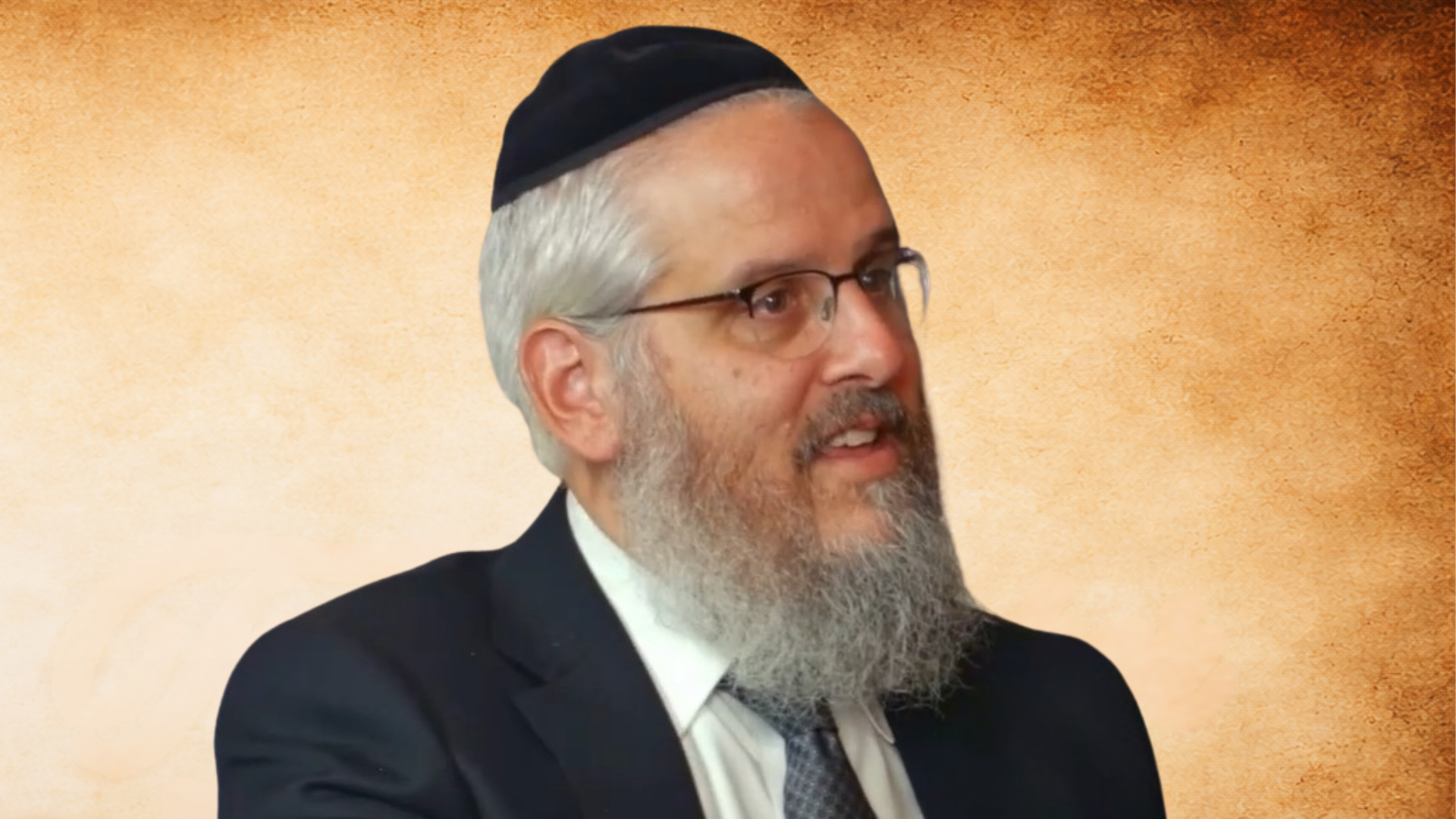
Rabbi Ariel Shoshan is the founding rabbi of Ahavas Torah: The Scottsdale Torah Center, a vibrant Torah community that has brought passionate, authentic, and welcoming Judaism to thousands throughout the Greater Phoenix area. Originally from Chicago, Rabbi Shoshan served as Director of the Phoenix Community Kollel before he and his wife, Ayala, founded Ahavas Torah in 2004. He has played a leading role in strengthening Jewish life across Arizona through initiatives including the Valley Eruv Project and the Esformes Family Mikvah. Rabbi Shoshan is a member of the Conference of Synagogue Rabbonim of Agudath Israel of America and serves as a volunteer chaplain for both the Scottsdale Police Department and the United States Secret Service. His popular weekly Nesivos Shalom shiur on All Parsha is a taste of the fire that warms the Scottsdale community and its thousands of annual visitors.
Learn more from Rabbi Shoshan's weekly Torah insights: allparsha.org/authors/134429