Facts vs Feelings: The Truth About Israel's Impossible War


In this thought-provoking episode of The Torah Broker Podcast, Rabbi Raphael Landesman joins Torah Broker Sanford Burstyn for a candid conversation about Israel, Jewish identity, and the roots of modern antisemitism. Drawing on his passion for teaching modern Israeli history, Rabbi Landesman explains why understanding the historical facts behind Israel's existence is essential for Jews and non-Jews alike.
From media narratives and campus influence to the moral challenges Israel faces in war, this discussion explores the Torah perspective on Jewish resilience, truth, history, and the importance of strengthening our connection to our people and heritage in an increasingly complex world.
Subscribe for more episodes ➤ / @torahbroker
Rabbi Raphael Landesman is the founder and Head of Shearim Torah High School for Girls in Phoenix, Arizona. He first arrived in Phoenix in 2000 as one of the founding members of the Phoenix Community Kollel and established Shearim in 2006. Widely respected for his analytical approach to Torah, history, and education, Rabbi Landesman combines deep Torah scholarship with a mastery of historical context and factual analysis.
The Torah Broker: Episode 9
Israel's Impossible War
00:00 — Rabbi Landesman
It's a bit of a passion of mine, and I feel that the world—maybe there is nothing more misunderstood than the modern history of Israel.
00:23 — Sanford
Welcome to Episode 9 of The Torah Broker, the second episode of the second season. Today we have an exciting guest, a builder of Torah, Rabbi Raphael Landesman. Rabbi, thanks for being with us.
00:40 — Rabbi Landesman
Thank you for having me.
00:41 — Sanford
The rabbi's been in Phoenix since 2000, when he came here with a young family and his wife. He was working at the original Phoenix Community College. After leaving in 2006, [he] opened [Chur?] High School. This is an amazing feat. It's an amazing institution. It's going to be soon celebrating its 20th anniversary. I had a daughter that went there, and it was really produced quite a lot in her that stays with her every day.
01:24 — Sanford
So, Rabbi, yeah, today, Israel. Big topic, small country, big impact.
01:36 — Rabbi Landesman
So let me tell you a little bit about kind of my connection to this topic, which is that, as you mentioned, I'm the head of school of an Orthodox all-girls high school, [school name], for girls. And what we saw in school is that our girls didn't really seem to feel all that connected to Israel, you know, and it's something that we think is important.
It's important as Jewish people to have a connection. We understand it to be our homeland. I myself, as I'm actually an Israeli citizen, and I have two children currently there, one living there, one in school there, and I have a lot of family there. My mother lives there, many of my siblings, and I felt that as an educated Jewish person, you should know about Israel.
You should care about what happens there. And Phoenix is pretty distant from Israel. Yeah. You know, all you have to do is look at a map to know that. Are our girls interested in what happens there? Are they feeling it? Are they emotionally connected?
And so what we did is we actually started a class that we've done for a number of years now, a class called Modern History of Israel.
02:53 — Rabbi Landesman
And the point of the class is to be pretty much just historical, no religious agenda, no real political agenda, but talking about the history of the development of the modern, what we call the modern Yishuv, as the modern Jewish community in Israel. That kind of dates in its current form, I would say, from the end of the 18th century, from that point on.
And in doing so, so the girls understand, you know, kind of the ins and outs of the history. You know, they understand what got us to the point that we are at today, and they feel much more of a connection and they feel much more interested in now what's going on right now.
And Rabbi Michael has been the teacher of—he's very, very knowledgeable. He's done a great job teaching that. And actually, this year, for the first time, we split it into two sections. And the second section is taught by one of your previous guests, by Rabbi Shapiro Reisman, who also is a wealth of knowledge, incredible teacher.
And because of that—and, but it's because it's a bit of a passion of mine, and I feel that the world, maybe there is nothing more misunderstood than the modern history of Israel and nothing more than maybe, I would say, abused in the modern history of Israel.
04:21 — Sanford
Is that—you're speaking outside the Jewish community?
04:25 — Rabbi Landesman
I was being outside the Jewish community, and I think unfortunately, a little bit sometimes, you know, some of our own are affected by things that they hear, things that they know. And I think it comes from a lack of understanding and a lack of knowledge as to why we are in the position that we're in right now.
04:41 — Sanford
What position would you say we're in right now?
04:43 — Rabbi Landesman
So I think we're in a very contradictory position.
On the one hand, I think that the State of Israel has shown a significant degree of might and success. You know, I think as religious Jews, we would say certainly that it's thanks to the intervention of God and to His blessing on the Jewish people.
And, you know, they've been able to have a lot of military advances against those that would seek to destroy it or to hurt it—Hezbollah, Hamas, Houthis, Iran, in the most recent. And that's really, you know, very much for the good of Israel.
And at the same time, it's at this tremendous cost of Israel becoming pretty much a pariah among the nations, people stopping to give them aid, people saying that Israel is committing genocide, attacks against Jewish institutions throughout the world. Some of the most notable ones being, unfortunately, in Australia. You know, we know about that. Attacks in England on this past Yom Kippur.
06:02 — Rabbi Landesman
And, and to a lesser degree in a number of other places. In Washington, D.C., you know, two people were killed. We have suffered as a nation. And I would say in a global sense that the sentiment of the world seems to be that Israel is an outsider. Israel is a force for terror, in the way that it deals with its enemies.
And I think that's very unfortunate. I think it's very false. And I think it comes from a number of different places—some misunderstanding, some, I would say even more so, some outright hatred towards the Jewish people.
And some of that hatred is new, some of it is very, very old. And I think that's where we're at.
07:06 — Sanford
The things that I've seen that I find concerning as it relates to anti-Jewish or anti-Israel sentiments are coming from young people.
And I think that some of the money in the Middle East, the Arab money in the Middle East, has been funding this education for many generations throughout the universities, primarily the Ivy League schools.
07:51 — Sanford
And I think that when you go to Harvard and Harvard tells you something, you don't need to do any fact-checking.
08:00 — Rabbi Landesman
And it's kind of an interesting thing because, you know, you'll see this is where it's a bit of a cross between the alt-right and the extreme left, that the alt-right talks about Israel and the Jewish people having undue influence over Congress, over President Trump, talking about how they, you know, AIPAC kind of buys its way into the hearts and minds of legislators.
08:29 — Rabbi Landesman
Sorry, legislators, I should say.
AIPAC's budget is something like—I looked it up recently—I think it's in the $45–50 million range, something like that they'll spend. I might be wrong about that, but it's certainly not more than that.
And you look at a country like Qatar, and they're giving $5.5 billion over the last ten years, putting it into universities, endowments of chairs about Middle Eastern studies, Arab culture, all kinds of different arenas in which they can influence the hearts and minds of young people.
09:06 — Rabbi Landesman
We saw what the results of that were on October 8th, when Israel hadn't even done anything. And you see hundreds and thousands, if not, you know, I would say, of college students spontaneously marching for Palestinians, and some of them even for Hamas, on the heels of them livestreaming their own atrocities.
Mind-blowing.
And the question becomes, why is it that people don't see this reality?
09:38 — Rabbi Landesman
Why is it that a focus so focused on Jewish influence? And I wouldn't even call it Israeli influence. AIPAC is an American institution that's run by American Jews, primarily, certainly aligned with Israel as an American Jewish organization.
Why are people so incredibly focused on that and ignoring the outsized impact of, like you said, of Arab money?
And I think it's a pretty interesting thing to think about. And I think it has historic roots. It's not a new phenomenon, this idea of Jews having undue influence.
10:24 — Sanford
Look, if—what are we worldwide? 14, 15 million people?
10:29 — Rabbi Landesman
Yeah.
10:30 — Sanford
Something like that.
10:30 — Rabbi Landesman
So depends on, you know, depends who's counting.
10:32 — Sanford
And then the world population was seven billion-ish.
10:36 — Rabbi Landesman
Something like that.
10:36 — Sanford
Right. So to the closest whole number, we make up zero.
10:40 — Rabbi Landesman
Yeah. They say like, you know, they're like 1.3, maybe it's more billion people in China, give or take, like, you know, give or take a couple of percentage points. Like, there's a bigger statistical error to the population of China than there are Jews in the world.
10:58 — Sanford
Right.
10:58 — Rabbi Landesman
You know, so, yeah, we're tiny.
And I think that that's one of the issues that we have. In reality, we're pushed around. You know, Jewish people are told what to do. The world says Israel needs to do this, needs to do that, and needs to rein themselves in, aren't acting appropriately because there aren't ramifications.
Israel doesn't have a ton of natural resources.
11:21 — Rabbi Landesman
They're not cutting off, you know, the choke point of the oil transportation system of the world. Can't do any of that. Can't turn off the spigot. They don't have any of that.
They don't represent a huge amount of voting power. You know, try to do the best with what we have. But, you know, we're not 10% of Europe.
11:56 — Sanford
I don't understand why. I mean, a lot of times in life, if somebody says something that is not relevant or worth responding to or acknowledging, the receiver just simply won't respond.
Right? And I think from what I can see, we seem to be sensitive and respond to things that are really not worthy of responding to.
12:29 — Sanford
I think people can get an audience if their business model is to come after us.
I think we're a sensitive people. I think sometimes we think we're going to convince someone who doesn't like us to like us, but the facts just get in the way.
If I watch some of these Charlie Kirk conversations with kids on campus, I really thought that if he set a criteria for someone to come to the microphone, for a student to come to the mic and engage with them, that they would have to have at least one fact to support any statement that they make, one source.
13:21 — Sanford
Without that, and in many cases, from what I can tell, it's really mostly emotion.
And so I just think if people want to get emotional and speak from that place, it should be identified as such.
13:39 — Rabbi Landesman
And I think you're right in that a lot of it is not based on facts at all.
And what you're really challenging is: if the facts are presented, would it make a difference?
13:49 — Sanford
You know, through the years being in my business, I think I've had two incidents where I had a hat on or something, but the two men were curious as to whether or not I had horns or not.
14:01 — Rabbi Landesman
Well, did the fact that you didn't have horns make a difference?
14:09 — Sanford
That's a good question.
14:09 — Rabbi Landesman
I assume that you don't have horns, by the way.
14:13 — Sanford
You know, I respected the question from both of them, though, because I owed them both money.
Okay. And usually I think one of the first rules of business is don't have someone who you owe money to—
14:27 — Rabbi Landesman
You know.
14:27 — Sanford
Yeah. Anyways, one guy, he was—I really liked him. He was a subcontractor. And he asked me straight out, and I took my hat off and, you know, I showed him.
I thought that was very courageous. You know, I thought that was fulfilling. He heard that from someplace, right? And he'd never met a Jew before.
14:54 — Sanford
I just recently became familiar with this organization, StandWithUs.
14:55 — Rabbi Landesman
Sure.
14:57 — Sanford
It seems to be quite a diligent promoter of the current Jewish story.
So it was very nice to see that. I saw this—it was small, so I watched it. It was a YouTube video from a non-Jewish reporter in Israel, and I don't know how dated it was, but there were, at the time, 1,000 drone attacks on Israel and 400 ballistic missiles, where two of them hit buildings.
15:30 — Sanford
There was one set of casualties in an apartment building, and the other one hit a hospital building that had been vacated the day before.
15:40 — Rabbi Landesman
Right. Soroka. Yeah.
15:42 — Sanford
So, when this reporter went to the building with the apartment building that was destroyed, she saw this young boy going through the rubble looking for his mother, and he couldn't find his mother.
The next day, she shows up. She doesn't speak any English. She's Russian. And she admits she's not—she's Jewish, but she's not religious.
And she said that during the night she heard God tell her to leave the building.
16:18 — Sanford
I mean, it's out there. I, you know, you can't make this stuff up, right? And the reporter's camera person can speak Russian and they're translating.
16:31 — Sanford
I don't think you need to be religious or necessarily believe in God, but to have sort of a curiosity to look at some of this stuff and say, how does this happen without the Creator stepping in?
16:50 — Rabbi Landesman
What I really am looking at is, I understand that, you know, to some extent, God does things for us, with us, to increase that relationship.
17:05 — Rabbi Landesman
So is the message—
17:08 — Rabbi Landesman
And there's a message to us, okay.
And perhaps, and I think that religious Jews often say this, you know, because we do believe this, that God often turns us in His direction, whereas otherwise we would tend to pivot towards the rest of the world's direction.
Okay. And that's really what you're saying.
My question is really for the rest of the world.
17:31 — Rabbi Landesman
Okay, you know, but what is the reason why, if you ask the average guy or the reporter for some major news network, you know, why is it that you choose to report on, you know, some errant bomb hurting, you know, some people in Gaza, as problematic as that is, and you choose not to report on the hundreds of missiles that are raining down on Israeli cities, what would they say?
18:01 — Sanford
You know, they have a job to do with a mandate and a message to send.
And that is, we only identify things that are bad looking for the Jewish people.
Why? So if you want to lose the job, focus on, you know, what's wrong with the other side.
18:16 — Rabbi Landesman
Right. But why? Why is that okay?
The reason why is because, for some reason—okay, and we can explore that reason—the Jewish people are reviled, hated, you know, kind of looked at as the other.
That's our condition.
So no empathy for us. Empathy for the other side. No focus on our problems and our issues. Okay.
18:43 — Rabbi Landesman
Only for the other side.
Okay. The Jewish people on October 7th were faced with the most difficult choice, perhaps, you know, in recent history.
Okay. The Jewish people are faced with an army of Palestinian terrorists coming across the border, attacking their border towns, doing all the things that we know that they did.
Now Israel has to respond.
19:08 — Rabbi Landesman
And Israel's faced with having to invade Gaza, having to go into Gazan cities, Gazan population centers, and they know that they're not going to face the enemy in the open.
The enemy is underground.
The enemy has built miles and miles of tunnels, and between the Israeli army and the enemy are two million civilians, roughly.
And these people are human shields—two million human shields.
19:39 — Rabbi Landesman
Okay. Maybe it's the first war in history that was fought vertically.
You know, Jewish people were on top. The Israeli army is on top. Enemy is subterranean, you know, and civilians in the middle.
And here they're faced with the choice, and the choice is a no-win choice.
The choice is either you say, okay, I'm not going to hurt anybody, and I'm going to admit defeat, and I'm going to give a message to the terrorists, world, to Iran and its proxies, that we're not going to fight for our people.
20:16 — Rabbi Landesman
We're not going to stand up for the needs of our own subjects, you know, our own population in the State of Israel.
But, you know, we're not going to hurt any civilians. Could do that.
Okay? Or we can go and we can try to minimize civilian casualties. But we've got to go after the terrorists.
20:40 — Rabbi Landesman
We've got to root them out. We've got to go building to building. We've got to level quite a bit of it in order to get to the tunnels underneath.
That's their choice. Maybe the most difficult choice in history.
20:53 — Sanford
If we were looking at this military situation strictly out of the Torah, and King David was ruling Israel at the time, I think we have a general idea as to how this would look.
It would happen really quick, and he wouldn't be too concerned about what The New York Times or The Washington Post had to say about whatever it is he had to do or did do.
21:14 — Rabbi Landesman
So, not so sure.
No, no. I think that you're making an assumption that the times of the biblical times are the same as the times of now.
I think that we look at ourselves as being in exile, despite the fact that we have the State of Israel.
We look at ourselves as being in exile.
21:37 — Rabbi Landesman
Meaning, what it means to say is that we're not at the times where God's presence with us is meant to be overt.
It's not miraculous, the kind of the King David—if you look at the Bible, you look at the way that the prophets describe it, and actually I just studied it with my kids—you know, King David, one battle after battle after battle, through prophetic promise to the fact that God told him He's going to be with him, and therefore did some of it in miraculous fashion.
22:12 — Rabbi Landesman
We know the story of David and Goliath, you know, most dramatic of that.
We know we're not living in the same times.
We haven't yet gotten to the point where that kind of situation has been restored.
And therefore we're taught—we're taught by our leaders, and I mean our religious leaders—that it's not all about, you know, standing up and pushing forward.
That we're not meant to necessarily ignore what the rest of the world thinks because we live among them.
22:46 — Rabbi Landesman
We're not meant to just say, okay, we're going to just do what we have to do, and everybody else just needs to fall into line.
Okay. And I'm saying that that's something that needs a certain amount of balance.
I agree with you. I agree with you that we're not looking to the left-wing people and we're not interested—
23:07 — Rabbi Landesman
But I know that you're expressing something that we all feel.
You know, what are you going to do with them? They just—they're just who they are.
What I'm exploring is: What does it come from?
Okay. And to some extent, what is the communication that you would give?
Okay. Not to the far-left people who are maybe beyond help, not to the far-right people who are channeling medieval rage.
23:37 — Rabbi Landesman
Okay, but what would you say to the people that are somewhat in the middle?
Could you point out to them that they're being influenced by hate?
Could you point out to them there really—all of the reporting, all of the shaping, all of the manipulation of the narrative that surrounds the Jewish people and Israel is something that in their core principles, they would abhor?
24:07 — Sanford
But the real question is: Are they really open to the facts?
24:15 — Sanford
Because most of what I see in antisemitism, the facts are just getting in the way.
It's, "I don't like the Jews for whatever reason. My friends don't like them. I was told at school to don't like them. So I don't want to hear anything good about them. I don't want to hear why I shouldn't feel this way."
24:37 — Sanford
I feel good about this. You know, I'm in my peer group. None of them like them.
So I think when you take a look at Jewish organizations that are trying to really tell our story in a clean way, or maybe winning over a few people, but I think more importantly, they're dealing with young minds that are getting shaped now.
25:02 — Sanford
Right? And so this generation, maybe future generations, as we work through this, have at least a different set of facts, and they have as much information on the pro-Jewish side as they do the pro-Arab side, because there was a void there for a long time.
25:23 — Rabbi Landesman
Do you think that people have as much information on the pro-Torah side?
25:27 — Sanford
On the pro-Jewish side? Yeah.
Well, I think there's more.
I mean, since I saw StandWithUs getting on the campuses, and I don't know if the other organizations—I don't know if Hillel on the campus is—they must be doing more. The [rumors?] organization, and what was Rabbi J. with my monitors? You know, they were on.
I'm sure that that has improved itself and its impact and broadened the reach.
25:59 — Sanford
I think that there are Jewish people with resources that are supporting this sort of stuff.
What I really enjoy about my observance of the Jewish people is how we all seem to work in different areas of the community to do what we think is good for the Jewish people.
And so if on our side it is learning, to spreading Torah, demonstrating Torah, being accountable to it, living it, has an effect that influences the world and people in a way that may align with our brothers and sisters on the media side and on the social influence side.
26:59 — Sanford
So there are different ways to create an awareness of who we are, and what our virtues are, and what the truth about our limitations are.
27:14 — Rabbi Landesman
I think that that is a lesson that somebody who's kind of coming from a maybe more secular position or mindset, not a religious one, might take some time to get to.
In other words, that really what this is all about is, you know, seeing that people are not so open, people are not so interested in facts.
27:40 — Rabbi Landesman
And that really what is happening here is a push towards us being closer to our own, being closer to where we came from, being closer to our own heritage.
You know, certainly, I think that people that are on college campuses that work with Jewish youth are seeing a tremendous growth in interests, in involvement.
28:07 — Rabbi Landesman
And it's coming from the fact that they are realizing who their friends really are and who's not.
You know, but I think that for some people, it happened pretty quickly. I think for some people it's taken a lot more time.
And I think part of the reason that it's taken a lot more time is that it's very difficult and very challenging for somebody to say, you know, what I've believed in for all this time, and I believe that I'm aligned with the rest of the world.
28:37 — Rabbi Landesman
I'm the same as the rest of the world. I'm really kind of, you know, integrated and part of things. And I'm viewed the same as everybody else.
I have a different flavor. I have a different style, a different culture somewhat, but really a part of things.
And to see it kind of turn around, and all of a sudden I'm cast out. Some of the things that I believe I'm not allowed to say anymore.
29:04 — Rabbi Landesman
They're not considered to be socially acceptable.
Core parts of how I think of myself are no longer a part of mainstream thought.
You know, that's very, very startling and very unsettling.
And so what does one make of that?
I think that coming to grips with the fact that this is irrational and it comes from many, many, many years of casting Jewish people as outsiders and villains and parasites and all of that, which really came from a place of wanting to validate one's own beliefs.
29:52 — Rabbi Landesman
And it's part of the human condition to try to validate one's own beliefs, often by trying to show how somebody else is problematic or somebody else is wrong, instead of, you know, trying to be the best person that you can be and try to show that.
Kind of all of that, like recognizing that it's the same thing that's been going on for a long time and that unfortunately, when out in a totally different place—
30:20 — Rabbi Landesman
And some of the things that were going on in the 1500s are kind of similar to what's going on now, et cetera, et cetera.
A hundred years ago, which we know that Jewish people suffered a tremendous tragedy in the Holocaust, that some of the rhetoric hasn't gone away, just takes on a different sort of form and maybe a different target in the State of Israel.
It's a very jarring thing for somebody that was so integrated and so involved in sort of Western life as opposed to Jewish life.
30:51 — Rabbi Landesman
And I think it's important to try to help them along, to kind of readjust, sort of, you know, sort of recalibrate.
You know, that actually this is an opportunity to reconnect. And actually an opportunity to grow and to become much more a part of the Jewish people.
But in order to do that, I think that they need the facts.
31:17 — Rabbi Landesman
I think that StandWithUs, you know, does great work. But I think that that's where they're starting from.
Like, there is a tremendous disparity and a tremendous misunderstanding of what's going on.
I mean, even among, you know, some of our students, sometimes somebody says to me, you know, a student will say to me, "I understand that terrible things were done to Israel."
31:37 — Rabbi Landesman
"But isn't Israel doing some of those things back?"
And they do need answers to that question.
And the reason why they think that is because of things that they read, things that they hear, things that they see on maybe on a news reporter, maybe even, you know, some video that they were sent, something like that.
31:59 — Rabbi Landesman
And they are wondering those questions.
I had a conversation with a young person like this two weeks ago, and I said to them, "You have to understand that any response that Israel gives to October 7th is because there is no possible situation, and you have no idea what you would do in that situation."
The questions and the dilemmas that they have to address are far, far beyond what anybody who is commenting on it has ever had to address.
32:26 — Rabbi Landesman
And they're dealing with it on such a high level, you know, trying to understand where to bomb and how to move people out of the way, how to make sure not to kill, you know, people that they don't have to, you know, using technology to try to identify where combatants are, and when to fight and when not to fight, when to bomb, when not to bomb—all those sorts of things.
32:48 — Rabbi Landesman
I think that actually our own people are struggling with this to some extent because of the things that they hear.
And I think it is important for them to kind of have an orientation of what the reality is.
And that goes doubly and triply for somebody that's been immersed in the narrative of the, I would say, the woke world, that Israel is the villain.
33:17 — Sanford
I went to some event at the Biltmore. You forgive me, I don't remember the name of that. Doctor Matlin's son spoke there, an idea of soldier. Do you remember the event?
33:28 — Rabbi Landesman
I wasn't there anyways.
33:30 — Sanford
I think there were 400 men there. Jewish men. I think in 30 minutes they raised like $5 million.
33:41 — Rabbi Landesman
Yeah.
33:42 — Sanford
And I used to go to these things here, and I would know a lot of people there.
I went to this and I hardly knew anybody.
That's how much the community has grown, that so many people, Jewish people, migrated here.
And you can see, you can sense, you can smell the wood burning in these men with what's going on.
34:05 — Sanford
I mean, I spoke with, through the whole night, maybe six or seven different men I didn't know that I was introduced to and asked some questions about this.
You know, one of the things that I heard that I found, if you're—if I think one of the things StandWithUs has is they have Muslim speakers who have been educated as to who the Jews are.
34:37 — Sanford
They went to Israel and they were treated like human beings, and they had lives, and the women were treated right and all that sort of thing.
And they've been speaking out.
It's the first time we've seen that ever in my lifetime.
But I know as I got more religious, I was more observant with my diet.
You know, we're in Arizona. This—we have four or five Jewish, you know, kosher restaurants.
35:00 — Sanford
This isn't the Tri-State area.
So a lot of my brothers have a lot of the same challenges about how to carry themselves through this new time of being Jewish.
And I, for one, just encourage them all. I know they're all doing the best they can, but I think we all improve our position as we learn more.
So with that, let me—can I go through some of the facts that came up with about Israel?
35:31 — Rabbi Landesman
Sure.
35:34 — Sanford
They revived the language.
I never really thought about this. It's the only country in the world that's revived what they call a dead language, Hebrew, made it an official national language.
I never—I mean, I understand it, but I never knew that.
The highest museum density, more museums per capita than either country in the world.
I mean, that would just make sense from the relics there, right?
36:03 — Sanford
Of all the religions and all the civilizations that live there, not just Jewish.
And then they call it the Startup Nation.
I remember hearing that in the past about technology, working with Microsoft and Intel and Apple and all these different companies.
Right. Okay.
Net gain in trees. Isn't that a strange metric, that Israel has a net gain?
36:30 — Rabbi Landesman
No, we know about—
36:31 — Sanford
That 7% coverage, right?
36:33 — Rabbi Landesman
Sure.
36:34 — Sanford
Oh, that was the agency with the former [met Jeff?]. Yeah, yeah. I used to sell their trees when I was a kid.
A lot of non-Jewish people were buying their trees, putting their grandmother's name in memory. They were $18 at that time.
Water sustainability leader with the—[sailing?] nation—recycled 90% of wastewater, wastewater, not water. Wastewater.
We know what that looks like for agricultural use, right?
37:05 — Sanford
Agricultural innovation with the whole drip system, the use of salt water, which is more available.
World leader in dairy cows.
Now, I come from a farming background. I had no idea about this.
The cows in Israel actually produce 10% more milk than the cows [in the] United States.
And we do a great job here. A great job.
The global humanitarian aid.
37:38 — Sanford
How Israel just loads up these big planes when there's a problem, flies in and helps people out.
Publicly traded companies: over 100 Israeli companies are listed on the New York Stock Exchange, the Nasdaq as well, featuring prominent technology, cybersecurity, pharmaceutical, et cetera, industries.
And then these war miracles.
This is pretty interesting.
And I shared this with Rabbi Bernstein when I was—when he was here last.
I was on an airplane sitting next to a guy who worked in the library at West Point, and all he does is alphabetize, study chronologies, maintain source [supply?] battles that they have stored from when it was swords and horses and chariots, catapults.
38:34 — Sanford
They don't say in the Jewish battles because I brought it up, and he said, "We can't explain them, so we don't study them."
So God—God's helped us.
I mean, I know we have to be concerned about antisemitism and the hate and the dislike for us, but I think we need to understand who we are.
What are obligations?
Are we—have a purpose. We need to fulfill that purpose.
39:00 — Sanford
You know, you want to go to school and it's raining, you put a raincoat on. It's snowing, you get boots on and muck boots, you know, and mittens.
We've got antisemitism. We have to make some changes, but we have to persevere with our lives.
So I think the Jewish people historically have always been very courageous.
39:26 — Sanford
And I think that as they access more information and they learn about the next world and how important that is, this is the foyer to that world.
This isn't the end of it.
My off-the-deep-end rabbi, did I just go over the edge?
39:46 — Rabbi Landesman
I think that all these things are definitely 100% true.
I think they're—I think they're amazing. Yeah.
And I think that Israel has a lot to offer the world, and I just wish that they would be able to see it.
I think, as you said, the people who are willing to see it will see it. And the people that are not are not going to see it, you know, are not going to—
40:10 — Sanford
See.
Been kicked out of 72 countries, the Jews. 72, and some more than once.
And the condition of humans—to where I've seen this in business, where emotion will replace money.
"I feel good doing this even though it's going to cost me money."
Now that's new. That never really crept into business until maybe 12 or 15 years ago, where you started to see that.
40:43 — Sanford
So there's this something in the world that's sprinkled around that has people very different than they've ever been.
Not just in the Jewish world—in the world, period.
I don't think we've had the kind of road rage and neighbor conflicts, you know, anger. You know, sometimes you sense it if you're too close to somebody in a grocery store, over a Target or something.
41:15 — Sanford
So listen, one of the three pillars of the Torah is kindness, right?
What is service? Torah for life and acts of kindness, right?
So that just doesn't apply to us. That applies to everybody.
Although that is not one of the seven Noahide laws, right, kindness?
41:37 — Rabbi Landesman
It's no—to have a fair and just court system. And I'd say that, you know, kindness would be a part of that.
41:48 — Sanford
I think it was interesting.
41:48 — Sanford
Thank you, Rabbi. Yeah.
41:49 — Rabbi Landesman
And I hope that, you know, I hope that people will, you know, think about, you know, some of these things.
And I think that I hope that they will consider them, you know, and, and, and like anything, you know, the point of having a discussion is really to provide food for thought, you know, and I think that one of the most important things that we can do is to, is to—
42:16 — Rabbi Landesman
Is to take seriously and be mindful of the things that we hear and, you know, and try to integrate them into our lives.
42:26 — Sanford
I think, you know, you're speaking to, I think, two audiences.
You're speaking to a Jewish audience, which I hope heard something that might cause them to reaffirm something they already heard or dig a little deeper.
And the other audience is the non-Jewish world.
And I don't know if they might have heard something here that would cause them to take another look at the facts or their own position.
42:56 — Sanford
Ultimately, we all have a job to do on this planet.
We all have a purpose, and we should just do the best we can with whatever.
You know, if you're a linebacker, you got to make tackles. If you're a quarterback, you throw passes.
But before we go, Rabbi, I need to ask something.
43:18 — Sanford
Are the Steelers going to do anything this year?
43:23 — Rabbi Landesman
You know, I think that I think that there's hope.
43:27 — Sanford
What was the best team in the Steelers' division?
43:30 — Rabbi Landesman
'78.
43:31 — Sanford
They won a Super Bowl '70.
43:32 — Rabbi Landesman
Definitely.
43:33 — Sanford
Was that the only Super Bowl, everyone?
43:35 — Rabbi Landesman
No, they won six.
43:38 — Sanford
Pittsburgh won six Super Bowls?
43:39 — Rabbi Landesman
Yeah.
43:41 — Sanford
How many of those were Bradshaw?
Four.
Who had the other two?
43:46 — Rabbi Landesman
Roethlisberger.
43:48 — Sanford
Wow.
Now those six accumulated over how many years?
43:53 — Rabbi Landesman
The first four were within six years, '74 to '79. The last two were '85—oh, no, 2005.
44:02 — Sanford
Oh, wow.
So they had a little bit of a drought and then—
44:04 — Rabbi Landesman
A lot—a bit of a drought.
44:06 — Sanford
Same ownership throughout all that time?
44:08 — Rabbi Landesman
Yeah, Rooney family always.
44:10 — Sanford
Wow.
44:11 — Rabbi Landesman
They only had one owner—I mean, one owner family.
44:14 — Sanford
Right, right. I'm a Lion fan.
44:17 — Rabbi Landesman
So did that. Your day will come.
44:20 — Sanford
Thank you, Rabbi. From your word to our ears and back into the locker room.
Okay, well, thank you for listening to Episode Number 9, which is the second episode of the second season.
If you've got any questions on anything you've heard here, just Google "Rabbi near me," get a phone number, call them up and fire with the questions.
Make an appointment, however you want to handle that.
All right. Thank you.
44:54 — Rabbi Landesman
Okay.
44:54 — Rabbi Landesman
Thank you.
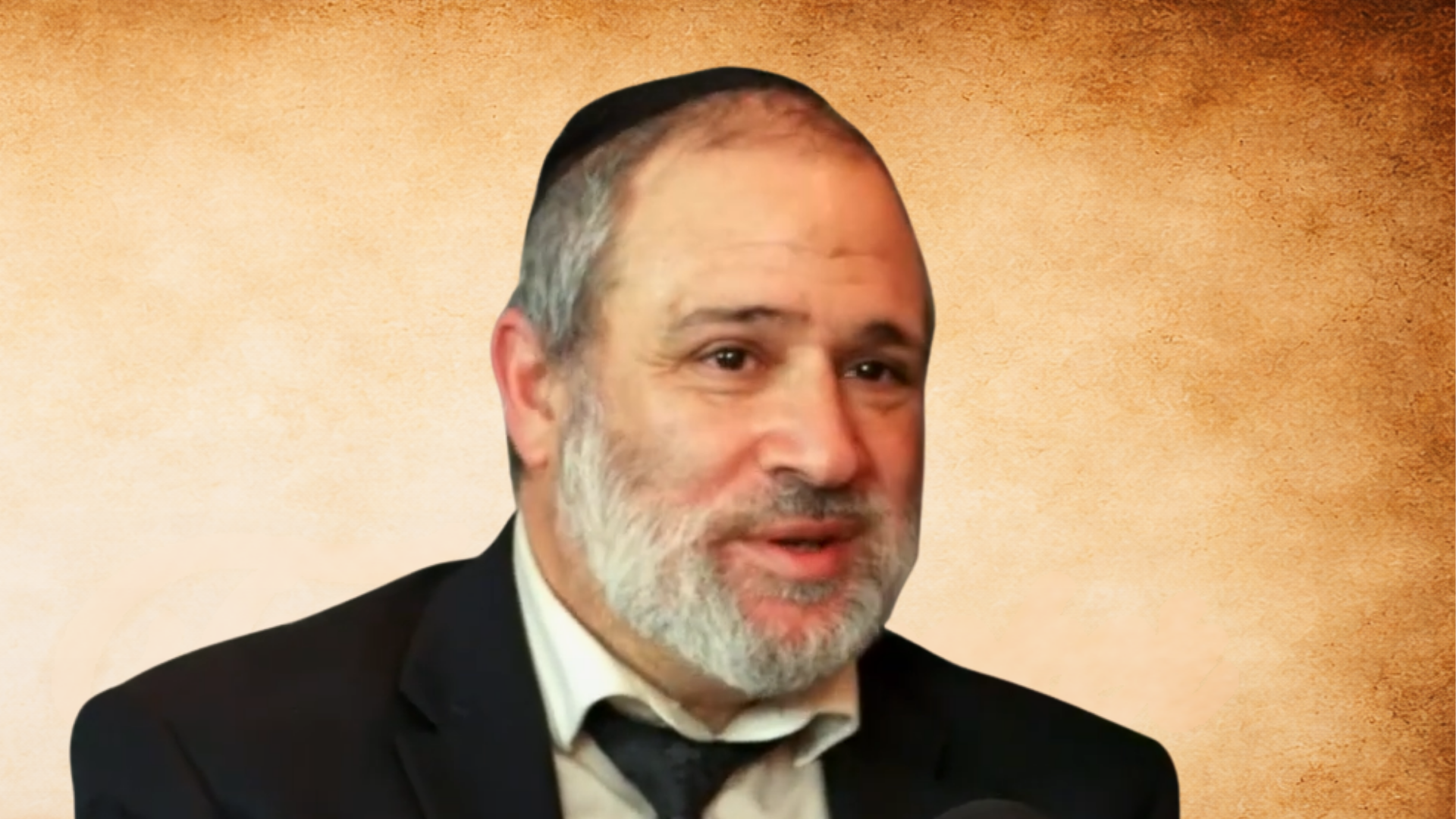
Rabbi, Head of School
Rabbi Raphael Landesman is the founder and Head of Shearim Torah High School for Girls in Phoenix, Arizona. He first arrived in Phoenix in 2000 as one of the founding members of the Phoenix Community Kollel and established Shearim in 2006. Widely respected for his analytical approach to Torah, history, and education, Rabbi Landesman combines deep Torah scholarship with a mastery of historical context and factual analysis.